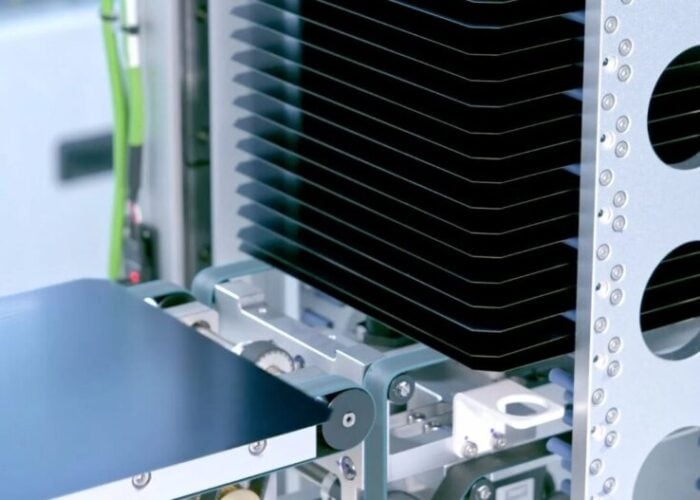
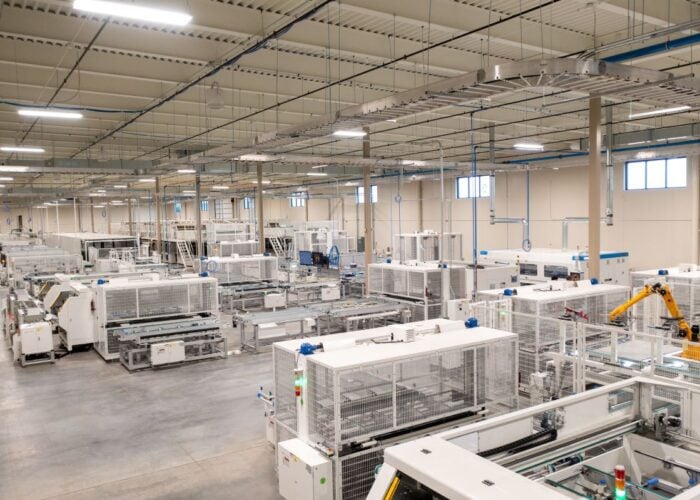
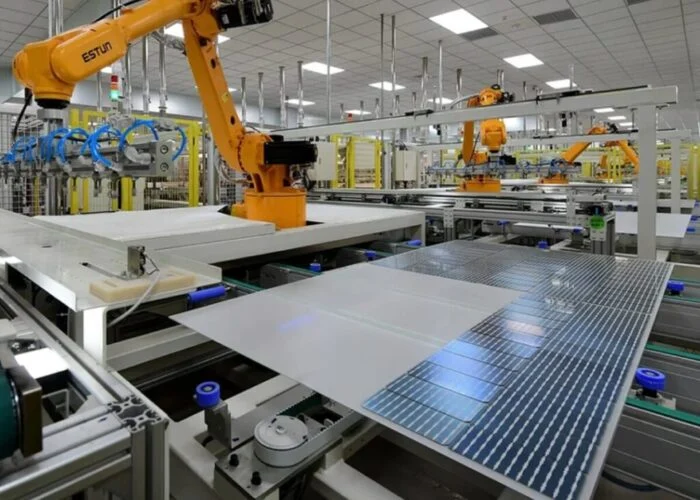
The photovoltaic-TPA (Thermo Plastic Applicator) from Bystronic glass group is a machine designed for the encapsulation and sealing of thin-film PV modules. The machine is claimed to be the first machine of this type that is capable of working in 24-hour operation without any interruption.
Problem
Try Premium for just $1
- Full premium access for the first month at only $1
- Converts to an annual rate after 30 days unless cancelled
- Cancel anytime during the trial period
Premium Benefits
- Expert industry analysis and interviews
- Digital access to PV Tech Power journal
- Exclusive event discounts
Or get the full Premium subscription right away
Or continue reading this article for free
While the use of the conventional butyl sealant stripes from a reel is permanently linked with production interruptions when the material reel needs to be changed, high-viscous butyl dispensing provides for continuous production and lower energy usage when compared to traditional lamination processes.
Solution
The photovoltaic-TPA (Thermo Plastic Applicator) is a machine for the efficient encapsulating and sealing of photovoltaic modules. It precisely applies high-viscous butyl on semiconductor thin-film substrates. Two high-performance pumps ensure that the viscous sealing material is always available. The dosing pumps are claimed to apply the material accurately to a tenth of a millimetre. Depending on the film thickness, the application thickness of the butyl varies between 0.5 to 1mm. In contrast to conventional lamination, this encapsulating method uses considerably less energy as it operates without any heating or cooling. Depending on the module size, the cycle times are approximately 30 to 45 seconds.
Applications
Cadmium-telluride (CaTe), copper-indium-diselenide (CIS), copper-indium-gallium-selenide (CIGS), microcrystalline silicon (µSi) or amorphous silicon (aSi) modules.
Platform
The machine is available in both horizontal and vertical options. Integration into complete back-end lines and existing plants is possible. Thanks to a dual-drum pump system, the machine is able to operate 24 hours a day, 7 days a week. The machine can be included at the planning stages for newly designed plants, but can also be integrated into existing systems.
Availability
Currently available.