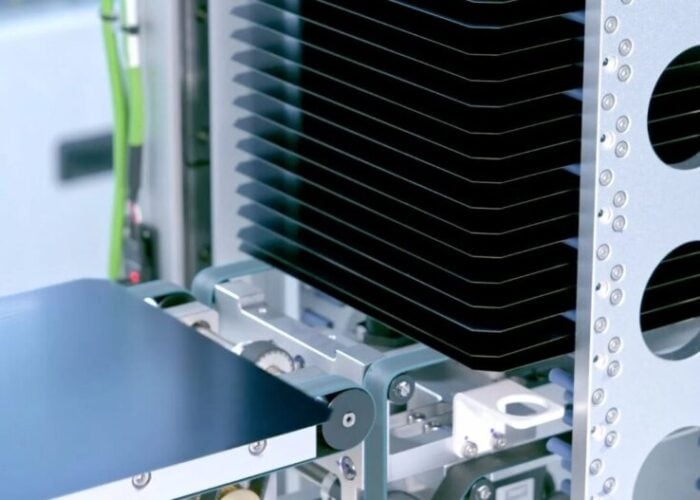
Henkel has introduced ‘Loctite 3382’ in an effort to simplify silicon ingot bonding and protect against wafer breakages. Loctite 3382 provides improved bonding strength of the ingot in the sawing process and is de-bondable in hot water. This new bonding solution helps to avoid corrosion of the equipment and is free of caustic odor.
Problem
Try Premium for just $1
- Full premium access for the first month at only $1
- Converts to an annual rate after 30 days unless cancelled
- Cancel anytime during the trial period
Premium Benefits
- Expert industry analysis and interviews
- Digital access to PV Tech Power journal
- Exclusive event discounts
Or get the full Premium subscription right away
Or continue reading this article for free
Loctite 3382 replaces traditional epoxies that require caustic acids for debonding. This adhesive breaks down easily on exposure to hot water, eliminating corrosive debonding solutions and minimizing silicon waste that occurs during the wafer-cleaning process.
Solution
Henkel’s new bonding solution is a water de-bondable epoxy adhesive providing bond strength to both silicon and the glass and metal mounting substrates used during the ingot sawing process. As this two-part epoxy is pink when cured, during visual inspections it is easy to distinguish from the silicon ingot and the metal and glass mounting substrates. Homogenous and stable, Loctite 3382 sets up in just 5 to 7 hours and is claimed to provide a consistent cutting layer that reduces edge damage and wafer breakage. This epoxy’s improved bond strength means the adhesive will not prematurely de-bond during the sawing process, protecting the ingot and the wafers from damage.
Applications
Silicon ingot bonding for wafer slicing.
Platform
Easy to dispense using meter-mix equipment, Loctite 3382 is packaged in cartridges, pails and drums. This adhesive emits no caustic odor, will not corrode equipment, and is fully-compatible with current wafer cleaning solutions and processes.
Availability
August 2011 onwards.