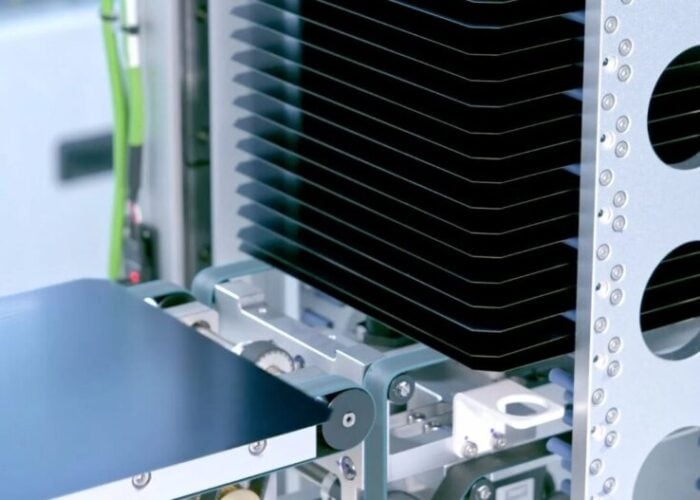
Product Briefing Outline: The Schmalz Wafer-Gripper SWG is applied in fully or partially automated production of highly sensitive wafers and solar cells with maximum process stability. A new handling concept provides minimum cycle times, precise positioning, reliable handling even of deformed and broken parts, breakage detection “on the fly” and controlled air discharge.
Problem: The current technology for handling wafers and solar cells utilises conventional vacuum grippers or floating suction pads employing Bernoulli’s principle. While conventional vacuum grippers allow robust handling, chemical contamination and high mechanical strain occur at contact surfaces. Although the chemical and mechanical effects of floating suction pads are much smaller, they carry the disadvantages of a considerably lower cycle speed, relatively imprecise positioning, and uncontrolled blow-off of nuisance particles into the process room.
Try Premium for just $1
- Full premium access for the first month at only $1
- Converts to an annual rate after 30 days unless cancelled
- Cancel anytime during the trial period
Premium Benefits
- Expert industry analysis and interviews
- Digital access to PV Tech Power journal
- Exclusive event discounts
Or get the full Premium subscription right away
Or continue reading this article for free
Solution: The Schmalz Wafer-Gripper SWG, grips the entire surface of the wafer without leaving a mark. Hundreds of suction holes reduce the stress impact on wafers to a minimum and avoid micro cracks. At the same time the SWG is said to meet the highest requirements with respect to acceleration and process speed. The large contact area between wafer and gripper with maximum holding force allows complex and high speed handling cycles below 1-second without slippage. The large contact surface provides reliable gripping even of deformed and broken wafers, which ensures maximum process stability. Since the pressurized air and ultra-small particles are completely extracted, production can be carried out under clean room conditions.
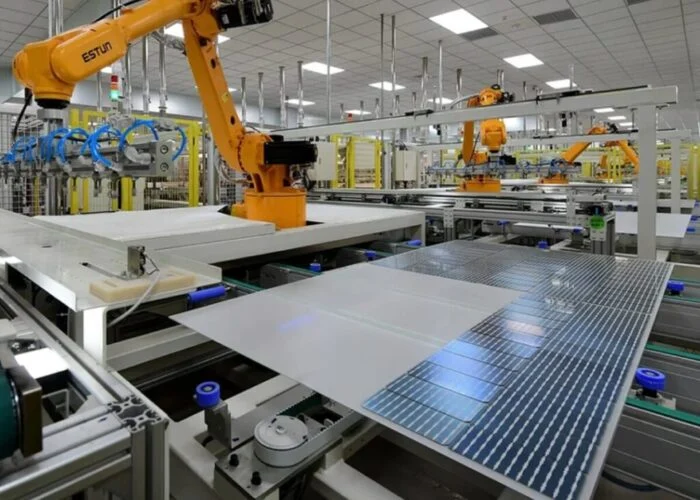
Applications: Wafer pickup from stacks and belts, loading of tabber/stringers, sorting, high accuracy positioning during and after the visual inspection process and other tasks.
Platform: The Wafer-Gripper is available with suction surface geometries for the standard cell sizes of 125 mm and 156 mm. The contact surface made of PEEK (Polyetheretherketone), vacuum generator, blow-off unit, robot interface, sensors and optional features are of modular design.
Availability: Currently available.