This paper presents the calibration of solar cells, in accordance with the IEC 60904 standards, carried out at the solar cell calibration laboratory of the Calibration and Test Center (CalTeC) at the Institute of Solar Energy Research Hamelin (ISFH). For the calibration of a solar cell, the cell area, the spectral responsivity (SR) and the current–voltage (I–V) curve have to be determined. The I–V curve then yields the characteristic parameters, including the power conversion efficiency, fill factor, short-circuit current and opencircuit voltage. The required measurement facilities and contacting stages are explained in detail; in addition, the measurement procedures are introduced. The precision and accuracy of the resulting characteristic parameters and curves are demonstrated by recent intercomparisons between different international calibration laboratories.
Passivated emitter and rear cell (PERC) solar cell design is the industry standard for high-volume solar cell manufacturing today. The next challenge for the PV industry is to find a low-cost cell upgrade technology platform that can be easily retrofitted in existing production lines to modify the front side and enhance the rear. The monoPolyTM technology platform, developed at SERIS together with its strategic industry partners, offers an attractive solution and paves the way for the adoption of passivating contacts in large-scale manufacturing. This platform requires only one tool upgrade for most PERC/T production lines, has one less process step than a standard PERC production process, and yields a +1%abs. efficiency boost over a standard PERC process. The
authors believe that monoPoly will enable the PV industry to mass produce cells with efficiencies exceeding 24% in their existing lines in the near future.
The PV industry is undergoing rapid technology changes that have been driven by the well-documented swift adoption of monocrystalline wafers. Less well understood, however, is that within this wafer technology transition comes a shift to larger wafer sizes, and this includes p-type and n-type mono-Si wafers.
This paper explains how these modern production concepts are implemented in ISC’s lab, and details the plans for their utilization in future production sites, with illustrations of the key benefits in practice. With these modern manufacturing concepts, it will even be possible to bring future c-Si PV production back to the EU with the choice of an appropriate cell concept (high efficiency but proven technology, e.g. interdigitated back-contact (IBC) cells, such as ZEBRA) and a sound business plan.
Today, solar power is one of the cheapest ways of providing energy internationally, partly because of the excellent R&D work in Europe. Prices of modules have fallen by half in the past three years, and at the same time the use of solar power has been steadily increasing. The reason why there has been an increase in the use of solar energy in Europe and Germany is the achievement of the climate targets of the Paris Agreement. While the machines for the production of solar modules are still manufactured in Germany, the production of cells has now almost completely migrated to Asia. Therefore, the VDMA commissioned a study from Fraunhofer ISE to evaluate whether the production of solar modules at competitive costs could again be realized in Europe. This paper presents the results of the VDMA study.
Welcome to the latest edition of PV Tech Power. This is a special issue for a number of reasons. The journal has now been running for five years with a growing roster of industry experts sharing in-depth knowhow on everything from contract law to the pitfalls of east-west module layout. It’s also a special issue for us as it is the tightest marriage yet of PV Tech’s decade-plus of solar industry coverage and the expert analysis and reporting of our sister site Energy-Storage.News.
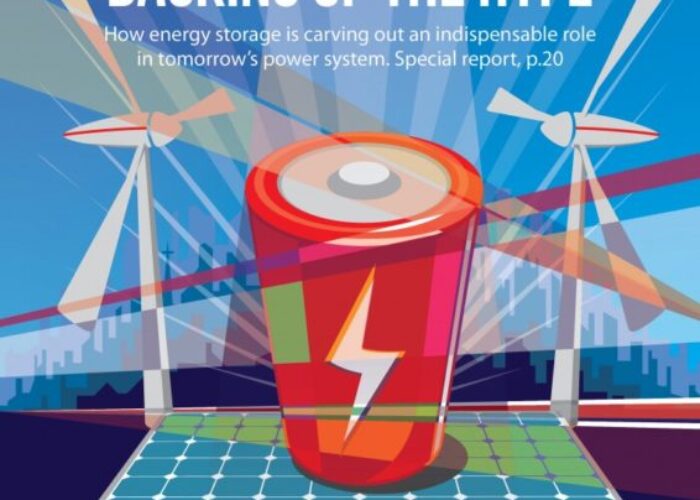
Our 19-page special report in this issue explores both the accomplishments of the energy storage sector and the ongoing challenges. Fittingly, Andy Colthorpe, editor of Energy-Storage.News, sets the scene, and much more.
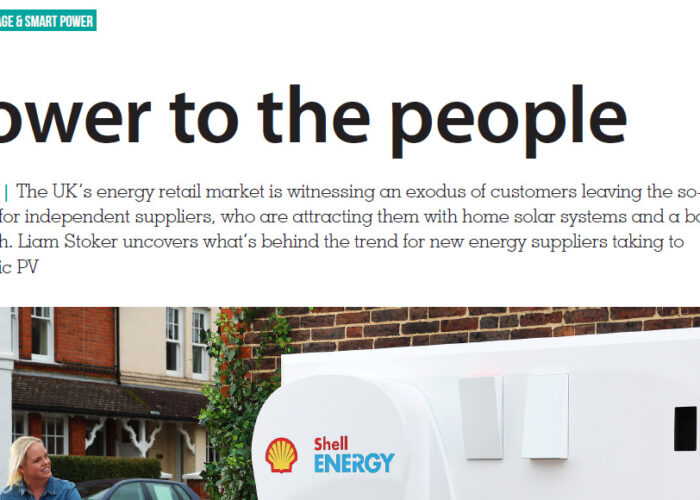
The UK’s energy retail market is witnessing an exodus of customers leaving the so-called Big Six for independent suppliers, who are attracting them with home solar systems and a battery to match. Liam Stoker uncovers what’s behind the trend for new energy suppliers taking to domestic PV.
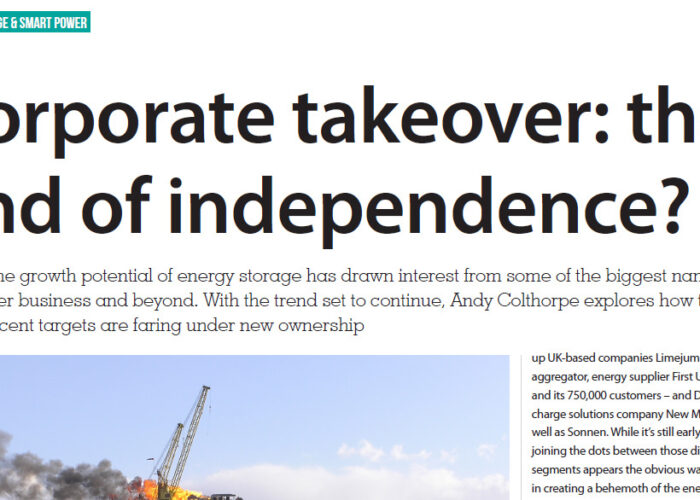
The growth potential of energy storage has drawn interest from some of the biggest names in the power business and beyond. With the trend set to continue, Andy Colthorpe explores how three of the recent targets are faring under new ownership.
As the building blocks of energy storage systems, batteries have a key role in influencing system design and economics. Davion Hill of DNV GL explores the importance of testing the performance of individual battery cells in minimising the exposure of battery buyers to technical risks.