Skip to content
Solar Media
Solar Power Portal
Energy Storage News
EV Infrastructure News
Events
Advertising
Contact
Solar Media
Solar Power Portal
Energy Storage News
EV Infrastructure News
Events
Advertising
Contact
Newsletter
Twitter
LinkedIn
YouTube
Subscribe To Premium
Premium Subscription
Sign In
My Account
Search ...
Results
News
Industry Updates
Premium
Photovoltaics International
PV Tech Power
Technical Papers
Market Watch
Cell Processing
PV Modules
Fab & Facilities
Materials
Thin Film
Plant Performance
Financial, Legal, Professional
Manufacturing
Markets & Finance
Power Plants
Features
Editors’ Blog
Guest Blog
Product Reviews
Interviews
Featured Articles
Long Reads
Special Reports
Sponsored Papers
Market Research
Events & Webinars
Solar Media Events
Upcoming Webinars
On-Demand Webinars
Markets & Finance
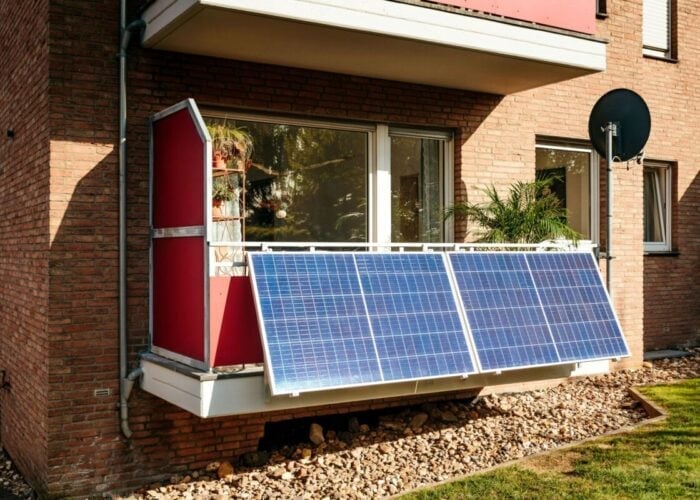
Socket Full of Sunshine Act calls for first federal-level support for US plug-in solar
October 23, 2026
New Jersey representative Rob Menendez has introduced the Socket Full of Sunshine Act, the first federal-level bill to support plug-in solar.
European solar PPA prices up 0.4% in Europe and 4.9% in the US
October 23, 2026
The average price of a solar PPA in Europe increased 0.4% between the second and third quarters of 2026, according to LevelTen Energy.
NextEra Q3 2026 earnings rise 9.7% as shareholders approve Dominion merger
October 22, 2026
NextEra Energy recorded a 9.7% increase in its net earnings in Q3 2026, with earnings up 9.5% in the nine months to date this year.
European Energy signs 30-year First Nations agreements for three Australian solar projects
October 22, 2026
Danish developer European Energy has signed 30-year agreements with Traditional Owners covering three solar-plus-storage projects in Queensland, Australia, including the 1.1GW Upper Calliope solar PV plant.
Lodestone Energy completes NZX’s first listing built entirely around utility-scale solar in New Zealand
October 22, 2026
New Zealand solar PV generator Lodestone Energy has started trading on the NZX Main Board after raising NZ$75 million (US$43 million).
EBRD provides US$265 million loan for 1.2GW solar-plus-storage project in Egypt
October 21, 2026
The EBRD has announced a US$265 million loan for a new 1.2GW solar PV plant, to be co-located with a 600MWh BESS, in Minya, Egypt.
Pivot Energy closes US$500 million credit facility for US solar PV and BESS deployments
October 21, 2026
Pivot Energy has closed a US$500 million bilateral corporate credit facility to further solar PV and BESS deployments.
China proposes export controls on polysilicon, wafers and other PV technologies
October 21, 2026
China’s Ministry of Commerce is proposing to introduce export controls on key PV components, including polysilicon, wafers and cells.
Italy awards over US$860 million to deploy 505MW of rooftop agriPV capacity
October 20, 2026
Italy’s GSE has awarded US$863.6 million in grant funding to 505MW of new rooftop solar capacity, to be deployed on agricultural projects.
NYSERDA finalises allocations for US$200 million of distributed solar capacity in New York
October 20, 2026
NYSERDA has announced its allocations of US$200 million to expand access to affordable solar energy across New York state.
Posts pagination
1
2
…
1,467
Next
Newsletter
Most Read
NextEra Q3 2026 earnings rise 9.7% as shareholders approve Dominion merger
News
European Energy signs 30-year First Nations agreements for three Australian solar projects
News
Kendall Sustainable Infrastructure brings 16MW of community solar online in New York and Oregon
News
More than module assembly: building a resilient solar ecosystem in the US
Features
,
Interviews
China proposes export controls on polysilicon, wafers and other PV technologies
News
IDOM to undertake site studies and design for 500MW Shanxi solar project in Oman
News
Upcoming Events
PV ModuleTech Europe 2026
Solar Media Events
November 3, 2026
Málaga, Spain
SolarPLUS Central Eastern Europe 2026
Solar Media Events
November 24, 2026
Warsaw, Poland
Solar & Storage Finance Europe
Solar Media Events
February 2, 2027
London, UK
PV CellTech Global
Solar Media Events
April 20, 2027
Istanbul, Türkiye