A boom in the satellite business is creating new opportunities for terrestrial PV manufacturers in space. Catherine Early explores the challenges of adapting crystalline silicon solar technology to the demands of operating in space.
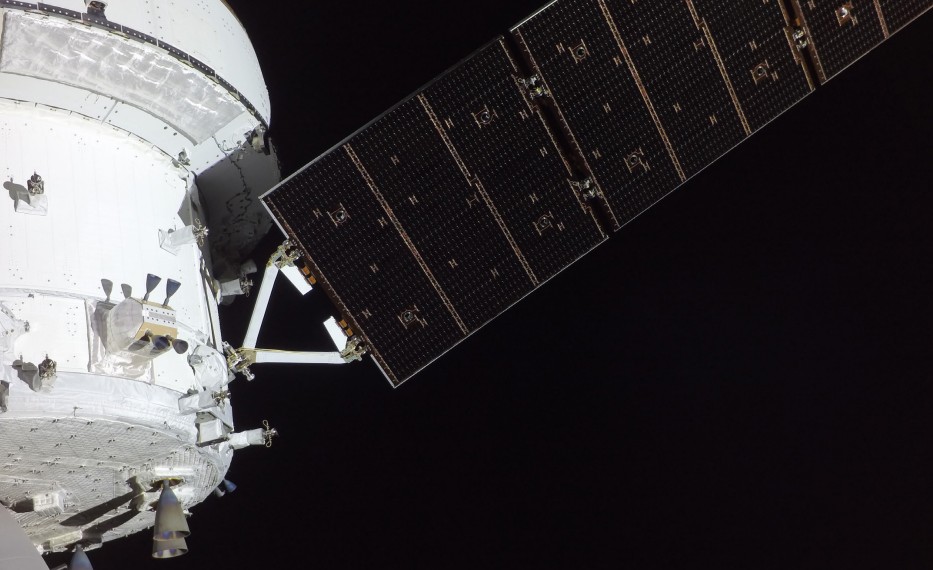
Solar cells in space have a long heritage. Vanguard 1 became the world’s first solar-powered satellite in 1958, and remains in orbit today, the oldest artificial object to do so. Solar cells also made it to the Moon in 1969, to the surface of Mars in 2004 and orbited Jupiter in 2016.
Try Premium for just $1
- Full premium access for the first month at only $1
- Converts to an annual rate after 30 days unless cancelled
- Cancel anytime during the trial period
Premium Benefits
- Expert industry analysis and interviews
- Digital access to PV Tech Power journal
- Exclusive event discounts
Or get the full Premium subscription right away
Or continue reading this article for free
For most of the decades since, space photovoltaics has been a boutique trade. Cells have been made in tiny numbers for a handful of very expensive spacecraft, where longevity in orbit and a few extra percentage points of efficiency justified the high price.
Space PV applications have long been dominated by ‘III-V’ cells, a reference to the placing of raw material elements gallium and arsenic on the periodic table. These cells have prevailed due to their high conversion efficiencies, exceeding 32%, and ability to tolerate the extreme space environment, where radiation and temperature extremes can degrade cells rapidly and shorten their working life.
But the status quo has been turned upside down by the proliferation of spacecraft now being sent into low-Earth-orbit (LEO). Goldman Sachs forecasts that as many as 70,000 satellites will launch over the next five years.
Spacecraft launched into LEO mostly serve applications in satellite internet, remote sensing and space communications. Elon Musk’s internet network Starlink already has more than 11,000 spacecraft in orbit, while Amazon’s rival LEO network has permission to launch roughly 7,700 by 2035.
Such volumes are rewriting the arithmetic of power. A 2024 Caltech presentation estimated that a Starlink satellite costs roughly US$300,000 and draws about 6kW. At around US$100 per watt, traditional III-V cells would add US$600,000, twice the cost of the satellite. “This is why Starlink uses silicon cells at US$0.5/W,” the presentation states.
Supply matters as much as price. Commercial satellite companies need a manufacturing scale that specialist III-V producers cannot easily provide. Many such commercial satellites being sent up today are designed to last just five years, making expensive solar panels designed to last much longer even less viable.
Manufacturing remains a challenge
But manufacturing is challenging, and volumes are small, relative to the size of the burgeoning market. III-V suppliers produce about 2MW of cells a year—enough to power just a small fraction of the space industry’s current annual demand, according to venture capitalist firm Shield Capital. This shortage will only grow as the satellite industry is projected to grow by seven times by 2035, Goldman Sachs predicts.
In addition, 98% of the world’s supply of raw gallium is produced by China, which, in 2024, banned the export of gallium to the US as part of a larger critical minerals ban. It also produces more than 60% of the germanium required for III-V solar cells.
Boeing subsidiary Spectrolab has supplied the market since 1956. The manufacturer can produce nearly 500kW a year, enough to power around 30 satellites, according to its website.
New Mexico-based SolAero has supplied missions including Parker Solar Probe and Mars InSight Lander. Now owned by Rocket Lab, SolAero’s production line has an annual production capacity of more than 1MW. Terrestrial heterojunction (HJT) cells, by contrast, are produced at gigawatt scale.
Incumbents are responding to the challenges. In September, Rocket Lab released the latest iteration of its Inverted Metamorphic (IMM) Apex III-V cell, dropping the supply-constrained germanium from the design.
The cell is a mechanical and electrical drop-in replacement for heritage solar cell products, meaning customers can integrate it into existing systems without major investments to re-tool for new cell technology, according to the company. The firm says it will be able to manufacture in ‘multi-100kW volumes’ to meet growing demand.
Silicon steps into the gap
However, many believe that the headwinds facing III-V cells are creating a gap that could be filled by the massive manufacturing output of the mainstream crystalline silicon PV sector.
The question is to what extent the economics of terrestrial silicon can adapt to meet the extreme environments of LEO. Several manufacturers are working on adaptations for terrestrial silicon technologies.
In August, US-based Source Energy and the Fraunhofer Institute for Solar Energy Systems (ISE) announced a new product line for satellites based on silicon solar cells. The partners say they can manufacture panels for under US$5 per watt and deliver within six months.
They can achieve this price and speed due to using ‘shingle matrix’ manufacturing process, where cells are cut into strips and overlapped like brickwork and bonded with conductive adhesive, allowing current to flow around any area damaged by debris.
Prototypes reached 18.8% efficiency under AM0 (the sunlight spectrum outside Earth’s atmosphere) and 252W/kg. Lab test results project that the cells can retain 76% of power after seven years.
“Three features make the shingle-matrix interconnection perfect for space,” explains Najwa Abdel Latif, project manager at Fraunhofer ISE: “Resilience to localised physical damage from impacts by small objects in space, flexibility in layout and tolerance to extreme temperature differences.”
The shingle-matrix technology is compatible with wafer-based solar cells featuring front and back contacts, such as PERC or silicon HJT, without having to adapt production lines, and will also be able to integrate perovskite silicon tandems in future, she adds.
‘Moving away from the older generation’
California-based Swift Solar is looking to combine HJT silicon with perovskite technology in tandem cells both for terrestrial applications and space-based uses. The company believes the space solar sector will converge on heterojunction silicon and tandem perovskite technology, explains Geoffrey Dunican, Swift Solar’s vice president of commercial strategy and partnerships.
“We are at the nexus of moving away from the older generation silicon PERC technology and the III-V technology to meet somewhere in the middle. HJT and tandem perovskite are going to really be high volume, minimal cost and better performance,” he says.
Swift Solar’s technology has flown on three space flights, with “essentially no degradation” after around nine months in space, Dunicane says. “We’re in the process of working with the commercial sector as well as the federal sector on additional test flights and getting cells tested,” he adds.
In March, the firm acquired manufacturing assets and intellectual property of European solar manufacturer Meyer Burger, putting the company on track to operate gigawatt-scale solar manufacturing in the US, from 2028.
Fellow US-based manufacturer Ascent Solar’s thin-film modules have been tested on the International Space Station (ISS) by NASA’s Marshall Space Flight Center. Its assemblies include copper indium gallium (di)selenide cells (CIGS), inverted metamorphic multi-junction cells and various protective coatings.
In 2026, its thin-film solar modules encapsulated in fluorinated ethylene propylene (FEP)—a high-performance fluoropolymer film rather than heavy glass or standard ethylene-vinyl acetate—underwent accelerated atomic oxygen exposure testing equivalent to approximately six months of operation in the LEO environment.
Post-test inspection and electrical performance characterisation showed no measurable performance degradation, and no observable atomic oxygen damage to the encapsulated modules, according to its CEO Paul Warley.
Side effects from an experiment by NASA on Corin coatings for CIGS cells, which used a polymer layer made of colourless polyimide layer to coat and protect cells, found that the cells possibly self-annealed, or ‘healed’ damage sustained by radiation, Warley explains.
Warley is considering a further test to certify that finding. But if it is true, the company’s technology will be in a “different ballpark” to other silicon technologies, whose efficiency typically falls from around 22% to 11-14% after five years due to radiation, he says.
Initiatives in the US, China and Europe
The US government is keen to support a domestic supply of PV cells for space, and has made domestic sourcing a requirement for federal contracts. In August, the Department of Energy (DOE) Integrated Energy Systems Office (IESO) announced a grant pot totalling US$12 million for research and development (R&D) projects supporting solar panels in space applications.
University and industry research laboratories can win up to US$1.5 million for projects advancing manufacturing methods and improvements in performance of durability of solar cells, and up to US$2 million for projects focusing on manufacturing processes capable of scaling to high-volume production of module prototypes for space or near-space environments.
The DOE’s grant is an “exciting” development, according to Yao Yue Lao, senior project engineer at the Aerospace Corporation. She says that the department, along with the National Laboratory of the Rockies (NLR) (formerly known as the National Renewable Energy Laboratory, or NREL), was very much involved in developing the gallium arsenide technologies currently used in space.
“The DOE was critically involved in the previous iteration of space PV so it’s great to see the department leveraging its PV expertise to develop the PV next technology for space,” Lao says.
Meanwhile in China, JA Solar is testing HJT modules in LEO aboard a Kuaizhou-11 rocket, launched from the Jiuquan Satellite Launch Center in September.
By comparing in-orbit performance data with results from ground-based simulations, the company will assess the long-term reliability and degradation of its technology for both space exploration and commercial space applications.
“The technology will require long-term validation, but we believe it is a direction worth pursuing,” says Dr Ouyang Zi, chief technology officer of JA Solar.
The EU is also in the line-up for the solar space race. The European Space Agency (ESA) has several routes for early technology development and de-risking of new technologies for space-grade solar cells, and has expanded its budgets and financial instruments to support R&D, according to Harald Kerp, senior business developer at Dutch research organisation TNO.
However, though the EU has satellite building companies, and solar panel producers, it is lagging the US and China slightly on development of space-grade solar cells, he says.
To help fill the bloc’s gap, TNO is partnering with various companies including Airbus Netherlands GTM Advanced Structures, the European Space Agency and its lab ESTEC, European research and development institutes, material suppliers and other companies along the value chain to explore innovations in combining terrestrial PV with advanced space solar technologies.
“It is very important that the whole ecosystem will team up to get these European factories off the ground,” he says.
It plans to develop ultra‑thin HJT silicon solar cells combined with back‑contact architecture, enabling low weight, high radiation hardness and compatibility with automated, high‑precision ‘pick-and-place’ manufacturing, an approach known for its flexibility in product design and compatibility with automated industrial processes.
The organisation has produced first prototypes and completed early tests such as thermal cycling, and is now working toward scaling up manufacturing, explains Kerp.
Testing and certification: slow and expensive
Testing and certification are some of the biggest barriers for PV manufacturers entering the space solar market, according to Lao. To conduct full qualification testing in-house, a manufacturer would need expensive facilities, including large thermal‑vacuum chambers, equipment for extreme thermal cycling and infrastructure to assess outgassing, radiation, UV and atomic oxygen exposure, she says.
According to Lao, who chairs the panel of the American Institute of Aeronautics and Astronautics’ (AIAA) standard S-111A2014, which covers solar cell testing, many commercial players do not fully complete the tests, instead prioritising only the most critical risks and relying on in‑orbit performance to flag any problems.
“A lot of the testing involves characterising how panels will perform in the space environment, under radiation, UV and atomic oxygen. But if all they care about is whether the panel deploys and produces power, they might just say, ‘this is good enough, we’ll launch it and see how it performs’,” she says.
This is the strategy used by Musk’s SpaceX, according to many commentators. “They simply started with taking earth-grade cells and putting them on the satellites. They have their own launch capacity, so it’s easy for them to do frequent launches to test a new batch of cells,” Kerp says.
Testing also has to be adapted to the specific challenges of space, Lao explains. For example, radiation testing for new solar cell materials, such as perovskites, is still at an early stage, because their behaviour under different particle energies does not map cleanly onto the long‑established standards used for crystalline silicon and III–V space cells.
In addition, module integration needs its own tests for issues, such as stack design and adhesives, which will not outgas or fail under extreme thermal cycling. While commercial companies are now focused on solving these module‑level engineering problems, university research has only partially progressed beyond cell‑level testing, she says.
Gigawatts in orbit
The trend towards silicon could face even steeper challenges in the near future. If talk of power grids in space to supplement power from degrading solar cells, and space-based data centres come to fruition, gigawatts of demand in space will be created levels “unheard of” in the current megawatt space solar market, Lao says.
“Space data centres would mean an insane increase in power—around a three orders of magnitude jump,” she says.
The solar arrays on data centres would need to be really large to make up for the lack of efficiency of silicon cells, she points out. And the larger the arrays are, the higher the chances that they will be hit by space debris, she adds.
“If you’re going to scale up to that level, you’re going to have a lot of new challenges to consider,” she says.
Dunican is already talking to customers about the potential for space-based data centres. “We’re optimistic, but also cautious that there’s a lot of work that has to be done collectively as an industry to see the type of scale that we’ve been seeing in headlines about this,” he says.
A takeover, or a new market?
Despite those challenges, commentators largely agree that silicon will become mainstream for space applications in LEO, likely within the next five years.
“I would not have predicted when I first joined aerospace 12 years ago how big the space market would become,” says Lao.
However, conditions in deep space are even more extreme than in LEO, making adaptations from silicon an unlikely contender for missions further from Earth. The solar panel for the ESA’s Juice mission to collect data from Jupiter’s moons was tested for its ability to withstand -230 degrees Celsius to +110 degrees Celsius.
The real story is therefore not silicon replacing III-Vs, but the LEO boom creating a new market that wants cells that are cheaper, faster to procure and made in far greater volumes. Whether that market is met depends on how well terrestrial technologies can be adapted for orbit.