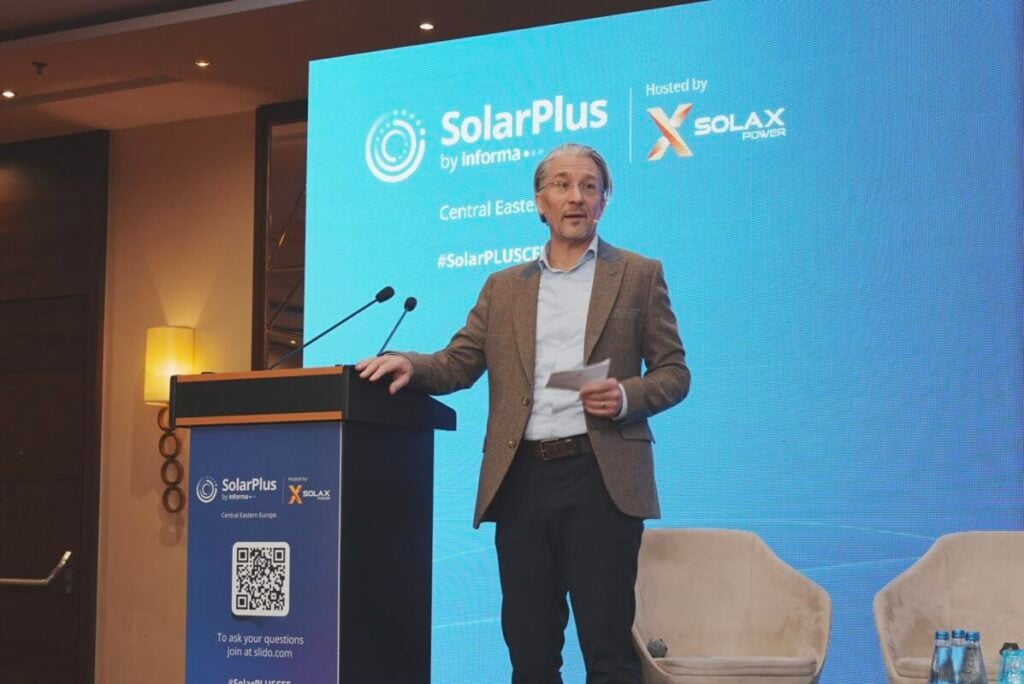
This year’s SolarPlus Central Eastern Europe event, hosted by PV Tech this week in Warsaw, took place against the backdrop of encouraging levels of solar deployment across the region.
The latest figures from SolarPower Europe show that market leader Poland installed almost 2.5GW of new solar PV capacity in the first half of the year, a 40% year-on-year increase, while Romania established itself as one of the most “dynamic” markets in the region, adding 1.8GW of new solar capacity and entering the EU’s top ten for solar deployments for the first time.
Try Premium for just $1
- Full premium access for the first month at only $1
- Converts to an annual rate after 30 days unless cancelled
- Cancel anytime during the trial period
Premium Benefits
- Expert industry analysis and interviews
- Digital access to PV Tech Power journal
- Exclusive event discounts
Or get the full Premium subscription right away
Or continue reading this article for free
However, it is exactly these strong deployment figures that have raised questions for the long-term future of the sector, as the growth in operational solar PV has been mirrored by a growth in curtailment.
Figures from consultancy Argmax show that, in the first ten months of the year, curtailment from solar PV in Poland alone increased by 30.9% between 2025 and 2026, and the volume of curtailment in the first seven months of 2026 exceeded that reported in the whole of 2025. Strikingly, Lennart van Walsum, director of EMEIA and Americas at the Global Solar Council (GSC), opened the conference by delivering a presentation in which he argued that standalone solar is simply “too disruptive to the grid”.
While some of the event’s attendees argued that there remains a business case for standalone solar, others placed great emphasis on the potential of battery energy storage systems (BESS), either co-located with individual solar projects or incorporated into a developer’s broader project portfolio, as a way to minimise this risk. It is likely, therefore, that discussions about the future of solar PV in Central and Eastern Europe will be incomplete without properly considering the role that BESS has to play.
Standalone solar can work, but needs more sophisticated contracts
The event’s very first panel discussion tackled the changing business case for standalone solar, and how dynamic financial metrics such as falling capture rates and an increasing number of negative price hours have affected investment decisions in the region. Piotr Maślejak, investment director at the Amber Infrastructure Group, said on the panel that these moving parts do not completely eliminate the business case for standalone solar, but they have made it “more and more challenging”.
“Generally, we’ve been investing early on in renewable platforms, and especially in solar,” he said. “I would say that, yes there’s a case [for standalone], but it’s becoming more and more challenging when it comes to the ability to finance and the structures of the offtake contracts.”
Much of the argument in favour of standalone solar comes from the strong underlying financial metrics that have underpinned the technology in the past. While he was sceptical of the long-term future of standalone solar in the region, van Walsum noted that the low price of solar deployments means there will always be an argument to be made.
“At the end of the day, this industry is about economics; it’s the economics that will drive the energy transition,” he said. “Energy generation, by solar and by batteries, is the cheapest form of investment in energy sources in the history of humankind.”
“There is a reason why solar became so important, and it’s all in the economics,” he continued, noting that, between 2013 and 2024, the average cost of deploying a solar project had fallen from around US$1/W to US$0.10/W.
“At the GSC we predict that that will be ongoing more or less until the mid-2030s and plateau around US$0.05/W.”

Maślejak went on to say that standalone solar can be justified, but “it takes more consideration right now”, particularly with reference to contractual complexity and offtake structures. He agreed with the assessment of Ewelina Walisiak, managing director at Erste Bank Polska Corporate and Investment Banking, who said during the panel discussion that standalone solar is “not easy” but “still doable” in the region.
Paweł Kordala, their fellow panellist and head of investment office and deputy CIO at R.Power, spoke about how signing a vanilla power purchase agreement (PPA) “doesn’t work anymore”, and that this has translated to more work, and more complex work, for power procurement teams.
“The contracts have lots of negotiations now about how negative prices are being settled,” he explained. “You can introduce baskets of 1-200 hours for negative prices to be settled, so that makes it more bankable.”
“You can also try to merge the PPAs on the solar and wind side with batteries, especially as some of the traders are offering both,” he added, making reference to the latest Contracts for Difference (CfD) round in Poland that saw the government award contracts to 1.8GW of solar PV, which demonstrates that “the market is building”.
‘Storage comes to the rescue’
However, van Walsum did concede that, with the GSC expecting global cumulative solar capacity deployments to reach 8TW by 2030, “solar can no longer grow and get to these numbers on its own.”
“That is where storage comes to the rescue,” he continued. “We see that storage, now, is being picked up; we expect that between 2025 and 2035—so in the next ten years—storage will grow by eight [times] in volume, and that is driven by cost [as] the cost has fallen by more than 50% since 2022.”
The falling cost of storage mirrors that of solar in years prior, but the addition of a BESS to a generation project, or an investor putting money into a battery for the first time, requires a degree of stepping into the unknown.
This was a topic of conversation on a panel discussion on the event’s first day, and one of the panellists, Econergy business development manager Reuven Gozal told PV Tech exclusively after the panel discussion that “it’s a matter of education” as investors, operators and asset managers look to become more familiar with technologies and business models that are still relatively new to the market.
“For standalone batteries, we’ve seen significant progress over the past two years in understanding the business case and getting market participants comfortable with the technology,” he explained. “The level of hybridisation is another level of complexity that the industry will need to understand, particularly when it comes to implementation and how dispatch works.”
“I think [Poland] will use the plain technology as a base, solar PV and wind, with a PPA or CfD, and the battery will be a top-up,” he added, suggesting that developers could look to invest more heavily in a technology with which they are more familiar, before moving into other complimentary technologies, as a route into co-location. This sentiment was echoed by HRH Boris Saxe-Coburg-Gotha, strategic development manager at Renalfa IPP, who discussed how the company’s Razlog project had transitioned from a standalone solar project to one co-located with BESS.
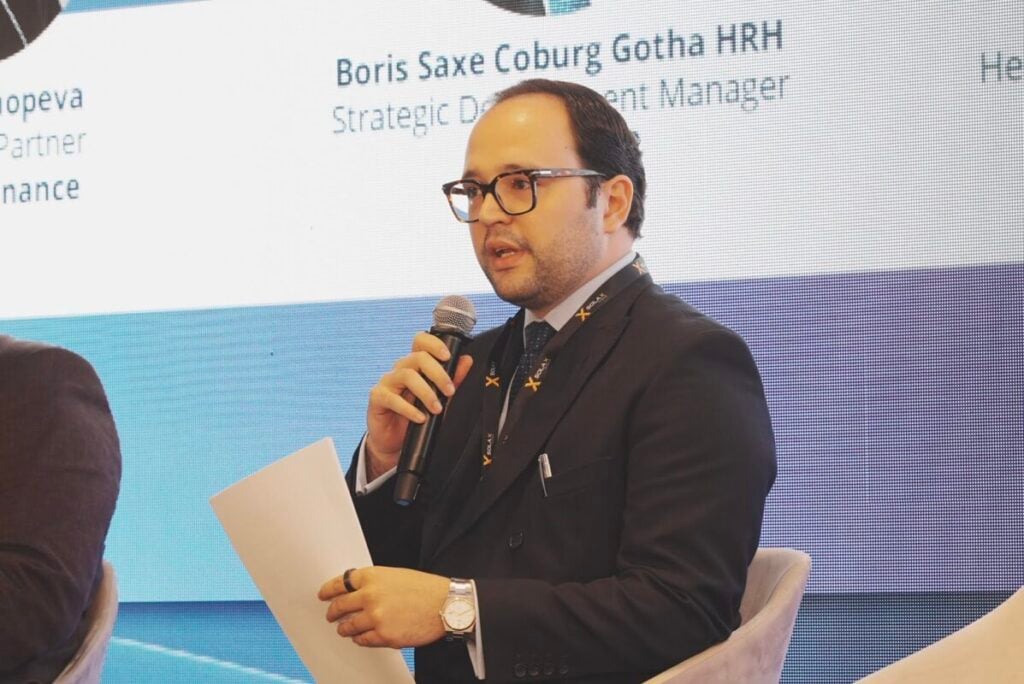
“Our plant Razlog was previously a standalone PV plant and in 2024 we introduced a 25MW BESS system—a 4-hour BESS system—under a PPA, which was the first of its kind in Bulgaria,” he explained. “At the time it was considered risky—it was the first in south-eastern Europe at that scale, and definitely the first in Bulgaria—and partially since our group company holding is consolidated in Vienna, we had access to lenders to practices and to trust from Western Europe, but the agility and versatility from the east.”
He went on to say that Renalfa’s unique position—headquartered in Western Europe but active in Eastern Europe—has helped with the delivery of other projects too. The Tenevo project, which combines 223MW of solar PV and a 311MW BESS, was brought online “from start to end” in a year, which he said is “unthinkable” in Western Europe. After the panel discussion on which he spoke, he told PV Tech that flexibility in operational approach is vital, particularly when working with multiple technologies, such as solar and storage.
The disparity between Western and Eastern Europe was picked up on during a panel discussion on the event’s second day. Radu Moldovan, head of energy at the Erste Group, said that developers in Central and Eastern Europe may not have to attract western capital in more mature markets, such as Poland, but that less well-established countries may still rely on investment from the west.
“This is an advanced market and a developed market question,” he explained. “Maybe in Poland, you’d look at this question differently than you would in Macedonia or Montenegro.”
“It’s a question of money; in smaller countries you’ll need investors simply because you need the money. In general, in Central and Eastern Europe, you’d need at least €100 billion to invest, still, in renewables production; this money is simply there in most of the countries.”
Policy landscapes in Bulgaria, Romania and Poland
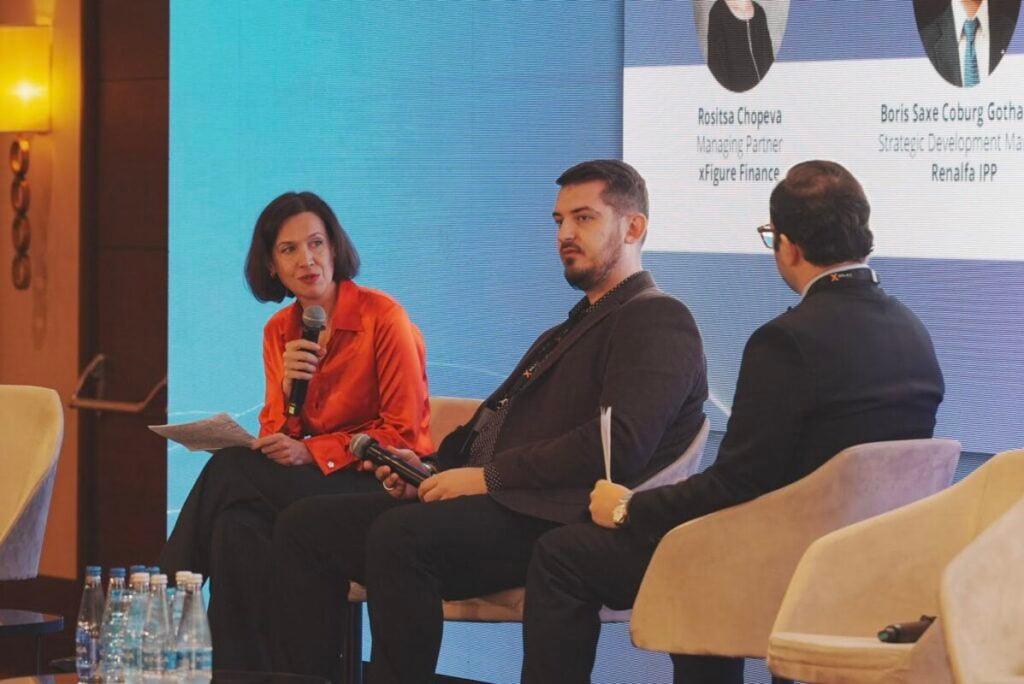
While foreign investment certainly has its place, a number of the event’s speakers discussed the role that supportive local policy can have in facilitating deployments of both solar PV and BESS in the region. Speaking on a panel discussion about Bulgaria, Rositsa Chopeva, managing partner at xFigure Finance said that the country’s “streamlined procedures” for renewable energy development have been integral to its becoming a “quiet overachiever” in the region.
“We see standalone BESS projects being developed in about a year and going online in 18-24 months,” she said. “We have good support from the grid operator, because our TSO has been able to connect to the grid close to 7GW of BESS without any issues in the grid; and still, as we speak today, we have grid capacity for new BESS projects coming.”
The policy framework is also shifting further towards supporting BESS deployments. While Bulgaria’s remaining renewable feed-in tariff contracts are expected to expire in the next five years, BESS projects are allowed to share grid capacity and electricity storage does not require a separate storage licence, which could incentivise more BESS deployments as state support for generation projects begins to diminish.
Romania, meanwhile, is a good example of how policy support can facilitate deployments in a particular subset of the solar industry. Gijsbert Huijink, co-founder and CEO at SOL renewables, said that “Romania has very favourable regulations for self-consumption,” which include the Casa Verda programme, which provided non-repayable funds covering up to 90% of system costs for homeowners who installed solar panels.
“There are already 400,000 households and small businesses that have solar panels, and this is growing by about 9,000 households a month simply because the rules and regulations are very favourable,” he added. “The average size of the installation is 11kW, so that’s around 100MW per month; let’s keep the numbers a bit simple and say times ten, that’s 1GW a year in home solar.”
However, in a move that reflects the region’s broader shift away from standalone solar towards co-located solar-plus-storage, Romania suspended the policy in both 2025 and 2026 and proposed a new €76 million scheme to facilitate the addition of BESS projects to existing solar facilities. This will work alongside a €150 million state aid scheme from the European Commission that was approved in March of this year.
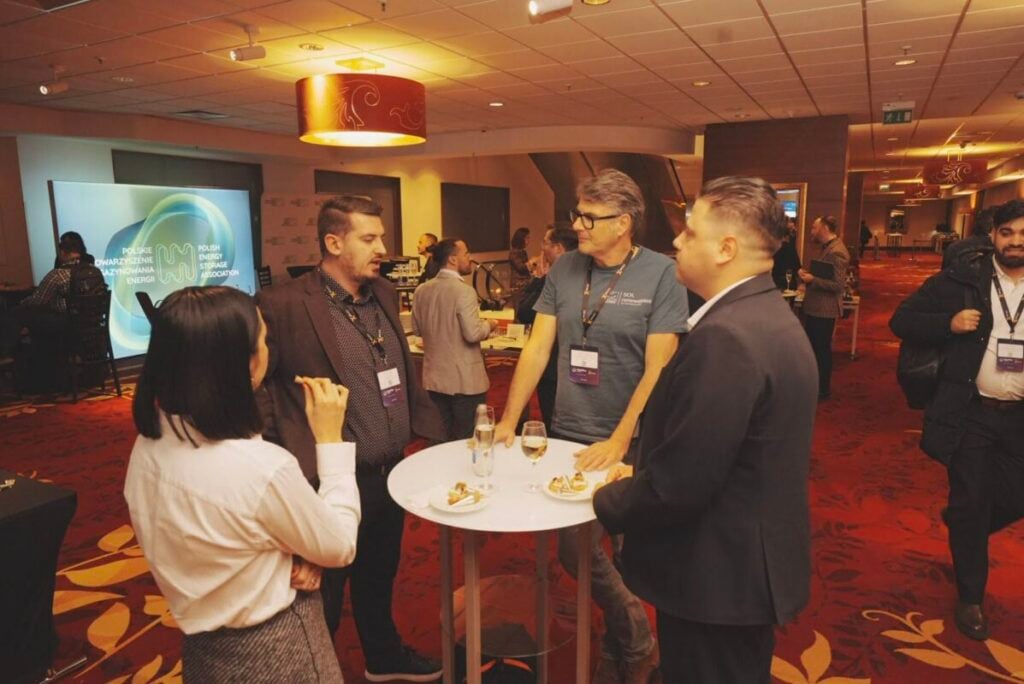
“We are planning to instal co-located storage to all of our projects that we have under construction right now [and] even those in operation,” said Marian Pavel, country manager for Romania at Rezolv Energy; the company operates utility-scale solar projects in Romania, rather than residential, but the shift towards co-location remains clear.
“At the end of the day, we’re looking to come to the market with a competitive generation product that becomes closer to the idea of stable,” he added. “We need to be in a position where we can serve our clients with electricity coming as steady as possible from our assets.”
However, this is not to say that every policy landscape in Central and Eastern Europe is without flaw. Agnieszka Kulinska, partner and head of energy in Poland at law firm Clyde & Co, called a combination of grid and zoning reforms in Poland “a bit of a deathtrap” for project developers, while fellow panellist Roman Karbowy, head of the agriPV working group at the Polish Photovoltaics Association, said that securing the necessary permits in good time in Poland has become a challenge.
“If you’re a developer and you want to develop something in Poland, you had to be in the process of developing a general plan,” he explained. “If you didn’t have a chance to be in touch with the [municipality’s] committee that was developing the general plan, you were already too late.”