
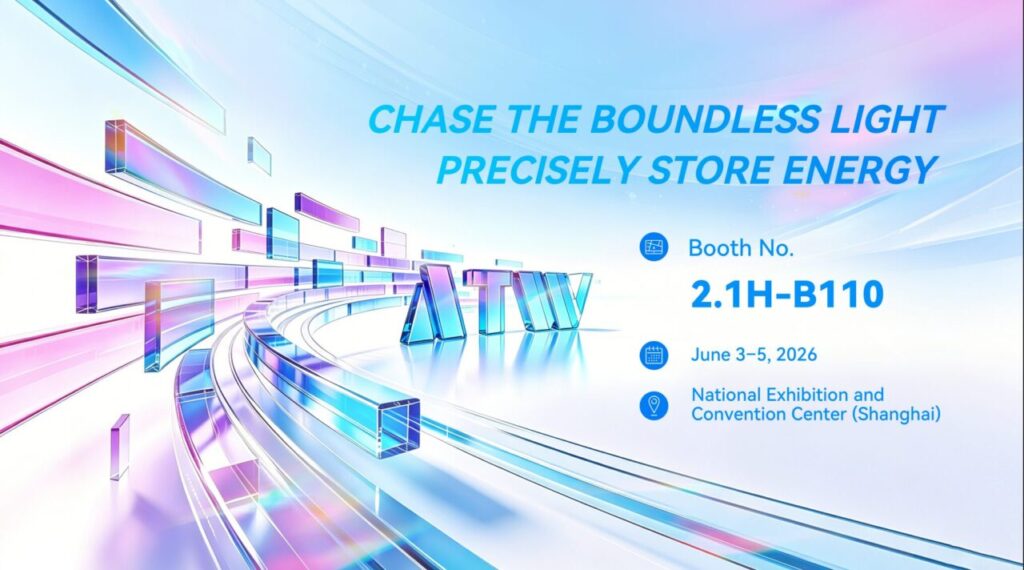
As the PV and ESS industries move beyond rapid capacity expansion into a new phase focused on manufacturing efficiency, system integration and intelligent production, equipment suppliers are also being pushed to redefine their roles within the industrial ecosystem.
Against this backdrop, ATW will use SNEC 2026 to present not only new technologies and products, but also a clearer picture of its long-term strategic transformation — evolving from a technology-leading single equipment manufacturer into an integrated turnkey solution provider for the PV and ESS industries.
For years, ATW has built its industry reputation around advanced manufacturing equipment and process-oriented engineering capabilities across photovoltaic production scenarios.
However, as global PV and ESS manufacturing becomes increasingly complex, the industry’s focus is shifting away from isolated equipment performance toward broader concerns including cross-process coordination, manufacturing compatibility, digitalized operation management, factory-wide efficiency optimization and faster production deployment.
This trend is accelerating demand for integrated manufacturing solutions rather than standalone equipment procurement and ATW’s latest strategic positioning directly reflects this industry evolution.
At SNEC 2026, the company will formally emphasize its role as an integrated turnkey solution provider, a full-chain intelligent manufacturing partner and a system-level manufacturing solutions company.
The company’s objective is no longer limited to delivering high-performance equipment at individual production stages. Instead, ATW aims to provide coordinated manufacturing ecosystems capable of supporting customers across the entire production lifecycle.
One of the central themes of ATW’s exhibition this year is “full-chain intelligent manufacturing.”
The showcase will span multiple industrial segments, including PV ingot and wafer manufacturing, PV cell manufacturing, PV module manufacturing, Perovskite technologies and ESS module, PACK and container assembly solutions.
By integrating these scenarios into a unified exhibition framework, ATW intends to demonstrate how interconnected manufacturing systems can improve production consistency, operational efficiency and industrial scalability.
The company describes this approach as a transition from “single-point equipment capability” toward “end-to-end manufacturing coordination.”
A major attraction at the company’s booth will be ATW’s immersive smart manufacturing sandbox. The installation is designed to simulate real-world intelligent factory environments and visualize industrial connectivity. Rather than presenting equipment in isolation, the sandbox aims to show how integrated systems can enable more stable and efficient manufacturing operations across the PV and ESS value chain, the presentation aligning with broader industry trends toward digital factories and intelligent manufacturing infrastructure.
During the exhibition, ATW will also unveil several new products targeting core PV and ESS manufacturing processes. While continuing to strengthen its equipment technology foundation, the company is increasingly positioning product innovation within a larger system-integration framework, reflecting a growing industry consensus that future competitiveness will depend not only on individual equipment performance, but also on the ability to coordinate complete manufacturing ecosystems efficiently.
In addition to product and technology displays, ATW plans to host a series of expert dialogue sessions during the event.
Several discussions will be livestreamed through multiple online platforms, extending engagement beyond the exhibition floor itself, the company explaining that these sessions are intended to facilitate broader industry exchange around the next phase of smart energy manufacturing development.
ATW’s upgraded positioning comes at a time when the global clean energy manufacturing sector is undergoing structural change. As competition intensifies, manufacturers are increasingly prioritizing lower coordination costs, integrated production systems, intelligent factory management, operational flexibility and scalable manufacturing efficiency.
In this context, the role of equipment companies is also evolving — from standalone hardware suppliers toward long-term manufacturing partners capable of delivering integrated industrial solutions.
