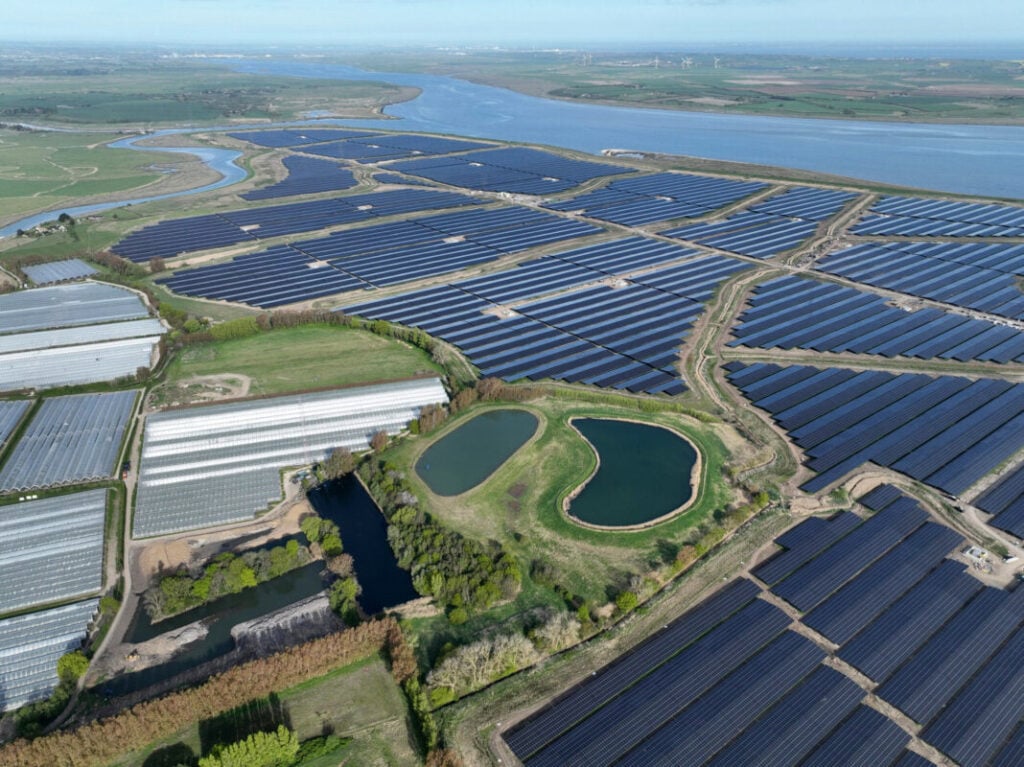
A proposed 840MW PV project in southern England that would have become the country’s largest has been turned down by the UK government.
The decision to reject the Botley West solar plant in the county of Oxfordshire is the first ever ‘no’ handed down to a solar nationally significant project (NSIP), a class of large-scale projects in England that requires national government consent.
Try Premium for just $1
- Full premium access for the first month at only $1
- Converts to an annual rate after 30 days unless cancelled
- Cancel anytime during the trial period
Premium Benefits
- Expert industry analysis and interviews
- Digital access to PV Tech Power journal
- Exclusive event discounts
Or get the full Premium subscription right away
Or continue reading this article for free
It comes a fortnight after another huge project, the 800MW Great North Road solar plant, was granted a development consent order (DCO), as reported by our sister website Solar Power Portal.
The Botley West plans, brought forward by German-headquartered Photovoltaic Development Partners (PVDP) on behalf of IPP SolarFive, would have seen ground-mounted solar PV panels installed across about 2,000 acres of land around the city of Oxford.
The refusal is in line with the recommendation of the Examining Authority.
The DCO route to development has, until now, been a relatively safe bet, given the current Labour government’s pro-solar approach. According to the refusal letter, issued by Baroness Margaret Curran, on behalf of the UK’s energy secretary, Miatta Fahnbulleh, the site was declined on several grounds.
Botley West would have caused “substantial” harm to designated Green Belt land; “significant” adverse landscape and visual impacts; “serious” harm to heritage assets; aviation safety concerns; failure to properly apply the mitigation hierarchy; inadequate landscape and environmental assessment evidence; and loss of “best and most versatile” (BMV) land.
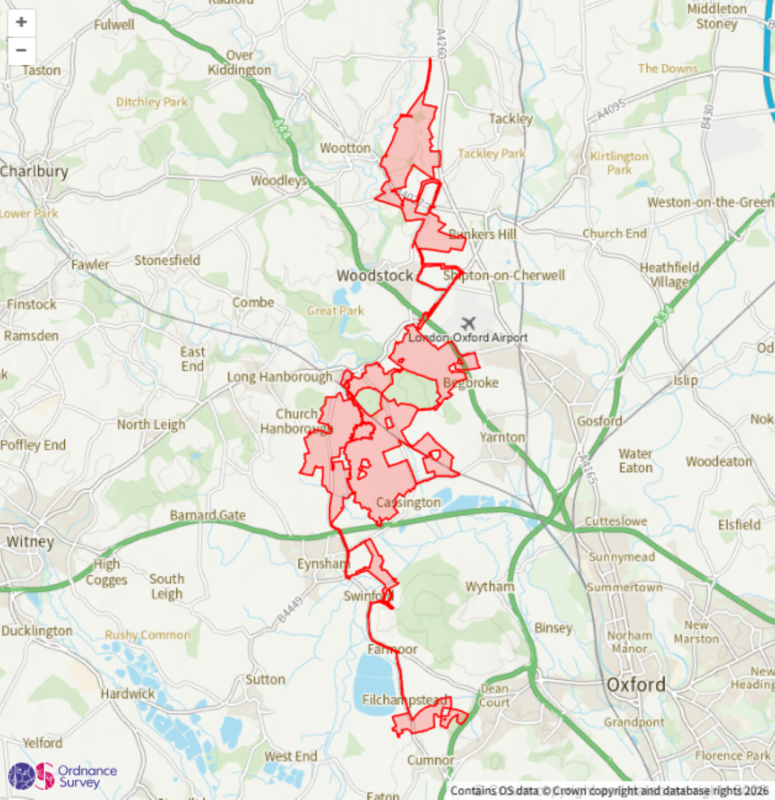
The solar plant would have covered about one-fifth of the Blenheim Estate, considered to have an adverse impact on the Blenheim Palace World Heritage Site.
The mitigation hierarchy is written into the planning process to ensure that, even if designated Critical National Priority (CNP), as solar plants are, developers make an effort to counterweight any negative effect.
According to the decision letter, the Examining Authority found that PVDP had promoted the proposed development as CNP, but in doing so had determined that its impacts were “inevitable and acceptable”, so hadn’t “appropriately applied the mitigation hierarchy”, an approach that was “systemic from the outset”.
Regarding the aviation safety issue, Oxfordshire hosts several flying schools and the London Oxford Airport (LOA). Safety issues raised by Oxford Aviation Services Limited were emergency landing areas, glint and glare, bird strike and heat-induced turbulence.
The Examining Authority requested, among other things, that thermal plume modelling be submitted. PVDP submitted the reports late, which the Examining Authority said “demonstrated that the applicant failed to apply the mitigation hierarchy properly, overlooked or ignored the critical information from a key stakeholder and put forward a poorly designed scheme from the outset”.
Response to the refusal
Trade association Solar Energy UK pointed out that solar power plants are planned or safely operating at Blackpool, Teesside, Bristol, Glasgow, Belfast, Southend, Edinburgh and Newquay airports.
While PVDP did not put the same effort into its application that peers like Elements Green, developing the approved 800MW Great North Road project, did, the refusal is broadly a blow to the industry.
Chief executive of Solar Energy UK Chris Hewett said the decision is “regrettable”.
He added: “We all know the desperate need for cheaper power and to push expensive gas off the grid – and that’s exactly what solar farms deliver. Moreover, economies of scale mean that the largest developments, such as Botley West, supply the cheapest power.”
The decision, which was delayed twice, comes hot on the heels of the UK government’s recent approval of the Jackdaw gas field in the North Sea and comments by energy minister Michael Shanks that were framed by the press as a net zero climbdown.
Hewett did say, however: “Nevertheless, there are multiple gigawatts of consented capacity waiting in the wings. Next year will no doubt see more solar farms constructed than ever before, helping to lower prices by pushing gas off the grid. This is still a very positive time for the sector.”