As utility-scale solar projects evolve, higher-current PV modules, varying site conditions, and demanding construction schedules are placing greater emphasis on electrical balance-of-systems (EBOS) design.
For EPCs and developers in Australia, labour costs, conductor material costs and installation efficiency are key considerations. Traditional field-assembled wiring requires extensive cable measuring, cutting and crimping, increasing reliance on skilled labour and the risk of installation errors.
Try Premium for just $1
- Full premium access for the first month at only $1
- Converts to an annual rate after 30 days unless cancelled
- Cancel anytime during the trial period
Premium Benefits
- Expert industry analysis and interviews
- Digital access to PV Tech Power journal
- Exclusive event discounts
Or get the full Premium subscription right away
Or continue reading this article for free
Pre-assembled wiring solutions help address these challenges by moving more assembly and quality control into the factory. However, optimising project costs and execution also requires appropriate power-collection designs, with conductor configurations and installation methods considered early in the engineering process.
LYNX PLUS: simplifying power collection with trunk bus solutions
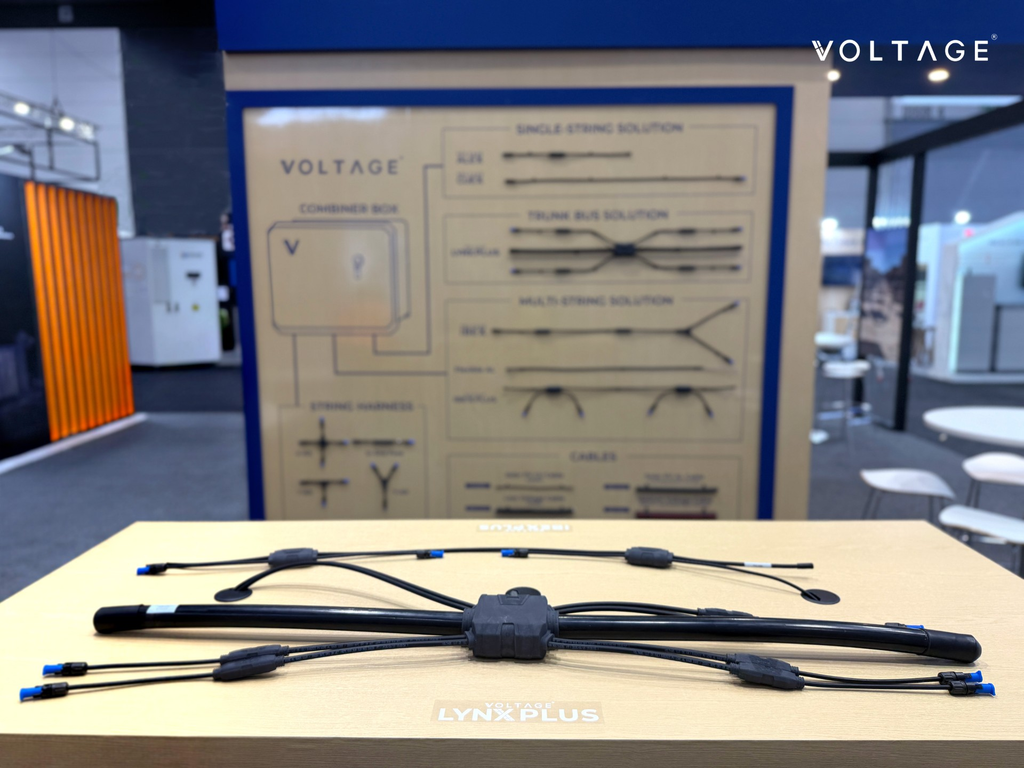
Voltage Energy’s LYNX PLUS is a pre-assembled trunk bus solution that can reduce reliance on conventional combiner boxes in suitable project configurations. This approach can simplify DC layouts and reduce equipment and installation requirements. With the LYNX PLUS Cluster Solution, projects can also avoid underground trenching for the trunk bus, enabling above-ground installation and easier access for operation and maintenance (O&M).
However, different project layouts and electrical requirements may call for alternative approaches. For projects using combiner boxes, flexible conductor configurations and efficient multi-string solutions become equally important.
IBEX PLUS: flexible aluminium for multi-string solutions
As PV module current ratings increase, EPCs must balance conductor capacity, material costs and installation requirements. Larger copper conductors can accommodate higher currents but may also increase material costs. Voltage Energy’s IBEX PLUS addresses this challenge through a pre-assembled multi-string solution that combines copper and flexible aluminium conductors.
Designed for the mid-capacity range (70–168A), its slim four-port configuration supports different combinations of copper and flexible aluminium conductors to accommodate project-specific current requirements. Flexible aluminium conductors can be upsized to handle higher currents, while compatibility with combiner boxes supports different DC power collection designs.
Combiner box: expanding flexibility in power collection
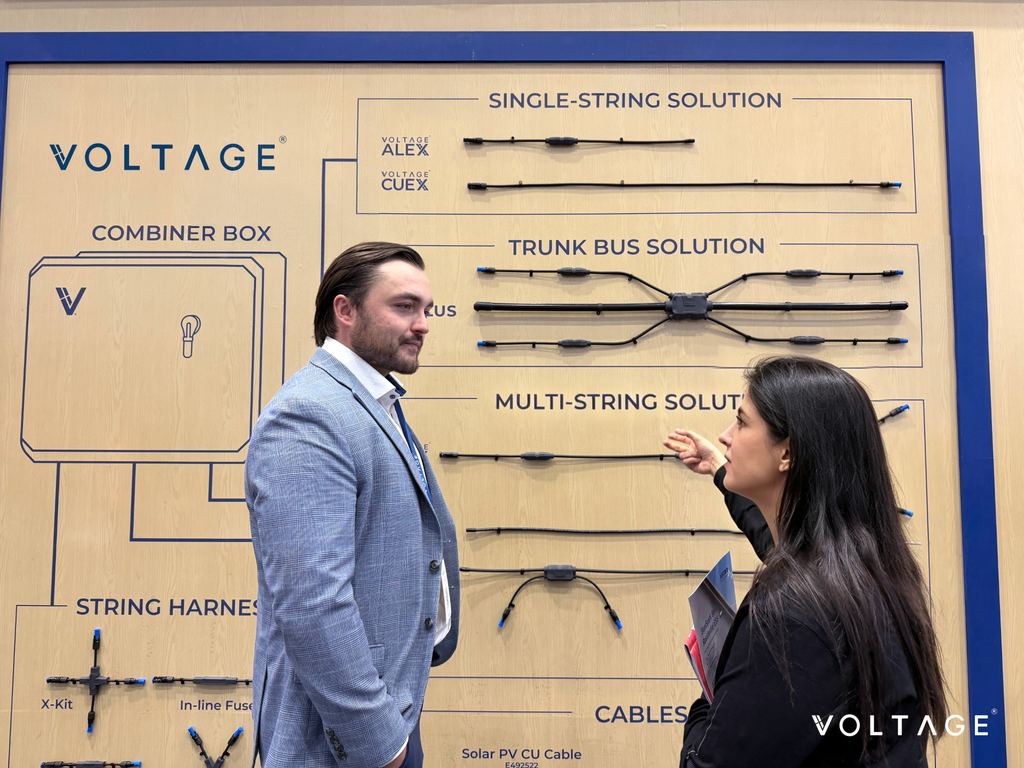
To support projects requiring combiner boxes, Voltage Energy is expanding its EBOS portfolio with a new combiner box that consolidates multiple PV string outputs into a single output for connection to an inverter.
The combiner box accommodates up to 16 string inputs and features parallel output conductors. This arrangement maintains access to fuses for maintenance, while parallel conductor configurations accommodate different DC feeder and conductor sizing requirements.
Paired with IBEX PLUS, the Combiner Box offers an alternative power collection configuration alongside the trunk bus approach provided by LYNX PLUS.
From wiring products to system-level EBOS solutions
When wiring assemblies, power collection equipment and feeder cables come from different suppliers, EPCs must manage multiple interfaces, material specifications and installation requirements across the DC collection path.
Voltage Energy’s system-level EBOS solutions bring together pre-assembled harnesses, power collection equipment and DC feeders through coordinated engineering. Project-specific wiring packages, clearly labelled connections and compatible conductor configurations can help reduce field decisions, installation errors and rework.
For Australia’s utility-scale solar projects, where regional workforce constraints and diverse site conditions add complexity to construction, early EBOS design decisions become particularly important. Aligning power collection strategies with project requirements from the outset supports more predictable project execution.
Learn more at the company’s new website.