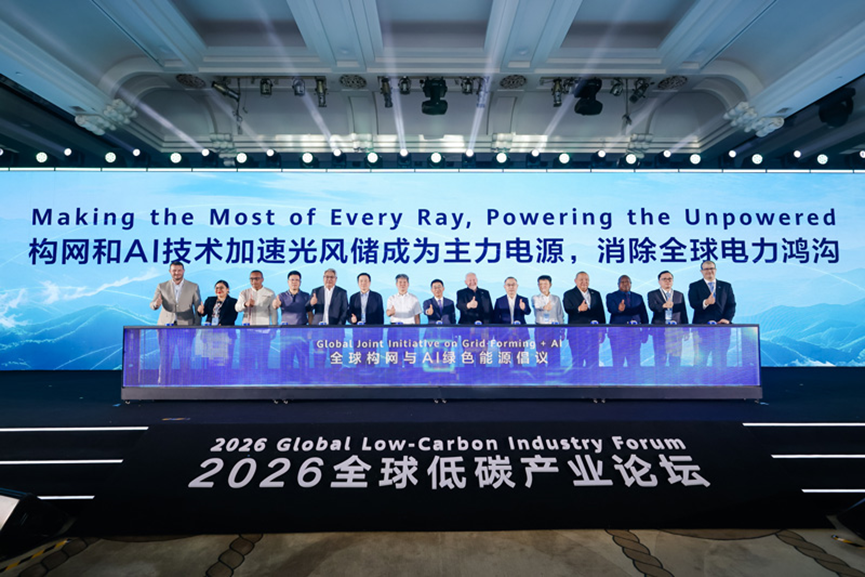
The 2026 edition of the Global Low-Carbon Industry Forum has been held in Shenzhen, under the theme of “Making the Most of Every Ray, Powering the Unpowered.” The event was co-hosted by the Global Solar Council, the China Energy Research Society, the World Alliance for Low Carbon Cities, the Tsinghua Shenzhen International Graduate School and Huawei Digital Power and brought together industry leaders, top scholars, grid operators and company representatives from around the world to explore how integrating grid-forming and AI technologies can reshape the global energy landscape.
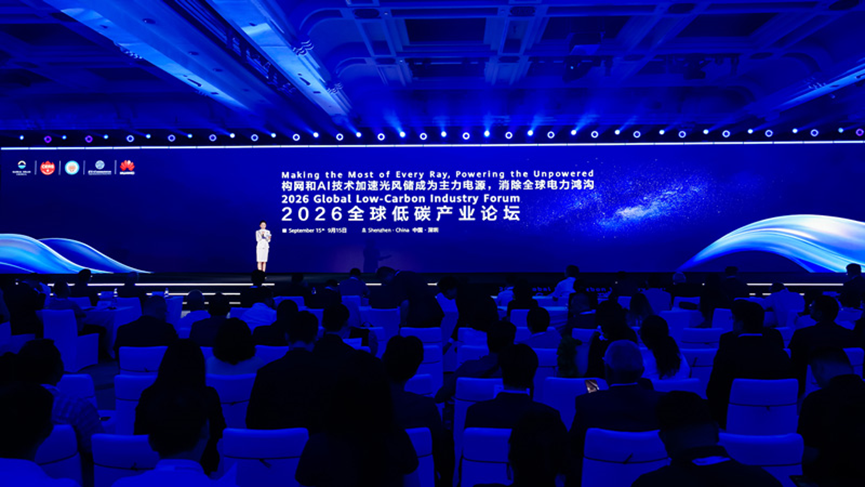
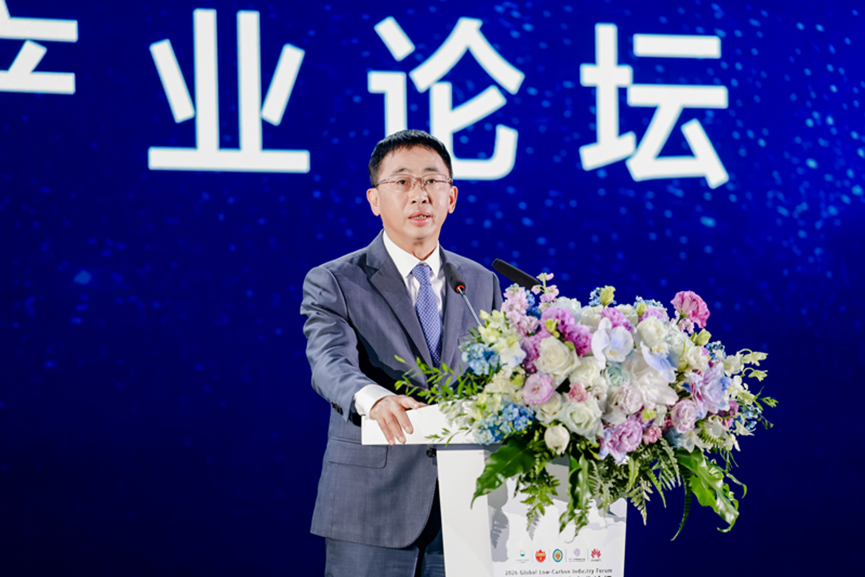
Hou Jinlong, Huawei board director and president of Huawei Digital Power, stated in his opening speech that decarbonization, electrification, digitalization and intelligence have become the long-term trends of global energy transition. However, there is no one-size-fits-all solution to the energy transition, with different regions and economies facing varying and structural complex challenges. In regions with high renewable energy penetration, the focus is on system safety. In emerging economies, the focus is on ensuring power supply and reducing costs, whereas in underdeveloped regions, the focus is on inclusive access to electricity. The integration of grid-forming technology with AI enables renewable energy to achieve low cost, high reliability, sustainability and supply security. This provides a brand-new, replicable and feasible solution for energy transition. Huawei Digital Power is committed to working with all partners to promote the vision of “grid forming everywhere and AI for everywhere” and building a healthy, prosperous and sustainable digital power industry ecosystem.
The global energy landscape is undergoing a profound paradigm shift. The Global Solar Council representative shared insights in his keynote speech: The world is moving from energy dependence on fossil fuels to energy independence based on local solar and energy storage resources, as uncertainties become increasingly frequent. He emphasized that technological revolution has made this transformation possible, and the deep integration of solar PV and energy storage will be the key to building a more resilient and sustainable power system.
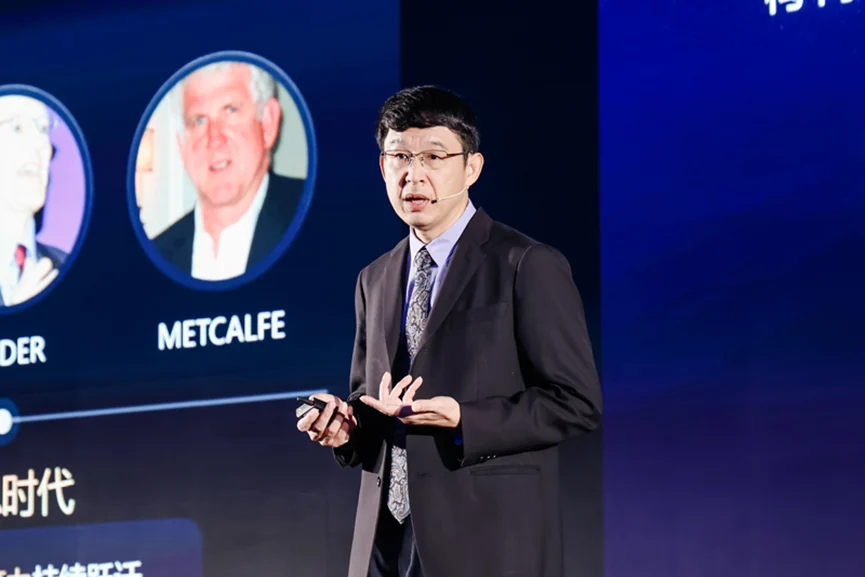
Wang Xiongfei, Xinghua Chair Professor at Tsinghua University and IEEE Fellow, analyzed the new challenges posed by GW level artificial intelligence data centers (AIDC) in his speech. He pointed out that future data centers should not only be large power consumers, but also become friendly loads that can sense the grid status, proactively support the grid and possess a certain level of fault ride-through capability. He proposed a chip-to-grid collaborative design concept, emphasizing that key technologies such as grid-forming energy storage, optimization of UPS control and coordinated workload shaping can be used to enable friendly interaction between data centers and power grids, ensuring the stable operation of future computing infrastructure.
Patrick Clerens, Secretary-General of Energy Storage Europe, delivered a keynote speech titled “European Energy Storage Markets: Market Mechanisms and the Development of GFM Services.” He introduced the evolution of the energy storage market mechanism in the EU, driven by security of supply needs and the reform of electricity market design. He pointed out that as the share of renewable energy continues to rise, the system inertia decreases, making grid-forming capability a rigid demand. He elaborated on Europe’s market-oriented exploration of grid-forming services such as synthetic inertia and fast frequency support, also noting that countries like Germany have started to auction grid-forming capability, opening up new business models and valuable opportunities for energy storage.
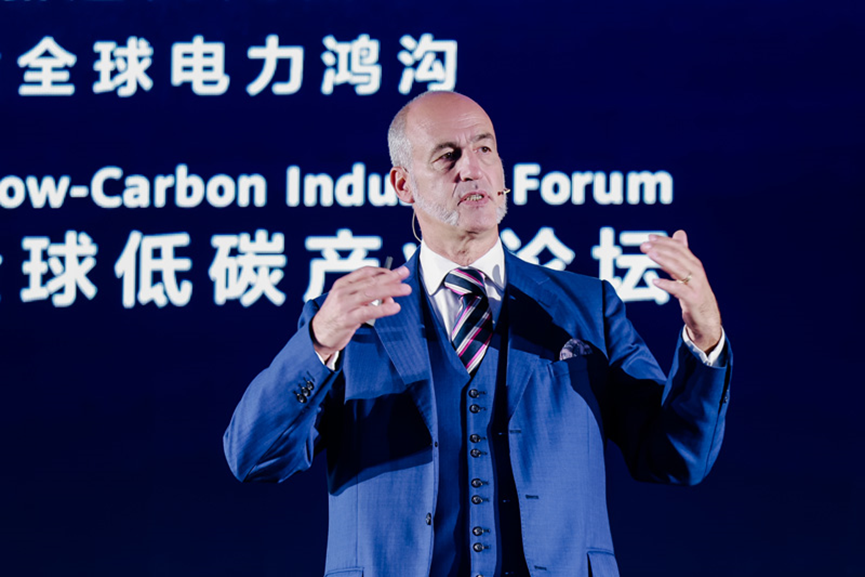
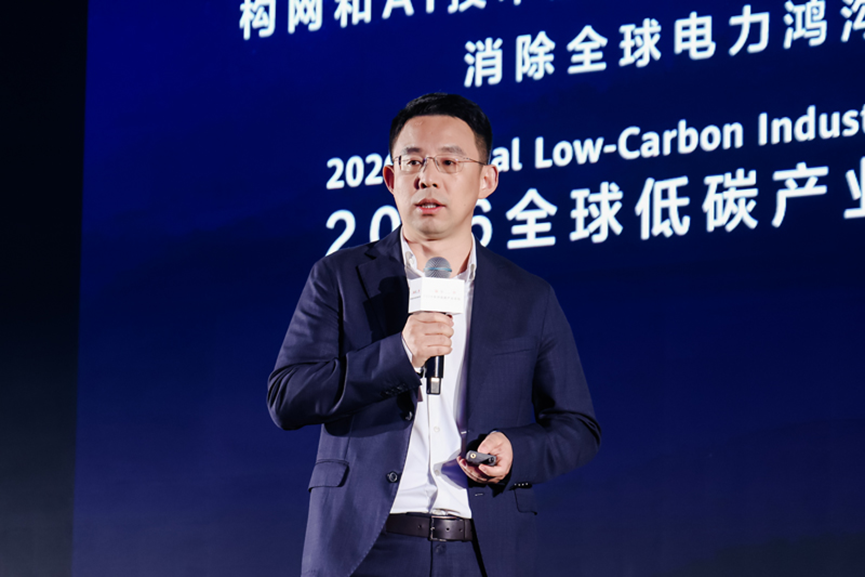
Dr. Liu Yunfeng, Chief Scientist at Huawei Digital Power, delivered a speech titled “Grid Forming + AI: Powering the Energy Internet’s Silicon Evolution”, pointing out that power systems are transitioning from “electromagnetic-mechanical systems” to “silicon-based programmable systems,” and the stability of systems is shifting from a “natural attribute” to a “designed capability.” He introduced Huawei’s end-to-end verification system in the grid-forming technology field and emphasized that AI is not an optional feature for the Internet of Energy, but rather an essential capability for complex systems to achieve autonomy. Huawei’s FusionSolar Agent, with its four-layer AI architecture comprising computing foundation, electric power models, intelligent equipment and agents, redefines the intelligent management of power plants throughout their lifecycle, advancing the comprehensive intelligence of solar PV, wind, and energy storage systems.
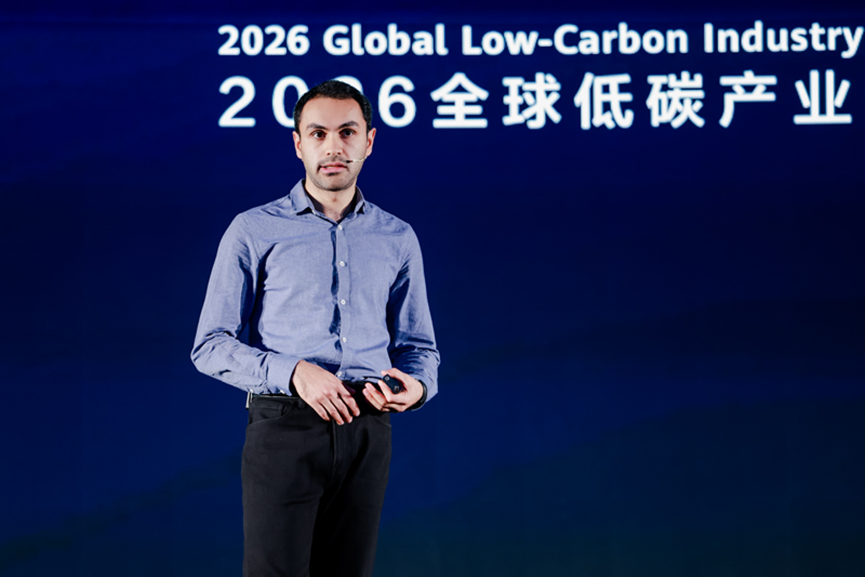
Pouya Mostashar, Research Associate at Fraunhofer IWES, shared the results of Europe’s first megawatt-level grid forming test, which was conducted in collaboration with Huawei. The test strictly followed the world’s first comprehensive grid-forming test guidelines released by VDE FNN in Germany, results showing that the energy storage systems performed excellently in key scenarios such as inertia response, overload capacity and islanded operation. He noted that this test not only proved the excellent applicability of grid-forming technology in battery energy storage systems, but also laid a solid foundation for the standard certification and commercial trading of grid-forming capability.
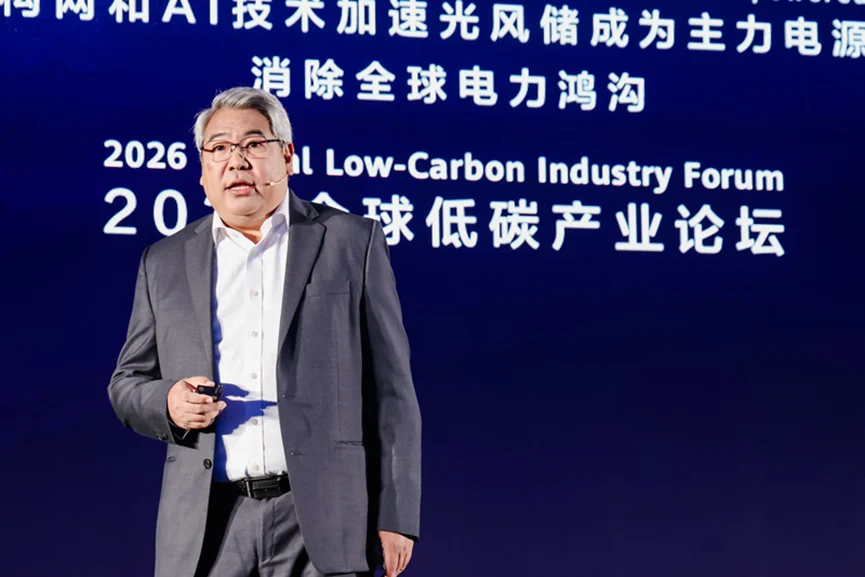
Antonio M. Abuel Jr., Chief Project Officer at Terra Solar Philippines, introduced the world’s largest project integrating solar PV and energy storage. The MTerra Solar Grid-Forming PV+ESS project includes a 3.5 GW PV system and a 4.5 GWh grid-forming energy storage system. In August, the Phase 1 – 2.5GWp PV and 3.3GWh of the BESS was completed and commissioned and has now commenced commercial operations. The project will deliver stable and clean power for some 2.4 million households and reduce carbon emissions by more than 4.3 million tons each year. He emphasized that the value of the project lies in proving that large-capacity PV+ESS systems can be considered a reliable and dependable stable source of power to the Philippine grid, creating a replicable model to accelerate the global clean energy transition.
Concluding the event, the co-hosts and attendees from around the world jointly launched the ‘Global Joint Initiative on Grid Forming & AI’, uniting the entire industry to accelerate the large-scale application and standardization of grid-forming and AI technologies. Technological innovations will be leveraged to address energy imbalances and deliver green, stable and affordable electricity to everyone, especially the nearly 700 million people worldwide without access to electricity. Concrete actions will be taken to fulfill the mission of bridging the global electricity gap. Driven by grid-forming and AI technologies, a green, stable and intelligent energy system powered by renewables such as solar, wind and storage is rapidly taking shape.