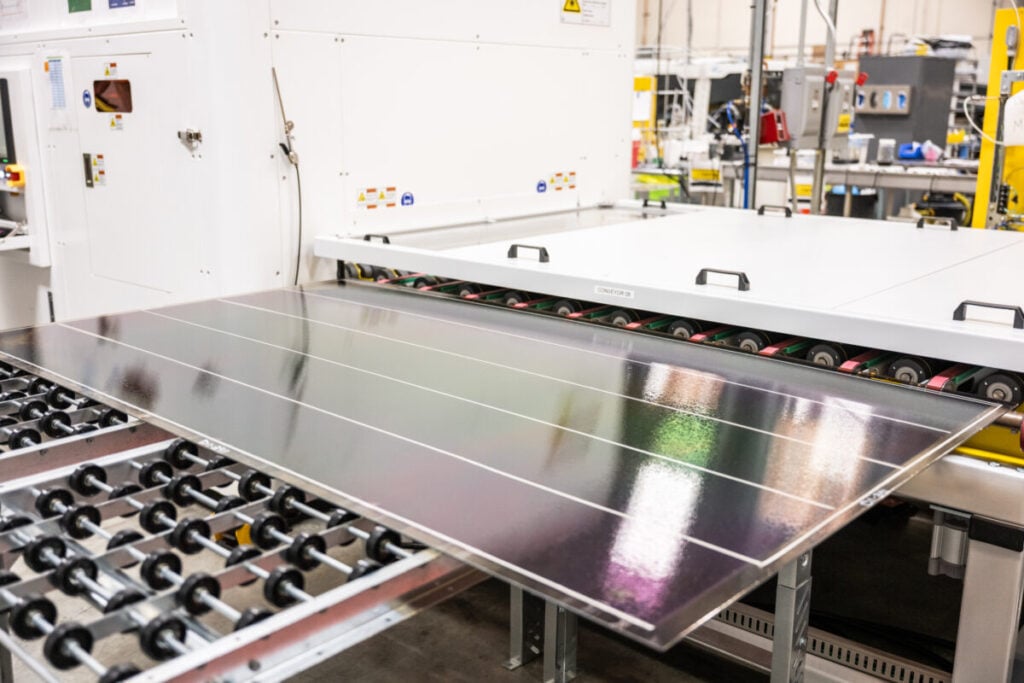
US solar technology company Caelux has signed an agreement with Indian PV manufacturer INA Solar to produce 3GW of perovskite-silicon ‘hybrid tandem’ modules.
Under the five-year deal, Caelux will integrate its proprietary energy-producing glass technology with INA Solar’s n-type TOPCon modules.
Try Premium for just $1
- Full premium access for the first month at only $1
- Converts to an annual rate after 30 days unless cancelled
- Cancel anytime during the trial period
Premium Benefits
- Expert industry analysis and interviews
- Digital access to PV Tech Power journal
- Exclusive event discounts
Or get the full Premium subscription right away
Or continue reading this article for free
By applying Caelux’s perovskite-based glass layer, the aim is to increase energy density and reduce the levelised cost of electricity (LCOES) of INA Solar’s modules, boosting their efficiency to an anticipated 29%
The two companies said in a statement they would work together on technology validation, manufacturing readiness and applicable regulatory approvals, including the requirements of India’s Approved List of Models and Manufacturers (ALMM) domestic production programme. The aim is begin commercial production by 2028.
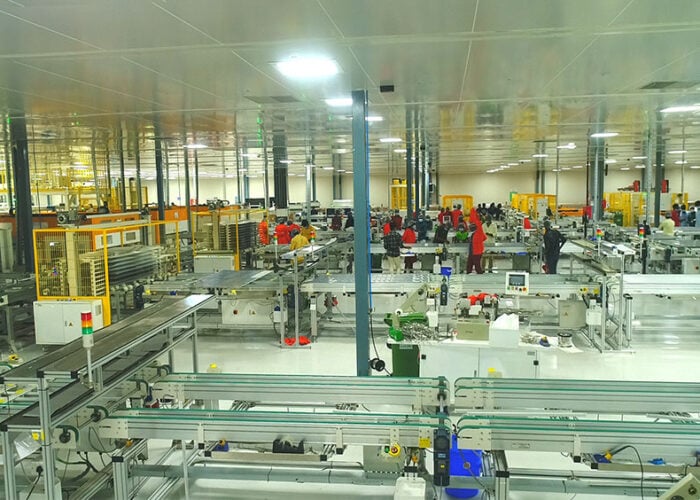
INA Solar operates three solar module manufacturing facilities in Jaipur, Rajasthan, with a combined annual capacity of 5.5GW. The company is also developing a 4.5GW TOPCon solar cell manufacturing facility.
Vikas Jain, managing director of INA Solar, said: “The partnership strengthens our focus on building an integrated solar manufacturing ecosystem. We remain committed to innovation, advanced technology and delivering high-performance solar solutions.”
Vish Iyer, Caelux’s managing director for India and West Asia, said: “Integrating energy producing glass with TOPCon technology represents a significant step towards the Indian market benefiting from ultra-high power density solar modules.”
The deal is one of four Caelux has now struck with Indian producers this year, along with one the company agreed in April with US producer Solx.
As Caelux’s CEO Scott Graybeal explained to PV Tech in an August interview, the company’s favoured route to market is to partner with existing crystalline silicon PV producers, adding efficiency and value to their modules by integrating its perovskite glass technology into their production lines. This approach is quicker and less costly than incorporating perovskite technology at the cell level, Graybeal said, predicting that by the 2030s, all solar modules would contain a perovskite element as crystalline silicon reaches its theoretical efficiency limitations.
Commenting on the latest commercialisation deal, Graybeal added: “Our partnership with INA Solar is an important step towards bringing next-generation solar technology into commercial production at scale in India. With this agreement, Caelux’s global contracted volume with module manufacturers exceeds 25 GW validating Caelux’s technology and market approach.”