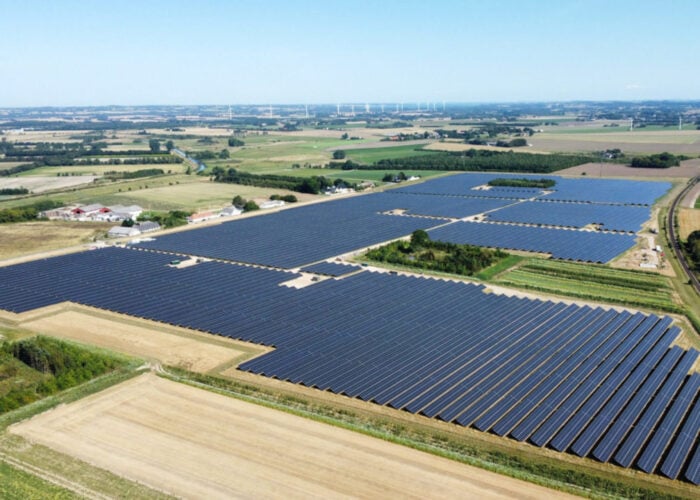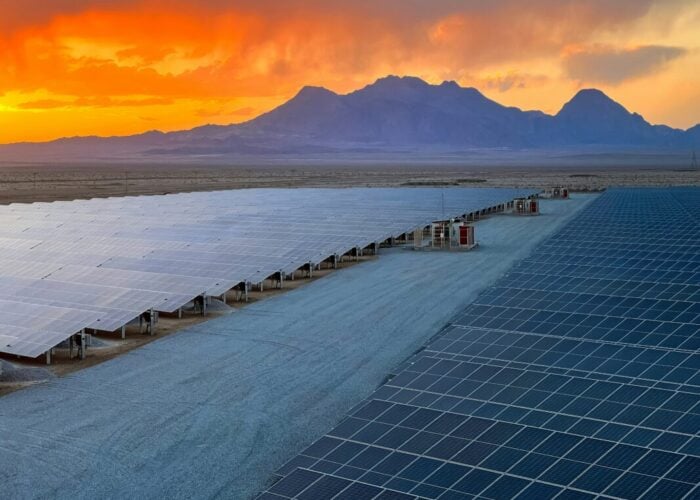
Solar and battery storage projects have pushed Australia’s National Electricity Market (NEM) connection pipeline up 43% in a year to 80.9GW, overtaking the grid’s existing 77GW of capacity for the first time.
The figures come from the Australian Energy Market Operator’s (AEMO) connections scorecard for Q3 2026, which tracks generation and storage projects from application through to full output. Solar features in almost a quarter of the capacity in the process, through hybrid solar and battery storage projects (19%) and standalone solar (5%).
Try Premium for just $1
- Full premium access for the first month at only $1
- Converts to an annual rate after 30 days unless cancelled
- Cancel anytime during the trial period
Premium Benefits
- Expert industry analysis and interviews
- Digital access to PV Tech Power journal
- Exclusive event discounts
Or get the full Premium subscription right away
Or continue reading this article for free
James Lindley, AEMO’s group manager for onboarding and connections, said: “A strong pipeline is encouraging, but what ultimately matters for consumers is getting viable projects connected and operating in the power system.”
Grid-scale battery storage accounts for 55% of the pipeline, with wind at 15%, hydro at 5% and gas at 1%.
Seven projects totalling 1.3GW completed commissioning and reached full output during the quarter, including two solar PV plants in New South Wales with a combined 225MW.
AEMO also approved applications for four solar hybrid projects totalling 0.4GW and one 0.3GW solar project. The market operator did not name the individual projects.
Of the 25 new connection applications AEMO received in the quarter, 0.8GW came from solar projects paired with battery storage. AEMO said battery storage, followed by solar, were the dominant technologies reaching milestones in the period.
That pairing has been building for some time. In the 2025-26 financial year, when a record 9.1GW of renewables and storage reached full output, AEMO received 4.3GW of solar hybrid applications, and 2.4GW of solar projects started or completed processes to add battery storage. The pipeline stood at 75.4GW at the end of June.
Solar output is also rising across the grid. Combined utility-scale and rooftop solar generation in the NEM reached 4,780GWh in September, the strongest September in PV Tech Premium’s NEM Data Spotlight dataset. Utility-scale solar PV plants generated 1,805GWh, up 36.9% year-on-year.
Daytime prices fell alongside the increase. Utility-scale solar averaged about AU$23.90/MWh (US$16.81/MWh) in September, down from about AU$34.90/MWh in August, while rooftop solar recorded a negative daily average on 10 of the month’s 30 days.
Households are adding capacity outside AEMO’s connection process too. Australia installed a record 1,894MW of rooftop solar in the first half of 2026, alongside 276,011 home battery storage systems, according to the Clean Energy Council. Rooftop solar supplied 12.9% of Australia’s electricity over the period.
Battery storage leads new applications
Battery storage accounted for 19 of the quarter’s new applications, with 5.8GW, or 76% of new capacity. It also made up 17 of the 23 projects approved in the quarter, totalling 3.6GW of the 4.5GW approved, while four battery storage projects totalling 1GW were registered.
Nearly 40% of battery storage projects in the pipeline can provide between three and 10 hours of storage.
“This can enhance energy resilience when renewable energy generation output is low,” Lindley said.
Most of the pipeline remains in its early stages. Around 88% of capacity sits in the application and proponent implementation stages, with application-stage capacity up 101% year-on-year to 38.5GW and implementation-stage capacity up 42% to 32.3GW.
Projects can be held back by ownership and design changes, or by difficulty finalising commercial arrangements.
“The size of the pipeline is encouraging, but not every project will progress at the same pace or ultimately reach commissioning,” Lindley said.
AEMO noted that around 15GW of generation is scheduled to retire over the coming decade, while electricity consumption is forecast to rise by more than 40%. The market operator has previously warned that reliability depends on timely investment, particularly beyond 2030.
“It’s critical for electricity reliability that projects continue to advance to commissioning,” Lindley added.
AEMO and industry are progressing phase two of the Connections Reform Initiative, alongside other reforms aimed at streamlining registration, improving technical frameworks and making connection outcomes more predictable.