Proposed legislation that could unlock gigawatts of solar has moved forward in the US Congress but faces increased resistance from campaign groups concerned it undermines environmental protections.
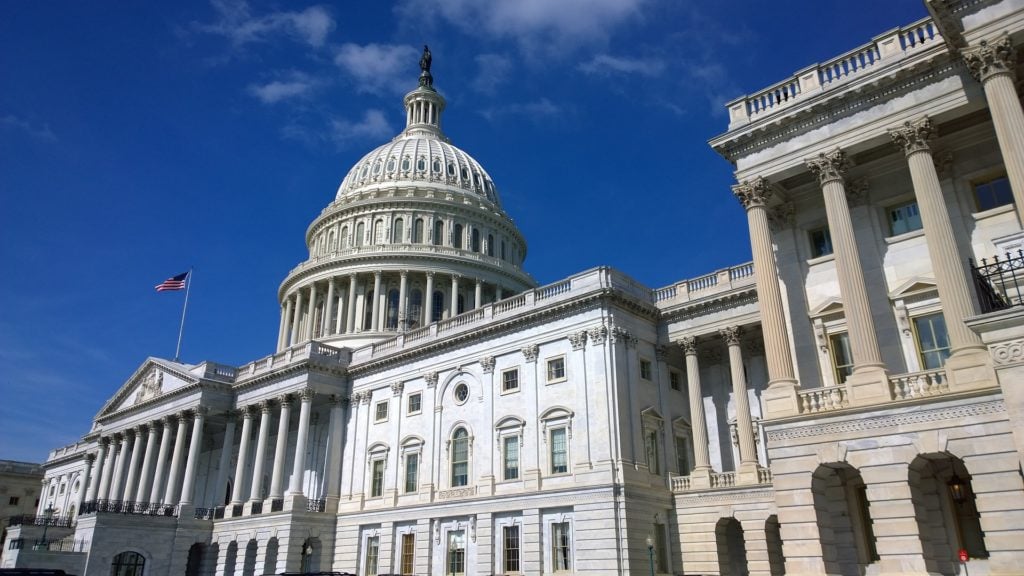
In a vote yesterday, the first major action since the Democrats scored a clean sweep in last week’s midterm elections, senators voted 73-25 in favour of advancing the Bipartisan American Affordability and Jobs Act (BAAJA).
Try Premium for just $1
- Full premium access for the first month at only $1
- Converts to an annual rate after 30 days unless cancelled
- Cancel anytime during the trial period
Premium Benefits
- Expert industry analysis and interviews
- Digital access to PV Tech Power journal
- Exclusive event discounts
Or get the full Premium subscription right away
Or continue reading this article for free
Approval of the so-called cloture motion does not mean the bill has passed, but moves it another step forward in its congressional passage.
The bill has emerged as a key focus of congressional activity since Democrats regained control of both chambers, with senators behind the legislation eager to pass it during the so-called lame-duck session ahead of the new, Democrat-controlled Congress taking charge in January.
The proposed permitting reforms would streamline the approval processes for energy infrastructure such as PV projects and transmission interconnections, but would also support fossil fuel infrastructure and facilitate the construction of new data centres, which emerged as a key concern among voters during last week’s midterm vote.
The bill has received support within America’s clean energy industry. Ahead of yesterday’s vote, trade body the Solar Energy Industries Association published a letter to congressional leaders signed by 300 solar and storage companies calling for the BAAJA to be passed as quickly as possible.
The letter pointed out that solar and storage account for 70% of new electricity capacity added to the grid thus far in 2026, while US$120 billion in clean energy investment remains caught in permitting delays.
“This bipartisan bill is exactly the kind of action America needs to meet growing energy demand, put downward pressure on energy prices, and deploy more affordable, reliable solar and storage for American families and businesses,” the signatories said.
Alongside the letter, SEIA also published analysis showing that the bill could unlock 167GW of additional solar capacity between 2028 and 2035, bringing solar to over 18% of US electricity generation by 2035. The analysis finds that the bill’s reforms could reduce cumulative power sector CO2 emissions by approximately 20% and avoid $54 billion in public health damages.
“You can’t lower energy costs if you can’t build the energy projects, and these companies know that this bipartisan legislation will help get America building again,” said SEIA chief executive, Tim Pawlenty.
“Americans urgently need lower energy costs, a better electric grid and more energy made in the USA. This bipartisan legislation delivers all three.”
But the bill faces opposition from environmental groups who argue that as well as potentially lightening the permitting burden for clean energy projects, it would also do the same for fossil fuel infrastructure and data centres, the latter of which were a prominent source of opposition among voters last week.
The Sierra Club said that although the bill contains provisions that would help boost clean energy and lower energy bills, it also contains “troubling provisions that profoundly weaken key environmental protections”.
As an example, the Sierra Club highlighted concerns that the BAAJA as drafted would make it harder for communities to challenge dangerous projects that could directly harm them.
“Updating and expediting transmission and clean energy permitting is essential to delivering lower costs, reduced air, water, and climate pollution, protecting communities, and expanding the grid for the American people,” said executive director at Sierra Club Loren Blackford. “But rushing legislation that erodes Tribal sovereignty and people’s right to have a say in what is built in their communities, abandons clean water safeguards and wildlife protections, while further enabling a rogue president that is waging a war on clean energy and our public lands is not an acceptable outcome.
“Senate Democrats have been given a mandate to act decisively to deliver relief on energy bills and level the playing field for clean energy. They can and must fight for a better deal. Unless additional dialogue and changes can happen, the Sierra Club cannot support this legislation.”