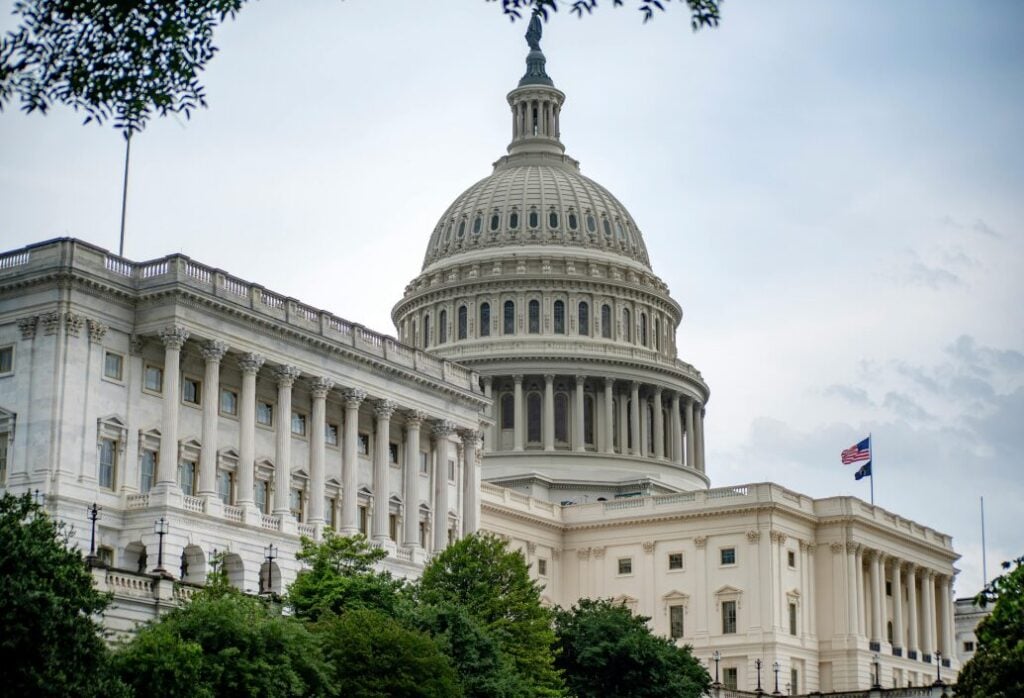
A US Senate bill proposing to speed up the permitting process for energy projects has received a mixed response from clean energy industry and advocacy groups.
The Bipartisan American Affordability and Jobs Act of 2026 was introduced yesterday by four US Senators, two Republican and two Democrat, and proposes accelerated permitting and environmental review processes for energy projects.
Try Premium for just $1
- Full premium access for the first month at only $1
- Converts to an annual rate after 30 days unless cancelled
- Cancel anytime during the trial period
Premium Benefits
- Expert industry analysis and interviews
- Digital access to PV Tech Power journal
- Exclusive event discounts
Or get the full Premium subscription right away
Or continue reading this article for free
The bill would reform permitting rules for data centres, grid infrastructure and both renewable energy and fossil fuel projects. It would include provisions to require data centre operators to pay for transmission costs associated with their facilities
“America is entering a new era of energy demand,” said senator Martin Heinrich (Democrat, New Mexico), one of the lawmakers who proposed the bill. “We have an enormous opportunity to build big things again to meet this moment—to build more generation, expand our grid, create more jobs, lower energy costs, and make sure we have the energy we need to compete.”
Senator Shelley Moore Capito (Republican, West Virginia) claimed that the bill “will transform our nation’s ability to power our economy and fuel future growth, while continuing to protect the land, water, and wildlife we all cherish.”
Sierra Club warns bill won’t guarantee renewable energy deployment
Reacting to the proposal, environmental group the Sierra Club expressed concern that the bill may expedite more oil and gas infrastructure projects under the current US administration, which has been hostile to renewables.
Sierra Club chief program officer, Holly Bender, said: “There is no task more urgent than building clean energy and transmission … We are still reviewing this new 400+ page package. But this bill cannot guarantee that more wind and solar projects will actually get built as long as the Trump administration continues to block them at every turn.”
She said the proposal “would create immediate benefits for oil and gas companies during a period of unprecedented growth in oil and gas infrastructure and record-breaking industry profits”.
Solar PV and energy storage are currently the dominant sources of new US power capacity, having accounted for around 90% of new capacity in the first quarter of 2026. However, the Trump administration has been hostile to solar and wind projects, phasing out tax incentives for clean energy and raising barriers to federal permits. In August, the Department of Energy (DOE) cancelled three Biden-era plans for new grid transmission corridors, claiming they were part of the “Green New Scam” federal policies of the previous administration.
Politico reported last week that the president offered to remove blockades to wind power development if Democrats agreed to the proposed permitting bill, ahead of the upcoming midterm elections that could see significant changes in the House and Senate.
Senator Sheldon Whitehouse (Democrat, Rhode Island), the second Democrat who brought the new proposal, said: “Like all major pieces of bipartisan legislation, this bill is a compromise.
“The American people want lower energy bills, and they want more clean energy. Our permitting reform plan gets us a long way toward both of those goals. If we can pass this bill, we will flood the grid with clean, affordable energy and make data centres start paying their fair share”.
SEIA, Crux welcome developments
The Solar Energy Industries Association (SEIA)—the leading US solar trade body—welcomed the permitting proposal.
SEIA CEO and former Republican governor of Minnesota, Tim Pawlenty, said: “This is exactly the kind of bipartisan action America needs to meet growing energy demand, put downward pressure on energy prices, and deploy more affordable, reliable solar and storage for American families and businesses.”
US clean energy financing platform Crux also welcomed the announcement. Its head of policy, Hasan Nazar, said the proposed bill was a “critical step in addressing the nation’s outdated energy permitting framework. Our research shows the current permitting process is slowing clean energy deployment and increasing project costs at a moment when every electron is desperately needed.”
As of the end of 2023, there was over 2TW of clean energy capacity in US grid queues. Last month the DOE committed US$5.25 billion towards grid expansion and modernisation, and in August the Federal Energy Regulatory Commission (FERC) had its plans to reform the permitting process upheld by a Washington DC Court.
Sandra Purohit, director of federal advocacy at E2, a representative group of US businesses, said: “We need permitting reform that works for our economy and environment—reform that gets new transmission built and clean energy projects connected quickly. That also must include ending the administration’s clean energy permit blocks, which are keeping gigawatts of the cheapest power off the grid as prices rise for everyone.”