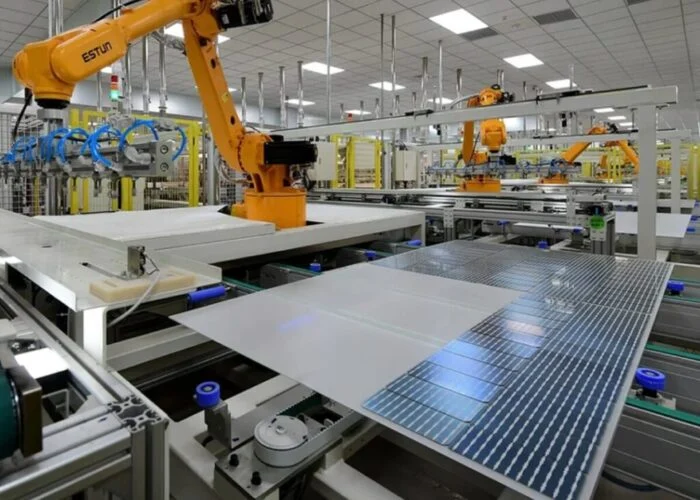
The post-mortem has already begun on the news that Applied Materials would stop selling its turnkey ‘SunFab’ thin-film manufacturing lines to new customers and retrench to service and support existing customers in the short-term, while reducing but not eliminating R&D on a-Si process technology.
Apart form Greentech Media’s ‘I told you so' article, the best post-mortem analysis so far comes from Ed Korczynski, a well-known semiconductor technology journalist with credentials that include MIT, emiconductor equipment suppliers and a stint working for none other than Applied Materials.
Try Premium for just $1
- Full premium access for the first month at only $1
- Converts to an annual rate after 30 days unless cancelled
- Cancel anytime during the trial period
Premium Benefits
- Expert industry analysis and interviews
- Digital access to PV Tech Power journal
- Exclusive event discounts
Or get the full Premium subscription right away
Or continue reading this article for free
I strongly recommend readers check this blog on SunFab.
However, the whole debacle raises more questions than answers, and so I thought it best to list the ones I have and hopefully readers can chip in with some more questions and of course any answers? I will then put forward a list and send to Applied.
- Why was the cost of SunFab equipment so high that it made it uncompetitive?
- Why were the operating costs never driven down far enough to be competitive?
- With 10% efficiencies claimed for tandem junction, why had few if any customers migrated to tandem technology to gain competitiveness?
- At what cell efficiencies and manufacturing cost levels per watt would SunFab be competitive with First Solar, the clear benchmark thin-film technology?
- How can SunFab customers now sell ‘bankable’ modules to utility-scale projects when the equipment and technology provider is perceived to have pulled the plug on the business?
- Can we expect SunFab customers to all go bankrupt or close down?
- Is this failure for a-Si technology going to impact rivals such as Oerlikon?
- Has Applied’s exit from this business given Oerlikon and other suppliers any competitive advantage?
- What is the true cost of Applied’s failure?
- Is there a comeback story for Applied in the triple-junction arena and when?
PS: Both Greentech Media and the Financial Times articles state that Applied has stopped selling the equipment. However, it was clearly stated in the press release, Mike Splinter's video blog and in the conference call with financial analysts that only turnkey lines to any “new customers” would be halted.