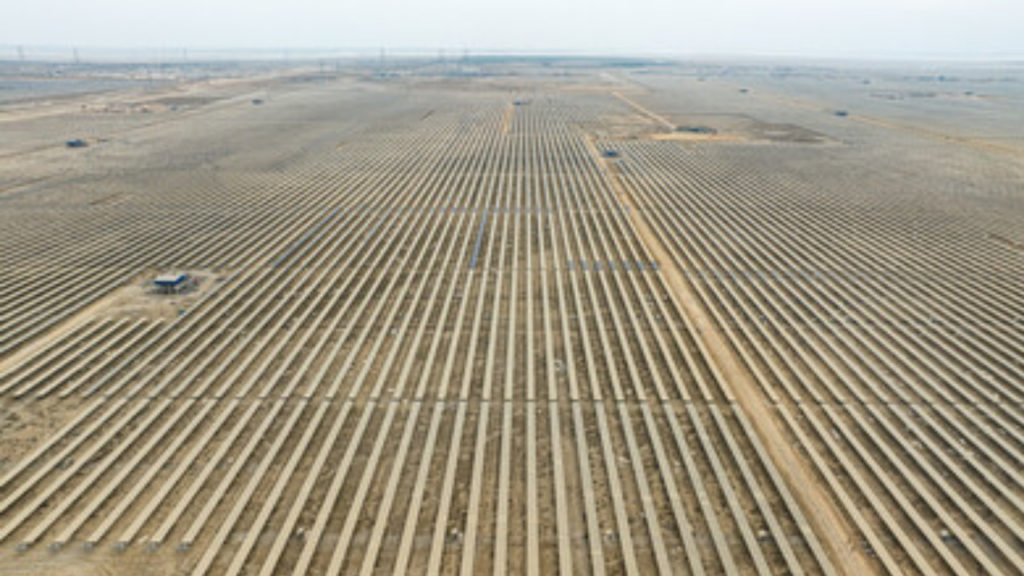
India has installed a record 6.2GW of new solar capacity in March 2024, nearly doubling the previous record for all renewables, according to a report from Rystad Energy.
In a single month alone, solar PV added nearly as much capacity as the entirety of 2023, when India added 7.5GW of new solar capacity.
Try Premium for just $1
- Full premium access for the first month at only $1
- Converts to an annual rate after 30 days unless cancelled
- Cancel anytime during the trial period
Premium Benefits
- Expert industry analysis and interviews
- Digital access to PV Tech Power journal
- Exclusive event discounts
Or get the full Premium subscription right away
Or continue reading this article for free
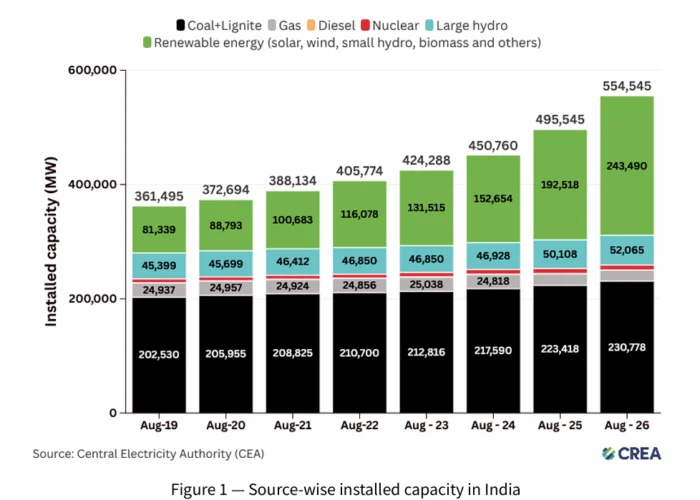
Solar PV added almost all renewable capacity in March 2024, which surged to 7.1GW, double the previous record for new renewables capacity set in March 2022 with 3.5GW.
Solar growth year on year increased by 23%, primarily driven by the commissioning of many projects in India’s inter-state transmission system network and ultra-mega solar park schemes. Gujarat, Rajasthan, Madhya Pradesh and Maharashtra are the states which have contributed the most to solar’s expansion in March 2024.
Among the biggest projects reaching commercial operations is the 1GW Khavda solar PV park in Gujarat from Indian renewables company Adani Green. Construction of that project was completed in less than a year, as the company aims to build 30GW of renewables capacity in Khavda in the coming five years.
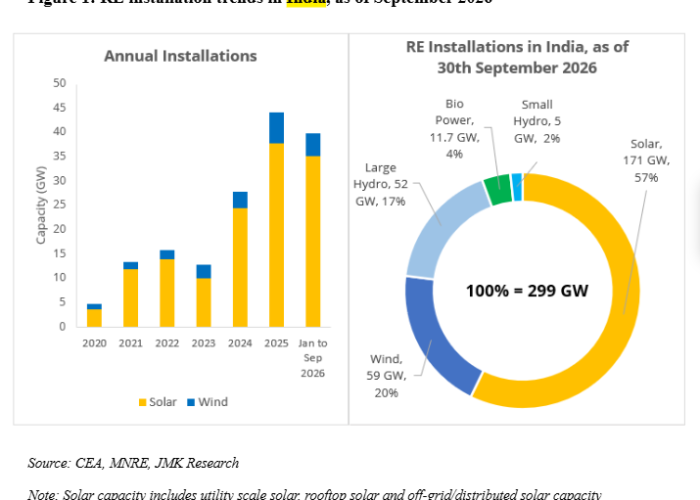
Despite that new record capacity for both solar PV and renewables in general, the country is still far away from its target of 500GW renewable capacity by 2032 and would require to add 30GW of renewables per year. India currently is not even halfway through that number, having installed less than 13GW of solar and wind capacity in 2023 (as shown in the chart below), according to recent figures from the Indian Ministry of New and Renewable Energy (MNRE).
“With the commencement of India’s general elections earlier this month, the country’s emphasis on renewable energy comes as no surprise. Despite ambitious climate goals to reduce carbon dioxide emissions, achieving them is only achievable if the country maintains the fervour witnessed in recent months, said Rohit Pradeep Patel, vice president of renewables and power research at Rystad Energy.
“However, critical challenges persist: ensuring grid stability alongside the higher integration costs that come with introducing more renewable capacity. A strategic solution lies in balancing this clean energy embrace with targeted exports, enabling India’s growth visions for the power sector, without compromising national climate goals.”
64GW of annual module nameplate capacity
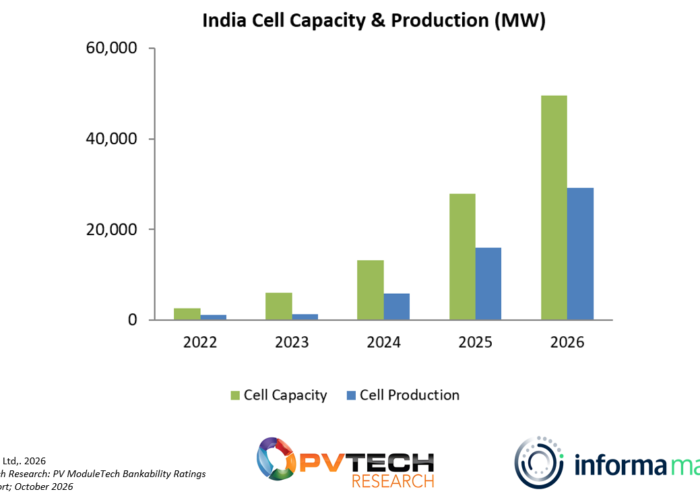
Regarding India’s manufacturing capacity, Rystad added that the annual nameplate capacity of modules reached 64GW in March 2024, with companies looking to export their excess capacity to other markets. Among these markets is the US, due to the Uyghur Forced Labor Prevention Act (UFLPA), according to Rystad Energy.
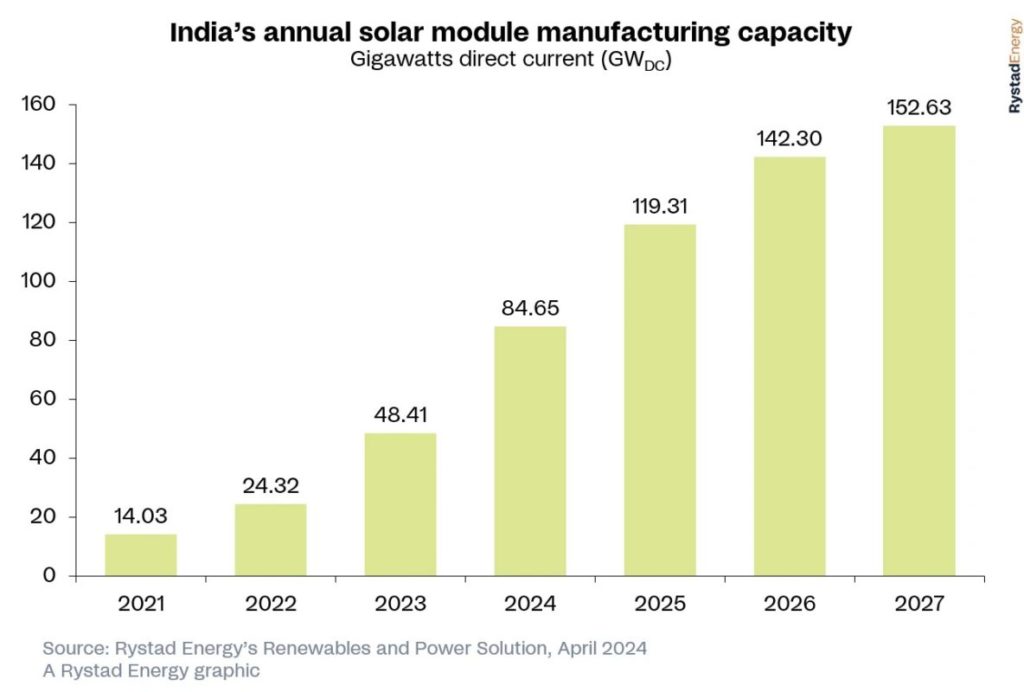
These latest numbers would nearly double the nameplate capacity for modules in India from March 2023, when it reached 38GW. India’s module capacity rapid growth has been boosted thanks to the launch of the production-linked incentive scheme in 2020 to reduce its reliance on exporting modules and other solar components from China.
Another application for the boost of domestic manufacturing in India was the implementation of a basic customs duty (BCD) in April 2022 – which imposed a 40% tax on imported solar modules and a 25% tax on solar cells – that reduced the import of foreign, mainly Chinese, modules.
More recently, the Indian government reinstated the Approved List of Models and Manufacturers (ALMM) which also worked as a means to boost domestic manufacturing capacity.