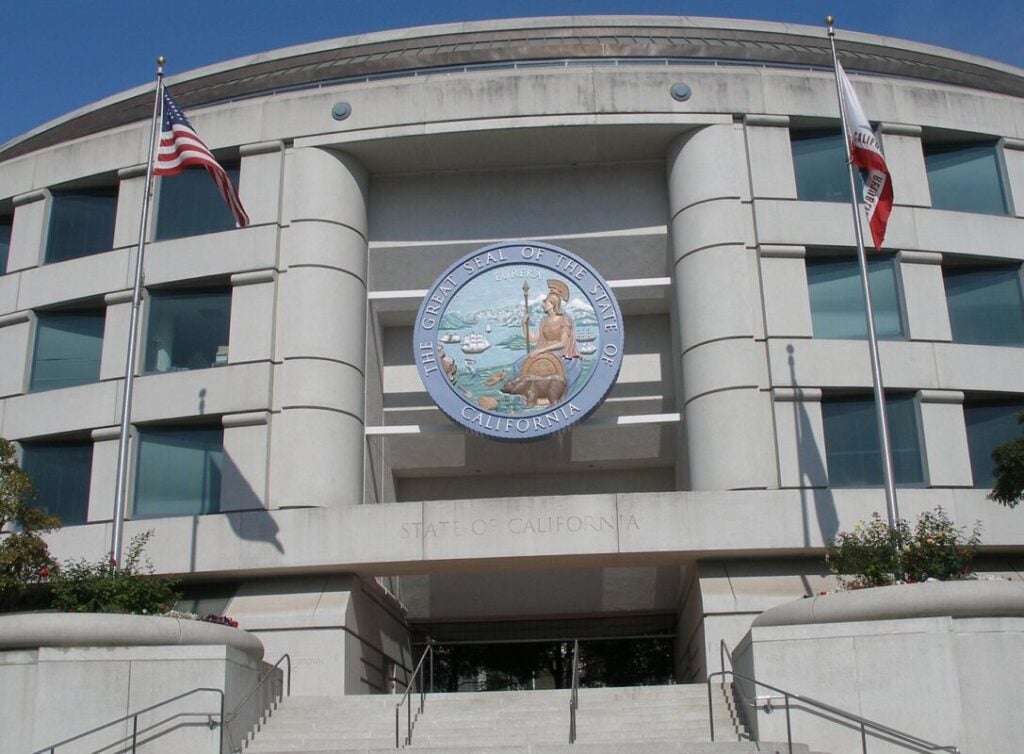
The California Public Utilities Commission (CPUC) has finalised details of its Community Renewable Energy (CRE) Program, which has been dismissed as “unworkable and destined for continued failure” by the Californians for Local, Affordable Solar and Storage (CLASS) trade body.
The commission first decided to introduce this programme in April, and last week’s vote confirms the decision. This will establish the rules for a community solar programme in the state, the manner in which community solar participants can sell excess electricity to Californian utilities and the projects that are eligible for this programme.
Try Premium for just $1
- Full premium access for the first month at only $1
- Converts to an annual rate after 30 days unless cancelled
- Cancel anytime during the trial period
Premium Benefits
- Expert industry analysis and interviews
- Digital access to PV Tech Power journal
- Exclusive event discounts
Or get the full Premium subscription right away
Or continue reading this article for free
The implementation of these rules follows the passage of Assembly Bill 2316 in September 2022 that sought to implement a process for “those unable to host a rooftop solar system” to participate in community solar.
Community solar groups and utilities in opposition
However, community solar organisations, such as CLASS, and Californian utilities have consistently disagreed over the specifics of the CRE programme. The community solar sector had argued, for instance, to use Net Value Billing Tariff (NVBT) calculations in determining the value of electricity sold by community solar projects to utilities, which would have tied compensation to the hourly value of electricity delivered to the grid.
Instead, CPUC decided to use the Avoided Cost Calculator (ACC) method proposed by the utilities, which values the electricity sold by comparing it to the utilities’ avoided cost of procuring equivalent power from other sources. CLASS leadership suggested this grants utilities too much control over the valuation of electricity sold by community solar projects.
“In the midst of an affordability crisis and rising utility rates, the CPUC has once again handed the keys to the utilities—the same utilities that have spent years working to ensure community solar never gets built—and called it a programme,” said CLASS executive director Derek Chernow.
However, CPUC concluded that many of the proposals backed by community solar groups would require non-market participants to pay compensation to the utilities, which is in violation of the utilities’ operating codes.
“Similar to the proposed Net Value Billing Tariff addressed in D.24-05-065, many of the above recommendations would result in non-participant-funded compensation that exceeds avoided costs,” wrote the CPUC in its final decision last week. “Therefore, these recommendations fail to comply with Public Utilities Code 769.3(c).”
“California remains committed to delivering on clean energy options for all customers,” added CPUC president John Reynolds. “Our decision makes sure that competitive community solar programs grow responsibly, balancing affordability, equity and grid reliability.”
California scrambles to replace Solar For All support
The ongoing debates around community solar in California follow a decision made by the US Environmental Protection Agency (EPA) to cancel the US$7 billion Solar For All programme, which was established under the Biden-era Inflation Reduction Act (IRA) to fund access to solar projects for close to one million low-income US households.
California, in particular, was set to receive US$249 million in Solar For All financing. While California and the CPUC are challenging the federal government’s scrapping of the policy in court, the sudden withdrawal of this money by the Trump administration has pushed California to introduce its own community solar support mechanism to replace the Solar For All funds. Community solar groups, such as CLASS, argue that the CRE programme, in its current form, will fail to enable access to community solar for low-income residents in particular.
After the CPUC decision, CLASS announced that five organisations have joined its “coalition” in support for Assembly Bill 1813, which was proposed by California State Assembly member Chris Ward explicitly to enable access to community solar projects for low-income households. Under the proposed bill, 51% of the CRE program’s subscribers would have to be low-income customers or “low-income service organisations”.
“This coalition now spans community power agencies, environmental organisations, regional economic leaders, the building industry, ratepayer advocates and clean energy leaders,” said Chernow of the new coalition. “We believe the momentum will continue because of the overwhelming support for this legislation as one of the fastest, easiest ways to lower utility bills, provide clean energy and improve grid reliability.”
Questions also remain about the future of the upstream components of the US solar sector, as manufacturers look to bring online more cell manufacturing capacity in the US. From 13-14 October, PV Tech publisher Solar Media will host the PV CellTech USA conference in San Francisco, to explore how best to scale the US cell manufacturing supply chain. Read the full agenda here and book tickets on the event website.