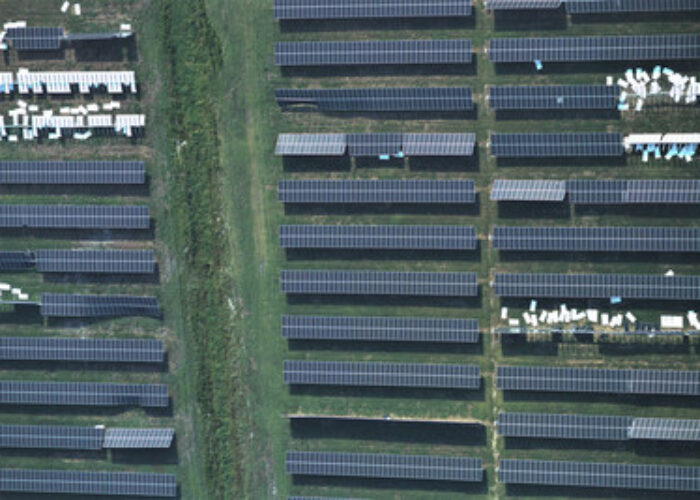
Duo uses Salt Lake City summit to launch first comprehensive testing and evaluation services for PV power plant owners and operators facing plant damage from extreme weather and other force majeure events.
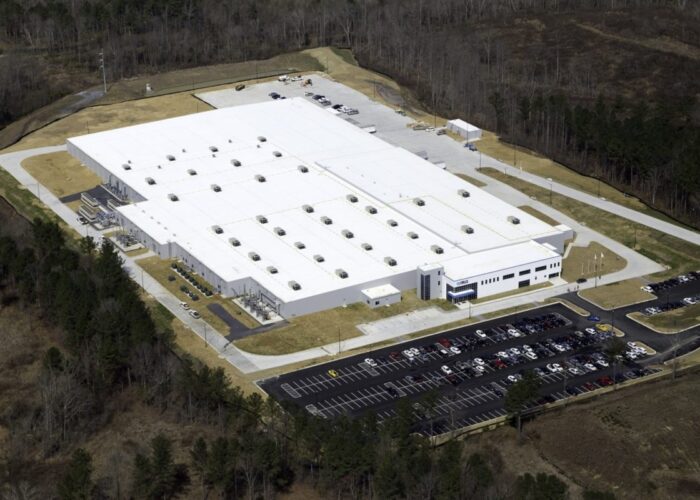
Q CELLS launches "largest solar factory in western hemisphere," Sungrow touts new product line in India, Arctech and Risen announce deals in Kazakhstan and Ukraine.
The Goyder South project mixing wind (1.2GW), solar (600MW) and batteries (800MW) is the latest of a deluge of enormous solar-plus-storage schemes proposed in the sunny island state.
Imec, a research and innovation hub in nanoelectronics, energy and digital technologies and EnergyVille, together with PVcase, a Lithuanian software company have developed a commercial software solution that allows to easily design and accurately predict the energy yield of state-of-the-art photovoltaic (PV) power plants.
Mounting systems specialist STI Norland said it had surpassed 3GW of cumulative installations with 1.2GW of contracted mounting systems orders expected in 2019.