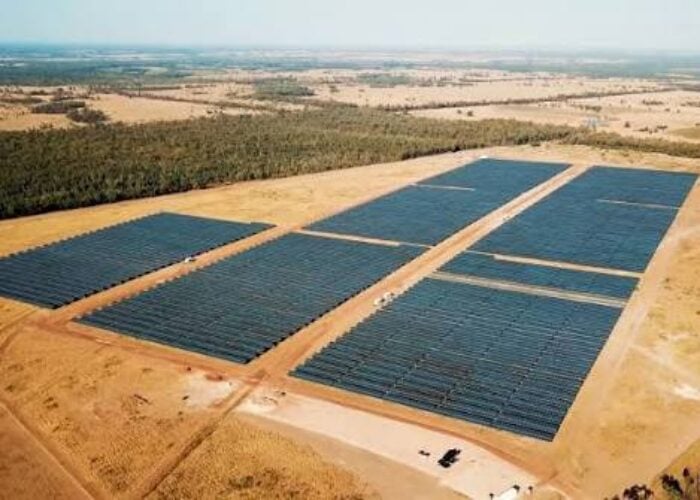
Emirati state-owned renewable energy project developer Masdar has entered the Philippines market with plans to develop 1GW of solar PV, wind and battery energy storage systems (BESS).
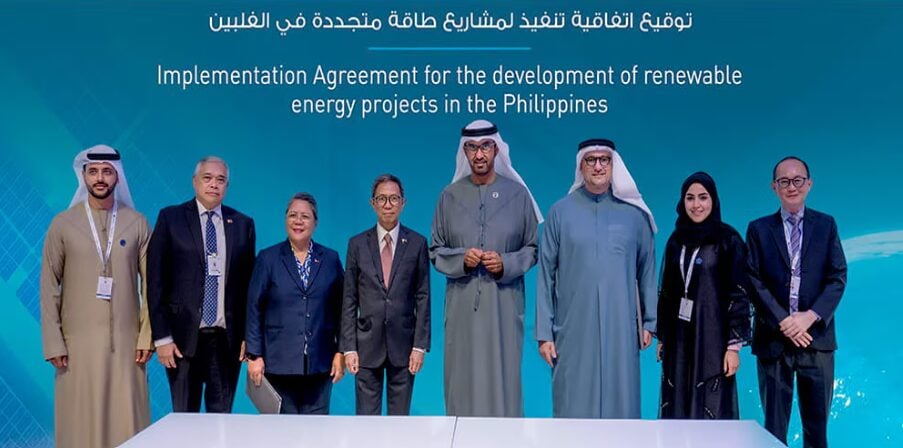
The move, revealed yesterday (16 January), has been formalised with the signing of an implementation agreement with the Philippines’ Department of Energy and a memorandum of understanding (MoU) with the Board of Investments of the Republic of the Philippines.
Try Premium for just $1
- Full premium access for the first month at only $1
- Converts to an annual rate after 30 days unless cancelled
- Cancel anytime during the trial period
Premium Benefits
- Expert industry analysis and interviews
- Digital access to PV Tech Power journal
- Exclusive event discounts
Or get the full Premium subscription right away
Or continue reading this article for free
Masdar’s entry into the Philippines will support the country’s efforts to decarbonise and secure its 2030 target to achieve 35% renewable energy generation. By 2040, this figure will rise to 50%.
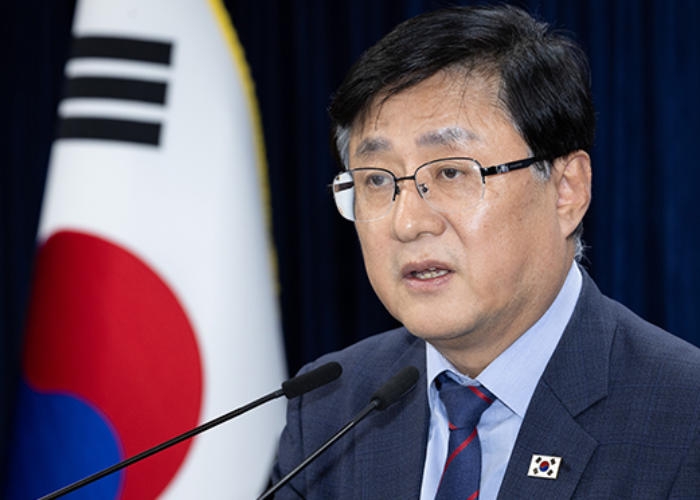
Raphael Lotilla, the secretary of energy at the Philippines Department of Energy, a role he has held for two terms, hailed the opportunities the partnership could bring to the country.
“Building on the long-standing ties between our nations and the recent Energy Transition Cooperation agreement, we welcome Masdar’s proven leadership and expertise in delivering utility-scale renewable energy solutions. This collaboration will significantly advance our goal of achieving 35% renewable energy in power generation by 2030.”
In November 2024, the UAE and the Republic of the Philippines inked an Energy Transition Cooperation, with several areas of collaboration identified, including renewable energy, the transmission and distribution system, nuclear energy, energy efficiency and conservation, and alternative fuels and emerging technologies.
Masdar’s entrance into the Philippines market is a direct result of this partnership, which has increased ties between the two countries and the energy transition.
Masdar’s entry into the country helps solidify its position within the Southeast Asian market, which the state-owned entity has dubbed a key strategic market.
Mohamed Jameel Al Ramahi, CEO of Masdar, hopes the company’s expertise will help implement large-scale renewable energy projects in the country.
“We welcome this announcement as a significant expansion of Masdar’s activities in Southeast Asia, a key strategic market in our ongoing efforts to achieve a renewable energy capacity of 100GW by 2030,” said Al Ramahi.
“With our proven success in implementing large-scale renewable energy projects in the region and worldwide, we look forward to utilising our expertise and experience to support the Philippines in meeting its ambitious renewable energy goals.”
Masdar’s focus on Southeast Asia
As noted by Al Ramahi, Southeast Asia is a key strategic market for Masdar in its bid to secure 100GW of renewable energy capacity by 2030.
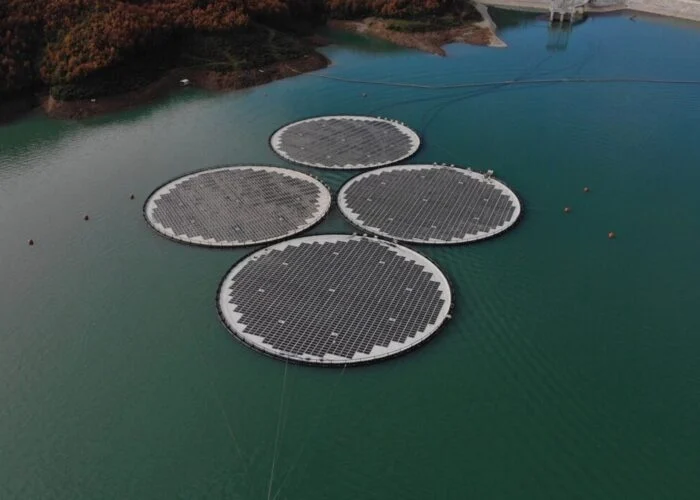
Readers of PV Tech will likely be aware of some of the state-owned entity’s operations and portfolio in the region. One well-known project is the region’s largest floating solar PV power plant in Indonesia, the 145MW Cirata project.
Masdar and PLN Nusantara Power (PLN NP), a subsidiary of Indonesian state-owned electricity company PPT PLN, began construction on the project in August 2021. The development was completed in November 2023. Since then, the two companies announced their intention to expand the generation capacity of the floating solar PV plant to up to 500MW.
Due to Southeast Asia’s geographical constraints, much of which consists of archipelago nations, the US National Renewable Energy Laboratory (NREL) said in 2023 that the abundance of waterbodies in the area could host up to 825GW of new floating solar capacity.
In October 2023, Masdar penned an MoU with the Malaysian Investment Development Authority (MIDA) to develop up to 10GW of renewable energy projects, including ground-mounted, rooftop and floating solar.
MIDA said Masdar aims to commission the projects by 2035. In addition to solar projects, Masdar will also help build wind farms and battery energy storage systems in the southeast Asian country. The groups plan to invest US$8 billion into the project.