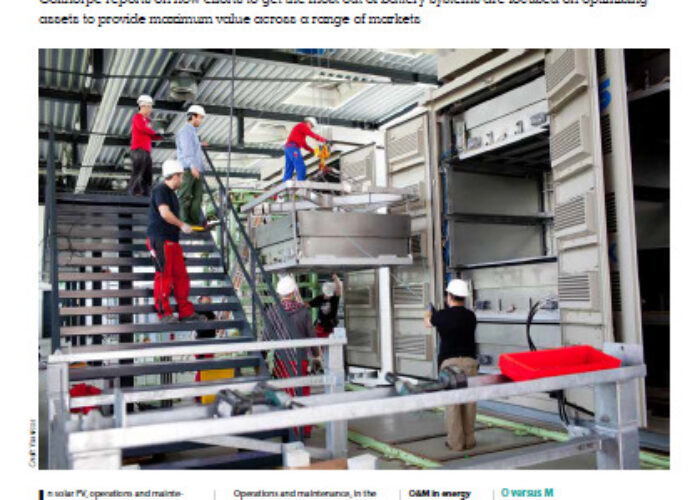
Battery storage | Operations and maintenance is becoming an important subset of the fast-maturing solar industry but is not yet as clearly defined in the less developed storage business. Andy
Colthorpe reports on how efforts to get the most out of battery systems are focused on optimising assets to provide maximum value across a range of markets.
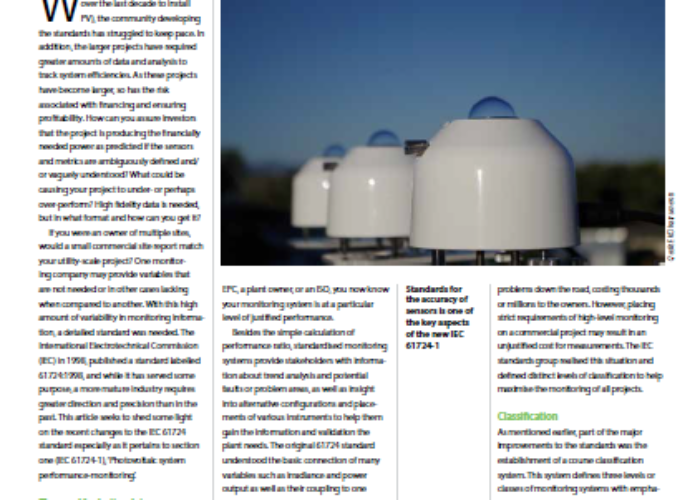
System monitoring | The international standard guiding the monitoring of PV systems has been revised to include greater emphasis on accuracy. Will Beuttell of EKO Instruments explains some
of the key aspects of the revised standard and how it will help satisfy the maturing PV industry’s appetite for better quality data on plant performance.
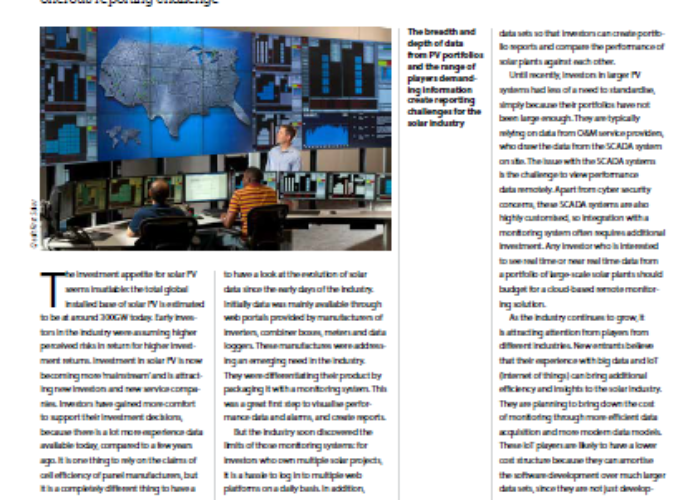
Reporting | The growing range of stakeholders in the solar business, from the owners of small rooftop systems to pension funds, require timely and adequate information on asset performance,
but to varying levels of detail. Edmée Kelsey looks at how the industry is rising to the increasingly onerous reporting challenge
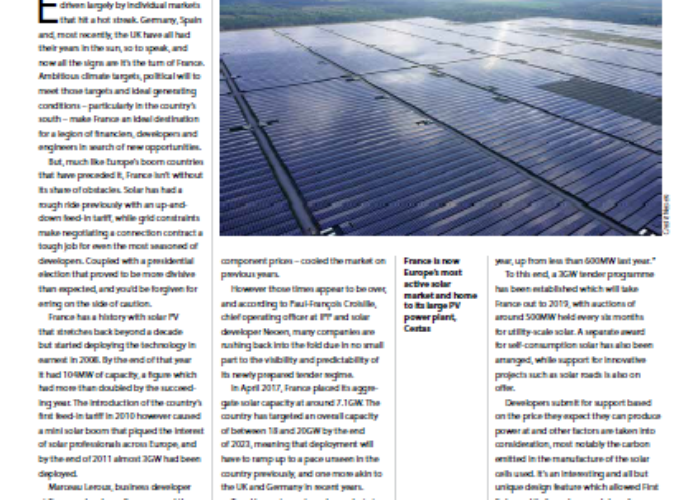
France | With Europe in search of another PV poster child, an Emmanuel Macron-led France looks all but set to truly embrace the solar revolution. But will it learn from the mistakes of other boom
markets that have preceded it?
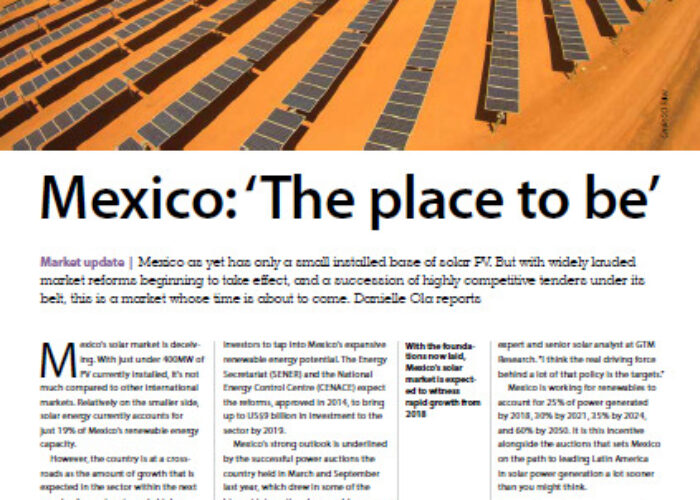
Market update | Mexico as yet has only a small installed base of solar PV. But with widely lauded
market reforms beginning to take effect, and a succession of highly competitive tenders under its
belt, this is a market whose time is about to come. Danielle Ola reports
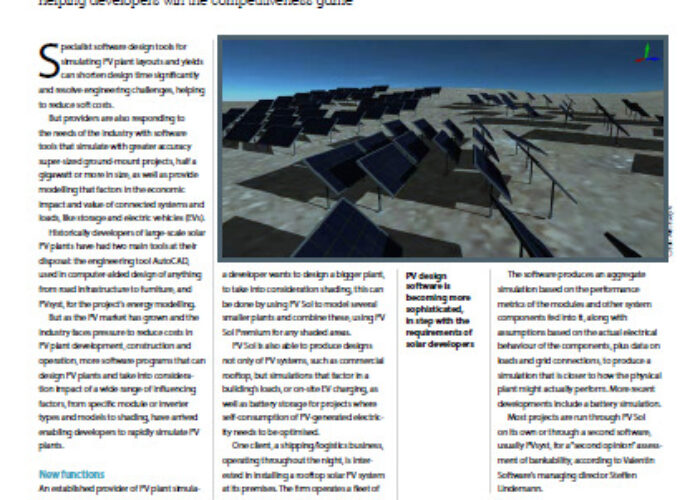
System design | As PV projects get bigger and more complex, plant design programs are rising to the challenge. Sara Verbruggen looks at how some of the latest innovations in design software are helping developers win the competitiveness game
Tom Kenning looks at the latest trends from some of the world’s most promising emerging PV markets. This issue features Turkey, Algeria, Saudi Arabia and Malaysia
With United Nations sanctions lifted on Iran in spring 2016, the solar industry was just one of many that pondered the risks of entering this previously restricted market. Just a year later and the Middle Eastern giant can already boast its first two large-scale solar plants, with the project rights developed by local firm Aftab Mad Rah Abrisham, but delivered and wholly funded by German PV specialist Athos Solar.
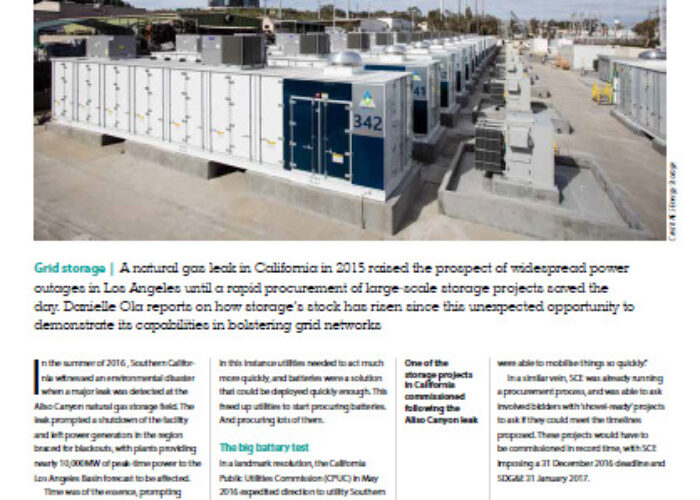
Grid storage | A natural gas leak in California in 2015 raised the prospect of widespread power outages in Los Angeles until a rapid procurement of large-scale storage projects saved the
day. Danielle Ola reports on how storage’s stock has risen since this unexpected opportunity to demonstrate its capabilities in bolstering grid networks.
Module degradation | Light-induced degradation has long been recognised for its negative effects on the performance of crystalline silicon solar cells. Researchers from Fraunhofer CSP explain
how with the advent of advanced materials and cell technologies such as PERC, new tests and standards are required to minimise the impact of the phenomenon on plant reliability.