The surge in PV capacity in Europe after Russia’s invasion of Ukraine in 2022 has slowed. Will Norman looks at the structural bottlenecks that need to be cleared to kindle the next phase in the continent’s energy transition.
The year 2025 was the first time in a decade that growth in Europe’s solar market slowed. The continent added 65.1GW of new solar capacity, a 0.7% contraction compared with 2024.
Try Premium for just $1
- Full premium access for the first month at only $1
- Converts to an annual rate after 30 days unless cancelled
- Cancel anytime during the trial period
Premium Benefits
- Expert industry analysis and interviews
- Digital access to PV Tech Power journal
- Exclusive event discounts
Or get the full Premium subscription right away
Or continue reading this article for free
“The decline we saw in 2025 was minimal, but I think [it was] symbolically important for certain trends that we foresee will continue in the coming years,” says Dries Acke, deputy CEO of SolarPower Europe.
As Acke says, the figures showed “minimal” decline, but SolarPower Europe expects things to get worse before they get better. “In the coming two, three years, we actually believe we will be below 60GW [annual installations],” he tells us. “That is not a great outlook.”
This puts the EU’s long-term solar deployment and renewables penetration targets in jeopardy; Acke says that SolarPower Europe assumed that to meet European targets there would need to be around 70GW of new solar added annually, “as a conservative estimation”.
So why is Europe’s solar sector stalling, and what will be needed to reignite its spark?
Sector breakdown
The primary reason for the fall in growth in 2025 was the residential and rooftop sectors. From 2022-24, Europe’s residential solar sector boomed due to what Acke calls a “sense of urgency”.
Following the full-scale Russian invasion of Ukraine and the ensuing energy price crisis, small businesses and European citizens rushed to install solar as a bulwark against price volatility. This was backed by a range of incentives across EU member states that improved the economics of going solar.
But by 2024, and especially in 2025, energy prices had calmed and the imperative for individual energy independence waned. “For good reason, of course,” Acke says, “and in a way, thanks to the solar boom, more SMEs and households were protected; the investment [in 2022-2024] helped shield consumers from these prices, and they also structurally reduced.”
Governments followed suit, from Italy to the Netherlands, in removing straightforward solar incentives. The market case for solar had been proven and it was no longer a priority for taxpayer funds.
“With that comes a lower energy awareness within the population,” Acke says.
“Residential solar…is a very psychological thing. If the topic is high on the agenda, is talked about amongst friends at their kitchen tables, then more people engage.” As a result of stable prices and reduced public awareness, Acke says certain countries saw a “collapse” in their residential rooftop markets.
Utility-scale solar actually grew in 2025, because the pipeline of projects developed and approved from 2021-2024 continued to bear fruit. “That resulted in big plants connecting and starting to generate,” Acke says.
But that pipeline is drying up and will be the main reason that Europe’s solar market slows and targets are missed in the next five years. In its Solar Market Outlook 2025 report, SolarPower Europe said: “Conditions for large-scale solar are also becoming increasingly challenging. Long anticipated structural bottlenecks have intensified.”
These include grid congestion, permitting and land use, curtailment, falling prices, faltering electrification in the wider economy and a lack of flexibility and energy storage capacity.
Natural decline
The slowdown isn’t really surprising. “In some sense, this is natural,” says Alex Barrows, head of PV at business intelligence and research firm CRU. “It’s not like we’re not putting more solar capacity in every year, it’s just that the amount we’re adding in a year is flat. That rapid growth era was always going to come to an end.”
Barrows says that some of CRU’s modelling suggests that the lowest cost energy system with high renewables penetration in Europe would require more wind installations and less solar. “At the moment we’re installing too much solar, or not enough wind – whichever way you want to put it.”
He is quick to point out that this is a particular and specific analysis model. “But there is an argument that if (big ‘if’) solar’s growth were to slow because there was more of a focus from developers on wind projects…maybe, in the long run, that’s not such a bad thing.”
Wind installations did increase in 2025 compared with the previous two years, according to WindEurope data. And the continent’s solar developers are continuously speaking about the challenges of grid shortage, price cannibalisation, curtailment and low solar power prices that have impacted their margins and viability.
Sameer Hussain, research associate for pan-European power markets at Aurora Energy Research, tells us that issues like cannibalisation and negative prices are because there’s been “so much build out of solar and renewables”. The challenge of low prices is compounded when solar projects are traded on a purely merchant basis, rather than backed up by a government subsidy or guarantee programme.
Prospects for growth
In April, the EU issued a new AccelerateEU communication, outlining the need for greater electrification and a reduced reliance on fossil fuels across the continent.
“Electrification is a very well understood problem in the EU, and there’s an emerging but quite firm consensus now that electrification needs to be progressing, not in the least because of the crisis that we’re in, which is an oil and gas crisis,” Acke says.

Hussain says that while electrification of the wider economy is “something everyone is focusing on”, the slow growth of renewables in the coming years “makes it harder to meet electrification needs when that [shift] does happen”. It is also hard to electrify heavy industries, which are far more power-intensive than sectors such as transport.
“On the European agenda, this is translating very quickly to grids investments, which of course is very important,” says Acke. But he says that other flexibility measures are getting less attention in Brussels.
“[SolarPower Europe] is running a very strong narrative on electrification and flexibility,” he says. The grid is only one way to provide flexibility for the system and incorporate more renewable energy, Acke adds. “Especially because we have a new, game-changing technology in our pockets called battery storage.”
The solar industry has already realised that energy storage is a potential skeleton key to unlock fresh revenues and growth, but Acke says that awareness of those opportunities “is not yet trickling up” to reach legislators in Brussels.
Recently, storage seems to have become a virtual panacea for the solar industry. But does it solve all of the problems that the sector is now facing?
For Hussain, storage is “absolutely” the top way to mitigate the effects of price cannibalisation, negative prices and curtailment that have tightly squeezed the profits and viability of European solar projects.
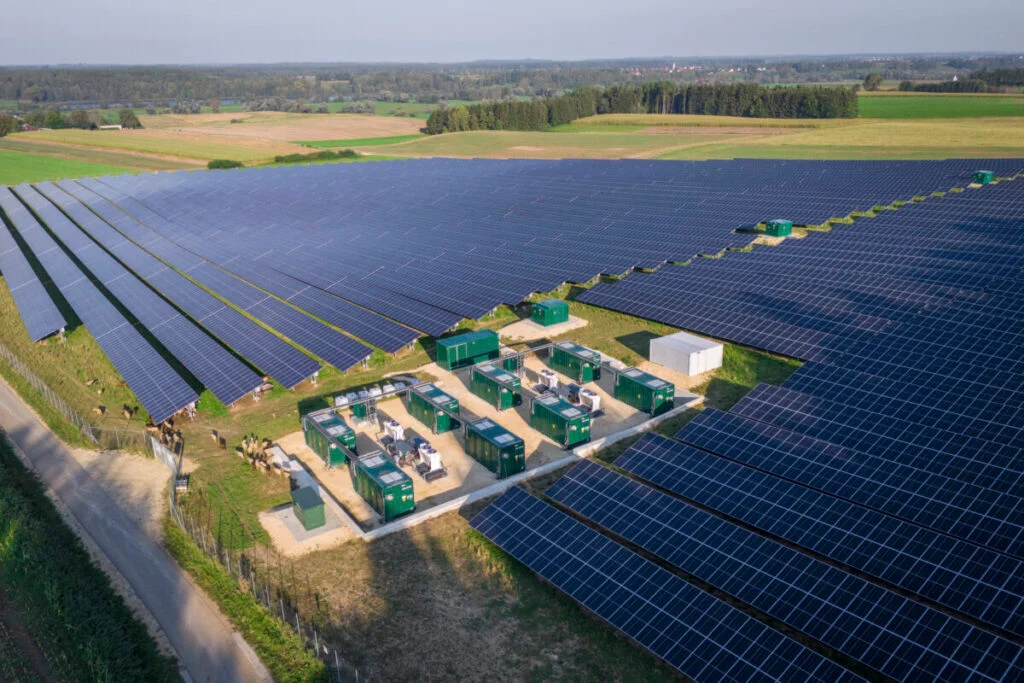
“In a lot of [European] markets where there are these sorts of risks, the only way to have your project be viable is through co-locating your renewable asset with a battery system,” he says. “In short, solar plus batteries is the biggest way to mitigate against the risks in the sector.”
Acke views storage as more of a “Primus inter pares” – first among equals. “There’s a whole list of flexibility options that are all important,” he says. “It’s about digitalising grids to improve existing grids with enhancing technologies; it’s about demand-side response from industry, from households, smart integration, vehicle-to-grid…it’s also about big hydro storage.
These things all matter. We are just emphasising battery storage because in politics, it’s incredibly important that you tell policymakers what novelties are on the horizon.”
Practical problems
Permitting and land restrictions are still a “continuous headache”, Acke says. “There’s absolutely been progress”, he continues, such as encouragement from the EU for member states to identify low-impact areas for project development, bringing in deadlines for simplified permitting under the Renewables Directive and speeding up certain environmental assessments.
“But you’ve seen progress in certain countries, and absolutely no progress in other countries,” he says. SolarPower Europe included a permitting assessment in its 2025 Market Outlook, which found no single country with positive developments across all the categories. “There are not really champions.”
For example, permitting around rooftop solar has been streamlined in many places, with mandatory inclusion for many new buildings and some deadlines for permits.
On the other hand, Italy has seen increased scrutiny over zoning around solar plants, particularly regarding agricultural land, pushing much more development of costly and complex agrivoltaics projects to meet criteria.
Complexity and political will
Renewables have come of age in Europe and are now taken seriously as a pillar of the continent’s energy security. Acke says this “uncharted territory” calls for a “different level of conversation” around the complexities and challenges for sustaining growth. At the same time, global instability has grown.
Years of direct incentives have given way to what he calls a process of “building our energy economy on renewables”. The challenges inherent in this, of continuing expansion and integration, have been well discussed, and may ultimately hinge on structurally reducing electricity prices to allow greater electrification across the economy.
That essentially means reducing the influence of gas on Europe’s power market. The Iran conflict has already illustrated this, with countries such as Italy and the UK (with high gas penetration) seeing the biggest price risk.
On paper, the Iran conflict makes a clear case for faster renewable energy deployment. But it is not obvious that it will move the needle greatly, given the structural barriers around grid availability and system flexibility that must be overcome. Acke says that the impacts of the Iran war on Europe’s energy are harder to predict than the impacts of the 2022 Russian invasion.
Hussain expects the conflict to ultimately increase renewables deployment in Europe. “Even if these things don’t have a direct impact, they signal an alarm bell,” he says. “There’s an incentive to move away from oil and gas, especially when the supply chains can be very easily disrupted.”
Increasing renewables – and solar as the fastest and cheapest among them – would be a solution to reducing energy shocks, and energy security is now baked into the industry’s public offering. But achieving greater growth will take a “leap”, in Acke’s words, of “flexibilisation” in the energy system. “That will really kick off the renewables-based energy system.