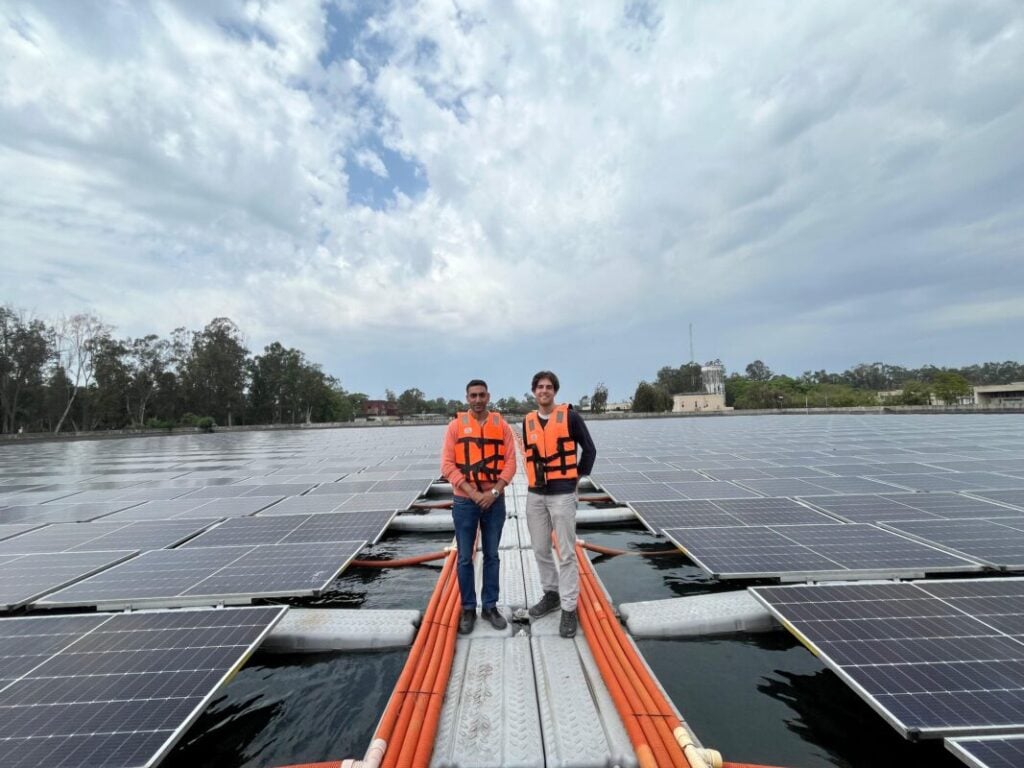
German solar research centre the Fraunhofer Institute for Solar Energy Systems (Fraunhofer ISE) has signed an agreement with Himachal Pradesh University, in India, to pursue research into floating solar PV.
The two institutions inked a memorandum of understanding (MOU) to collaborate on research projects looking at floating solar and agrivoltaics (agriPV). Fraunhofer said the collaboration would enable joint master’s and PHD supervision and enable exchange programmes.
Try Premium for just $1
- Full premium access for the first month at only $1
- Converts to an annual rate after 30 days unless cancelled
- Cancel anytime during the trial period
Premium Benefits
- Expert industry analysis and interviews
- Digital access to PV Tech Power journal
- Exclusive event discounts
Or get the full Premium subscription right away
Or continue reading this article for free
“India has great potential for floating PV installations, combined with ambitious expansion targets for renewable energy,” said Karolina Baltins, group leader for PV power plants at Fraunhofer ISE.
“Similar to Europe, there are unclear permitting processes, public scepticism and unresolved research questions regarding plant economics, long-term system reliability and environmental impacts. We can learn a great deal from and with one another here.”
As solar deployment proliferates and takes in new countries and terrains, floating solar is attracting more attention as a way to deploy solar with fewer land requirements. It also offers some benefits in applications like reservoirs, where panels can reduce water evaporation and algae buildup and the cool air from the water’s surface can make panels more efficient.
In January, the state of Maharashtra in India issued a 100MW tender seeking floating solar projects at the Tansa and Modak dams.
In May, the Norway-headquartered technical consultancy DNV issued new standards and guidance around the construction, design and maintenance of floating solar installations, illustrating the technology’s wider adoption among the mainstream of the solar industry.