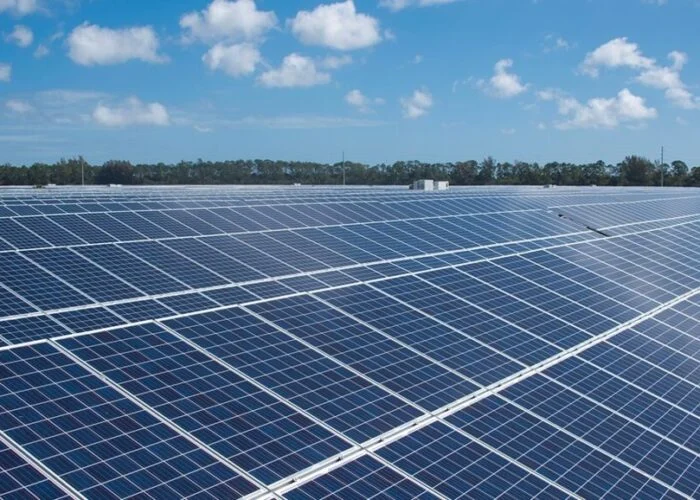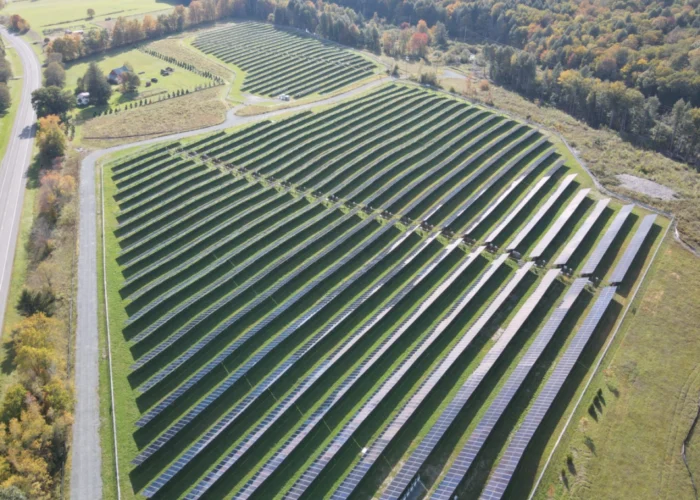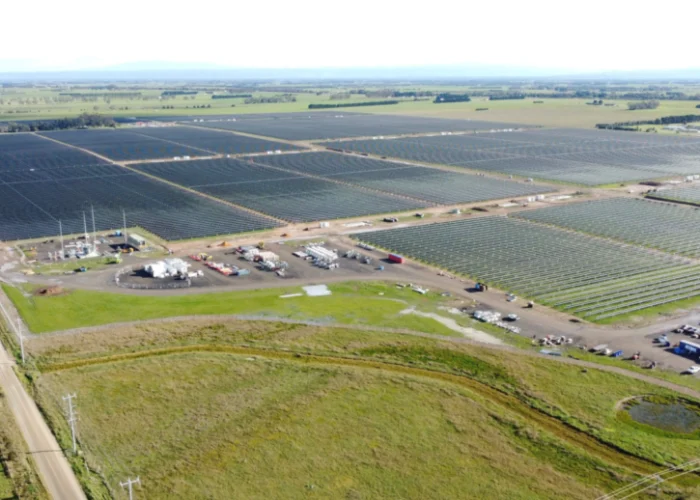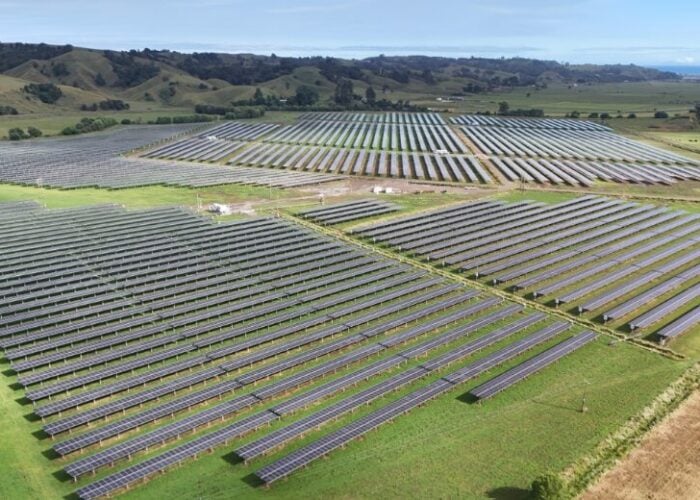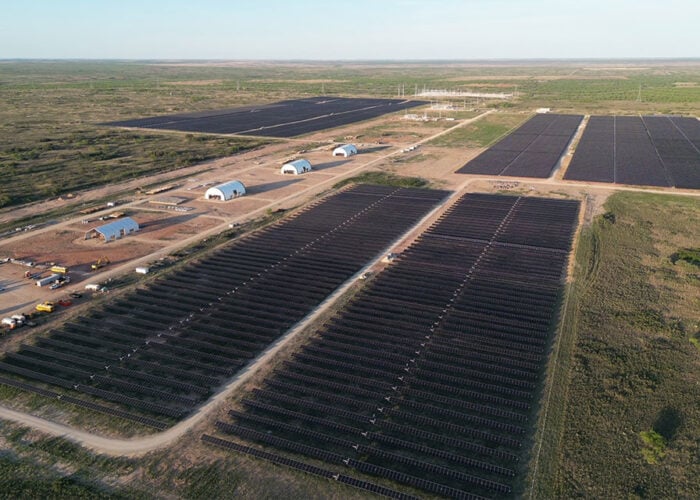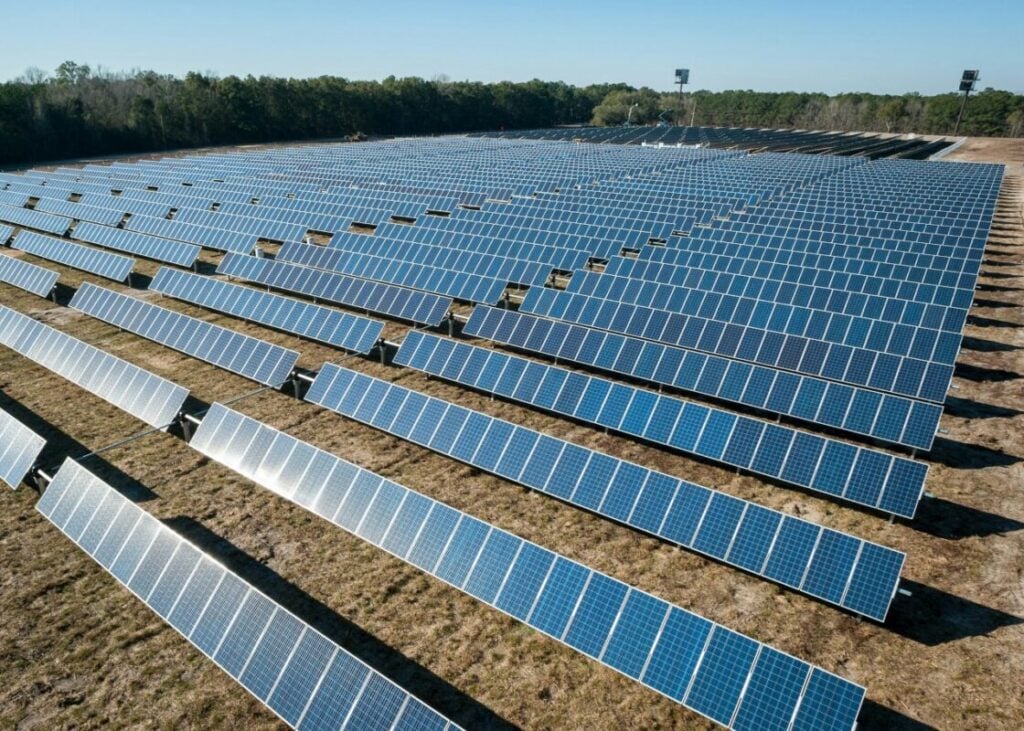
Renewables are the lowest-cost source of new energy generation in the US, despite the impact of tariffs and increasing costs, according to financial advisory firm Lazard.
Utility-scale solar PV and onshore wind generation offer the lowest levelised cost of energy (LCOE) on an unsubsidised, US$/MWh basis, despite “rising and inflationary cost pressures across all generation technologies”, according to Lazard’s latest LCOE+ report.
Try Premium for just $1
- Full premium access for the first month at only $1
- Converts to an annual rate after 30 days unless cancelled
- Cancel anytime during the trial period
Premium Benefits
- Expert industry analysis and interviews
- Digital access to PV Tech Power journal
- Exclusive event discounts
Or get the full Premium subscription right away
Or continue reading this article for free
As a result of their cost-competitiveness, renewables “will account for the majority” of near-term energy capacity additions in the US, Lazard said. This is despite rising demand projections that have “driven a sharp increase” in new-build gas generation in the US, even though gas has seen a “15-year high LCOE”.
Utility-scale solar and onshore wind have a low-end unsubsidised LCOE of US$40/MWh and US$37/MWh, respectively, the report said. This is lower than the US$51/MWh bottom end for combined cycle gas, and considerably below coal, gas peaking and nuclear power plants.
LCOE costs increase slightly with co-located renewables, rising to a low of US$61/MWh for utility-scale solar-plus-storage and US$49/MWh for onshore wind and energy storage.
US investment and production tax credits (ITC/PTC) drag the LCOE of all renewable energy technologies down, hitting a low of US$16/MWh for PTC-backed utility-scale solar and US$11/MWh for PTC-backed onshore wind. Community and commercial & industrial (C&I) solar also drops, from an LCEO of US$88/MWh without the ITC to US$64/MWh with the credit.
Those federal credits have become harder to access after the Trump administration’s “One, Big, Beautiful Bill” act imposed harsher limits on qualifying for the ITC and PTC. But Lazard’s data shows that for projects that have already secured “safe harbour” for the credits, or are on track to enter operations by the end of next year, the tax break makes a meaningful cost difference. Analysis from Wood Mackenzie last week showed that the OBBB had cost the US over US$100 billion in clean energy investments.
The report comes at a time of “unprecedented power demand growth” and a greater focus on reliability, Lazard said. These factors are “compounding the pressures already confronting the industry, from pipeline capacity constraints to rising and inflationary cost pressures,” the report continued.
Lazard said that grid infrastructure will need to be funded and expanded to meet this growing demand, along with accelerated permitting and approval processes “to enhance overall system reliability and security,” as project delays and connection queues “increase costs and reduce reliability”.
“We’ve entered a speed-to-power era—demand is outpacing supply, costs are climbing across every technology, and value is shifting to whoever can deliver capacity the fastest,” said Samuel Scroggins, managing director and head of renewables and sustainable infrastructure at Lazard. “Renewables remain the lowest-cost and quickest to deploy resource, but meeting this moment will require a diverse generation fleet.”
As tariffs, the cost of investment, permitting issues and inflation pushed up the cost of new generation projects, existing generation has become relatively more competitive, Lazard said. However, it did point out that traditional fossil fuel generation “remains sensitive to fuel prices,” which have increased significantly this year and are vulnerable to geopolitical shocks, weather and broader market trends.