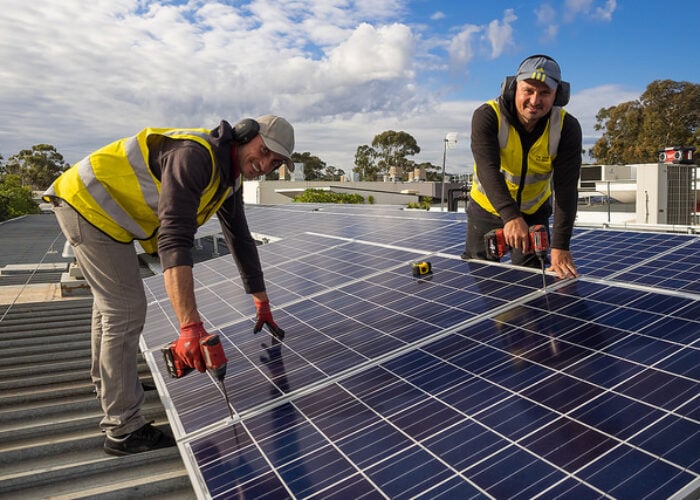
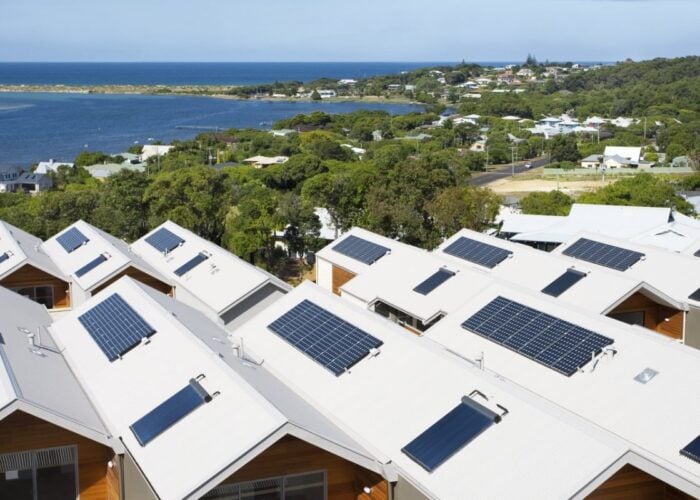
Australia’s largest PV array, the 102MW Nyngan project in New South Wales, has delivered 60,000MWh of power to the national grid in its first three months of operation, the country’s renewable energy agency has said.
Policy | As one long-running policy saga finally draws to a close, a series of attacks on renewable energy support have offset any progress that had been made. Tom Kenning explores the latest setbacks and where the possibilities for progress may lie.
News in brief from the PV Tech Storage site: Australia gets its largest battery storage system to date, Tesla man persuaded to go back to Sonnenbatterie and Gildemeister installs PV-linked flow battery systems in Czech Republic.
The number of small-scale solar PV panel installations on residential rooftops in Australia has reached 1,441,876, with 74,756 installed so far this year, according to Australia's Clean Energy Regulator.
Australia has pledged to reduce greenhouse gas emissions by 26-28% by 2030, from 2005 levels, but the plans have been criticized by environmental campaigners for falling behind other countries.
The Australian Competition and Consumer Commission (ACCC) has proposed reauthorizing a voluntary system including best practice standards for solar businesses, which is to be run by the Clean Energy Council (CEC) for five years.
The outspoken chief of industry body the Australian Solar Council has backed a pledge by the country’s parliamentary opposition party to put in place a 50% renewable energy by 2030 target if elected.
The head of Australia’s Clean Energy Finance Corporation (CEFC) has predicted a revival in investor interest in the country’s renewable energy sector following political agreement on its Renewable Energy Target (RET).
Tony Abbott’s government has finally approved the reduction of the country's Renewable Energy Target (RET) from 41,650GWh to 33,000GWh by 2020 after 15 months of uncertainty for the solar sector.
The cost of subsidies for installing and maintaining residential solar power systems will cost Australia’s economy AUS$9.7 billion (US$7.5 billion), according to a new report, which has prompted a strong backlash from solar industry bodies, who said the findings were “cherry picking”.