US Customs and Border Protection (CBP) has released shipments of solar cells manufactured at Japanese solar manufacturing company TOYO’s facility in Ethiopia following a review of supply chain documentation submitted by the company.
TOYO said the release followed its submission of supply chain traceability records, including documentation covering the sourcing of polysilicon and wafers.
Try Premium for just $1
- Full premium access for the first month at only $1
- Converts to an annual rate after 30 days unless cancelled
- Cancel anytime during the trial period
Premium Benefits
- Expert industry analysis and interviews
- Digital access to PV Tech Power journal
- Exclusive event discounts
Or get the full Premium subscription right away
Or continue reading this article for free
The company said it had cooperated fully with CBP throughout the review process and welcomed the agency’s assessment of its supply chain documentation.
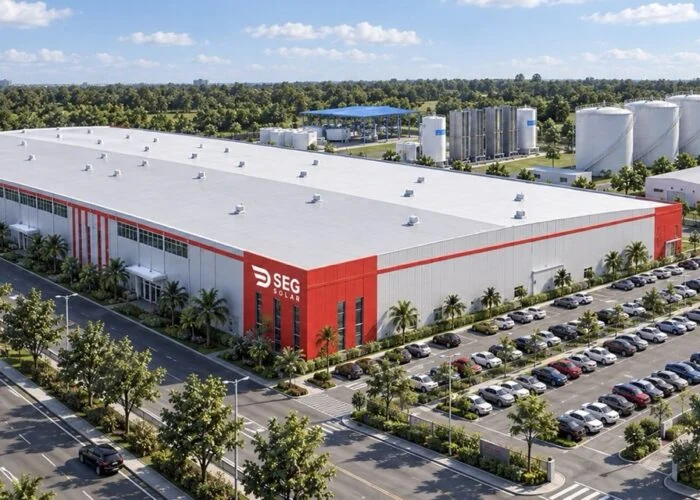
TOYO added that it has strengthened its US import compliance programme to support its domestic manufacturing operations at its facility in Humble, Texas.
“We are grateful to CBP for its careful review,” said Takahiko Onozuka, CEO of TOYO. “As a Japanese company building in America, we hold ourselves to the highest standards of transparency and compliance. Our customers need confidence in where their solar products come from, and we intend to lead by example by providing that confidence across our entire supply chain.”
The company is also pursuing certification under CBP’s Customs Trade Partnership Against Terrorism (CTPAT) programme, a voluntary supply chain security initiative designed to strengthen cooperation between customs authorities and businesses involved in international trade.
The release comes against the backdrop of a May 2026 filing by the Alliance for American Solar Manufacturing and Trade (AASMT), a coalition of US solar manufacturers, requesting that the US Department of Commerce (DoC) initiate an anti-circumvention investigation into crystalline silicon (c-Si) solar cells and modules manufactured in Ethiopia using Chinese-origin components.
The filing alleged that TOYO Solar and Origin Solar Manufacturing were using Chinese-origin wafers to produce solar cells in Ethiopia, which were subsequently assembled into modules in Ethiopia or Vietnam for export to the US.
TOYO’s compliance efforts come as US solar manufacturers and importers face increased scrutiny of supply chains, particularly the sourcing and traceability of upstream materials such as polysilicon and wafers.
Previous cases have covered imports from Thailand, Cambodia, Malaysia and Vietnam, as well as a separate investigation involving India, Indonesia and Laos, alongside longstanding trade measures against Chinese solar products.
Earlier this year, trade tensions expanded to South Korea, with a separate group of North American solar manufacturers petitioning the US DoC to investigate solar imports from the country. These cases reflect the increasingly complex trade environment facing solar manufacturers seeking access to the US market.