Electricity exports have generated US$500 million in revenue for Türkiye since the beginning of 2025, as strong domestic clean energy capacity additions have created the conditions for Türkiye to become a “regional clean power hub.”
This is the key takeaway from a report published today by clean energy think tank Ember, to coincide with Türkiye’s hosting of the COP31 summit this week. The Ember report notes that Türkiye exported more than 4TWh of electricity in 2025, the second-highest figure on record, which generated US$359.1 million in revenue, the most for a single year.
Try Premium for just $1
- Full premium access for the first month at only $1
- Converts to an annual rate after 30 days unless cancelled
- Cancel anytime during the trial period
Premium Benefits
- Expert industry analysis and interviews
- Digital access to PV Tech Power journal
- Exclusive event discounts
Or get the full Premium subscription right away
Or continue reading this article for free
The Ember report notes that Türkiye exported more than 4TWh of electricity in 2025, generating US$359.1 million in revenue. This was the second-highest figure for exported capacity from the country included in the think tank’s figures and the most revenue from sales within a single year.
While the US$166.4 million in revenue reported in the first eight months of this year is less than half of this record figure, the Ember report notes that, in May 2026, electricity exports to Iraq resumed after being suspended in August 2025.
This could help export-based revenue recover in the latter months of 2026 as Iraq has historically been a significant importer of Turkish electricity, buying more than 1TWh in both 2024 and 2025, before the suspension of exports contributed to a significant decline in exports in 2026, where Iraq imported just 0.5TWh in the first eight months of the year.
Bulgaria has also emerged as a key importer of Turkish power in recent years, importing 1.2TWh of electricity in 2025—second only to the 1.3TWh imported by Iraq—and leading 2026 imports with 1.3TWh in the first eight months of the year. This is a reversal from the state of affairs of previous years, where Türkiye had been a net importer of Bulgarian electricity until 2024, and is owed in large part to new Turkish renewable energy additions.
According to the SHURA Energy Transition Center, a Turkish energy think tank, renewable energy accounted for 99% of net electricity capacity additions in 2025, with solar PV accounting for 4.9GW of last year’s new capacity additions, the most of any technology.
Simultaneously, Ember figures show that Turkish electricity imports have fallen considerably in recent years. Türkiye imported more than 6TWh of electricity in both 2022 and 2023 via the Georgia interconnector, but this fell to just 2TWh in 2025 and less than 1TWh in the first eight months of 2026. The combination of more domestic clean energy generation and fewer overseas imports will be a boon to Turkish energy security, and comes as the government looks to further expand renewable energy deployment.
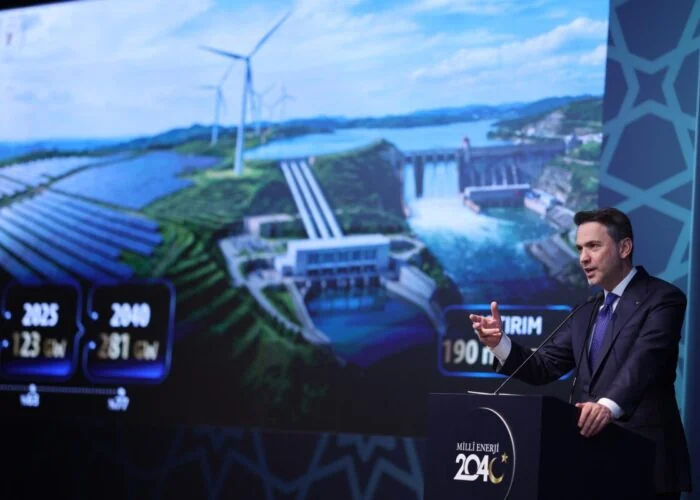
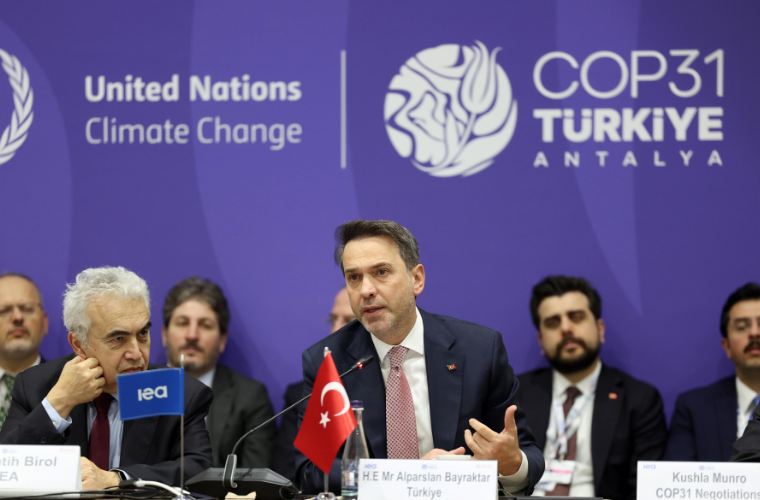
This week, at the COP31 summit, energy minister Alparslan Bayraktar announced that the government has increased its target for renewable energy capacity additions and now aims for clean energy to account for 77% share of the Turkish energy mix by 2040. Under this plan, solar PV in particular will see its operational capacity increase from around 26GW today to 112GW by 2040. New capacity additions will be facilitated through the government’s Renewable Resource Areas (YEKA) tender, which allocated 785MW of solar PV capacity in its latest round.
Indeed, the Ember report says that Türkiye has the potential to be a “regional clean power hub,” through a combination of renewable energy deployment and effective transmission infrastructure.
“With targeted interconnection plans and stronger regional cooperation, Türkiye can build on its growing electricity exports and renewable energy ambitions to become a key hub in clean energy,” said Ufuk Alparslan, regional lead for Türkiye and the Caucasus at Ember and author of the latest report.
“As the host of COP31, it has a unique opportunity to bring neighbouring countries together to strengthen cross-border electricity trade, enhance energy security, diversify supply and accelerate the shift towards a cleaner, more affordable energy future.”
Türkiye, Azerbaijan, Bulgaria and Georgia sign transmission agreement
However, the Ember report notes that further investment in the country’s transmission infrastructure, particularly cross-border interconnectors, will be necessary to realise this potential. The Ember report highlights cross-border connections in place with seven countries, including Bulgaria and Greece in Europe, and includes a connector with Azerbaijan that is not yet operational.
Ember notes that expanding its cross-border infrastructure will require “country-specific targets,” in place of the current government target to expand interconnection export capacity to 6.75GW by 2035, which does not include country-specific goals. The report describes building infrastructure to Azerbaijan and the Caucasus region as “the most immediate and strategic option” for expanding export capacity, and notes that Türkiye’s synchronisation with the mainland European grid means there is potential for further infrastructure deployments connecting Türkiye to other European countries.
A second Türkiye-Greece interconnection is set to begin operations in 2031, and today at the COP31 summit, the governments of Türkiye, Azerbaijan, Bulgaria and Georgia signed an agreement dubbed the ‘Azerbaijan-Georgia-Türkiye-Bulgaria Green Energy Corridor’ to build a single interconnection network connecting the four countries across Europe and the Caucasus.
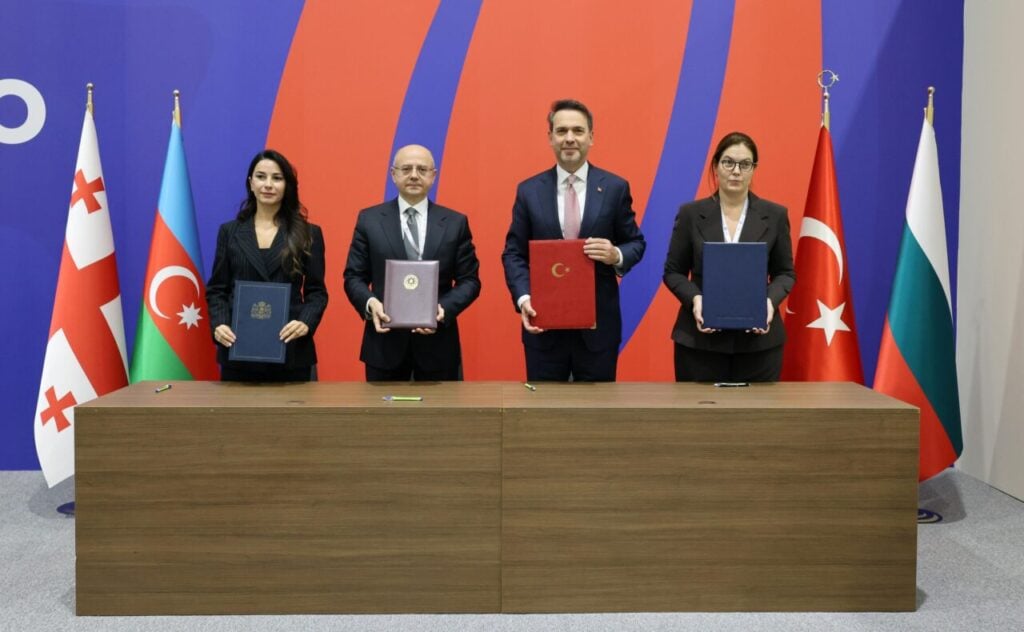
Azerbaijan energy minister Parviz Shahbazov, who first discussed the plan publicly in September, said the corridor will have an initial transmission capacity of 1GW, which is larger than the existing 700MW interconnector between Georgia and Türkiye and would be the largest interconnector originating from the latter country.
“Through this project, which we describe as the ‘TANAP of electricity,’ we aim to deliver electricity generated from clean energy sources to European markets along the Azerbaijan–Georgia–Türkiye–Bulgaria route,” said minister Bayraktar, making reference to the Trans-Anatolian Natural Gas Pipeline (TANAP), which delivers gas from Greece to Azerbaijan via Türkiye.
“At a time of accelerating electrification, this step will strengthen energy ties among our countries, create new opportunities for clean energy trade and contribute to Europe’s security of supply.”