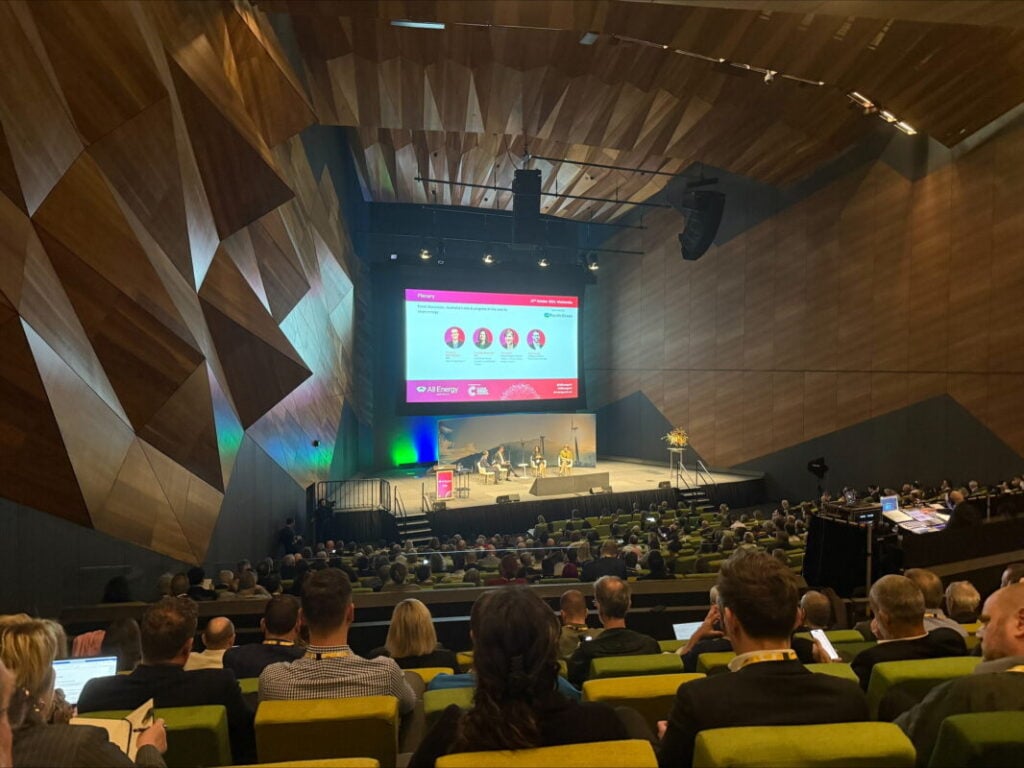
Kane Thornton, CEO of the Clean Energy Council, launched All Energy Australia 2024 in Melbourne this morning (23 October), highlighting that the energy transition is a “once-in-a-lifetime opportunity”.
In the day’s opening session, Thornton discussed the potential economic opportunity the energy transition could bring to Australia, with solar PV set to play a pivotal role.
Try Premium for just $1
- Full premium access for the first month at only $1
- Converts to an annual rate after 30 days unless cancelled
- Cancel anytime during the trial period
Premium Benefits
- Expert industry analysis and interviews
- Digital access to PV Tech Power journal
- Exclusive event discounts
Or get the full Premium subscription right away
Or continue reading this article for free
“If we get this right, we can cement our [Australia’s] role as a clean energy superpower,” Thornton added.
Australia’s vast natural resources have helped bolster renewable energy generation in the country. Indeed, when Australia’s prime minister, Anthony Albanese, was elected in 2022, he outlined a plan to turn the country into a ”renewable energy superpower,” leveraging the country’s abundance of irradiation to attract investment.
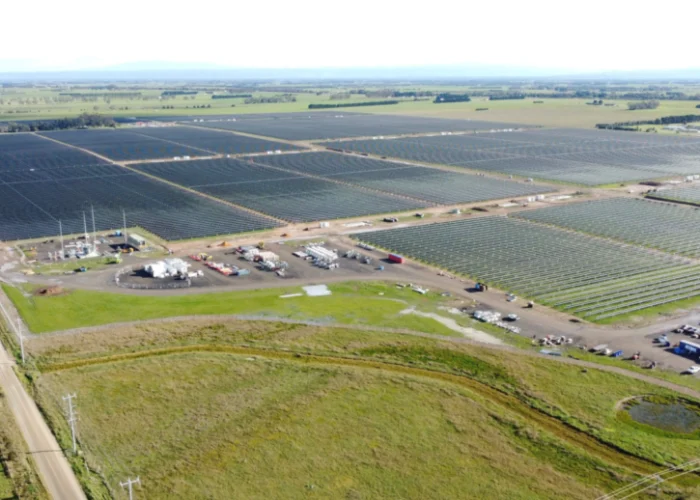
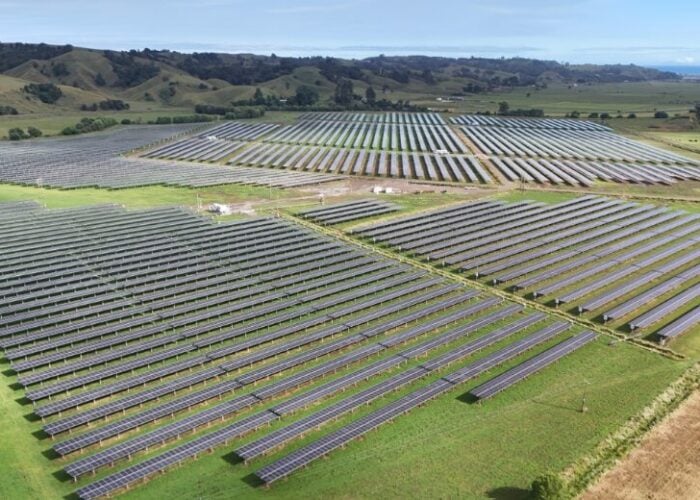
Since then, the country has gone from strength to strength in its energy transition. As previously reported by PV Tech recently, the National Electricity Market (NEM) added 1.2GW of solar PV over a 12-month period, according to the Australian Electricity Market Operator (AEMO).
Solar came up on top of the primary renewable energy generation technologies connected to the NEM, with consumers also investing heavily in larger rooftop solar PV systems. Second to solar PV was wind generation, with 0.2GW brought online, alongside 0.2GW of green hydrogen generation.
Although not fully influenced by the Albanese government, it is worth noting that the Australian government’s latest Energy Update 2024 report revealed that large-scale solar PV power generation has grown more than 20-fold in the last six years.
Pacific Green: ‘We have technologies, such as solar PV, that are ready and investable now’
In the opening panel discussion of day one of All-Energy Australia 2024, titled ‘Australia’s role & progress in the race to clean energy’, Joel Alexander, managing director & CEO of developer Pacific Green Australia, highlighted that renewable energy technologies that are investable and scalable now should be prioritised over nuclear energy developments.
“There is a pathway for technologies that are here now. We have the technologies ready and investable now,” Alexander highlighted when discussing nuclear energy’s potential in Australia.
“We have lots of policy and support for solar PV, and we have the space for large-scale deployment, along with great irradiance.”
The topic of nuclear energy has been brought to the forefront of the Australian energy sector due to the upcoming federal election. Peter Dutton, leader of the opposition Liberal Party of Australia, wants to develop several nuclear power plants nationwide to boost grid resiliency. However, as discussed on the panel, this plan has issues.
Amandine Denis-Ryan, CEO of the Institute for Energy Economic and Financial Analysis, stated that nuclear energy “does not make financial sense in Australia” before adding that coal power plants will have already been decommissioned by the time it takes to build large-scale nuclear plants.
Because of this, investing in large-scale renewable energy deployment, such as solar PV makes more financial sense as it is “here and ready”.
The panel discussion also touched on Australia’s economy and the impact the energy transition could have on certain commodities, such as iron.
On this topic, Denis-Ryan said: “Some of Australia’s major exports are seeing a decline, but we have opportunities to capture new markets with green technology.”
One green technology that could also be supported through continued investment in solar PV deployment is the production of green metals, which, given Australia’s mining prowess, will be a major export opportunity.
“Green iron is the biggest opportunity for Australia in the decarbonised world,” Denis-Ryan said.
This perspective is backed by Australian mining giant Fortescue Metals, the CEO of which, Dino Otranto, recently said that the company would aim to capitalise on China’s “insatiable demand for green products” through green metals production and exports.
As previously reported by PV Tech, Otranto, discussing the potential of utilising green hydrogen and solar PV for green metals production in the company’s 2024 financial year results, said: “Within 12 months, we will show the world that it is possible to make green iron metal, so 95% plus pig iron that is in granules out of Pilbara-based iron ores, with hydrogen as a reducing agent derived from the sun, and in the future the wind.”