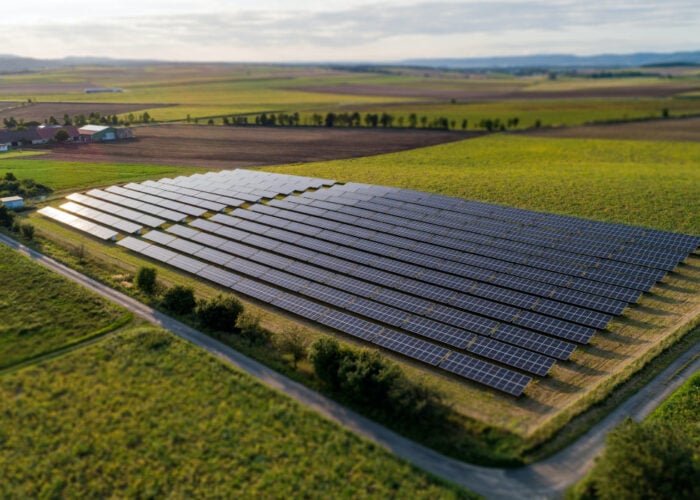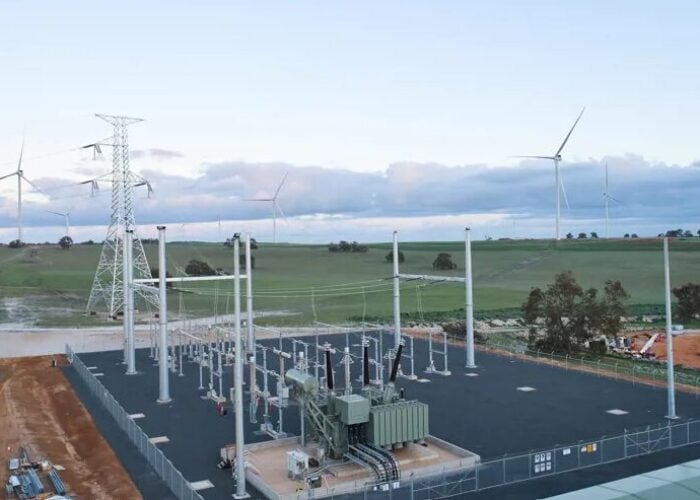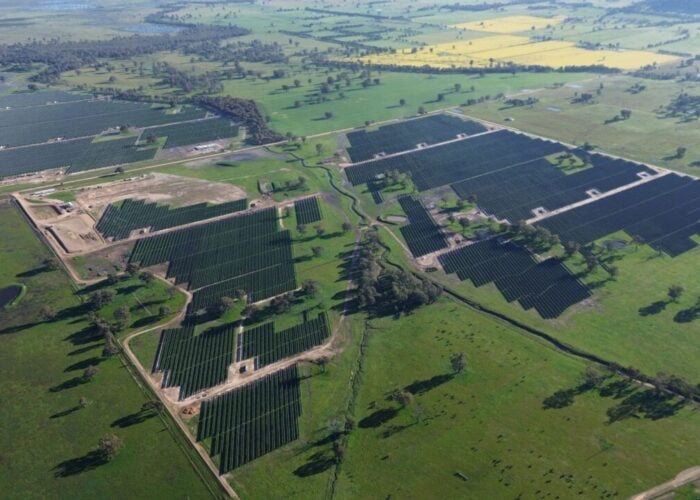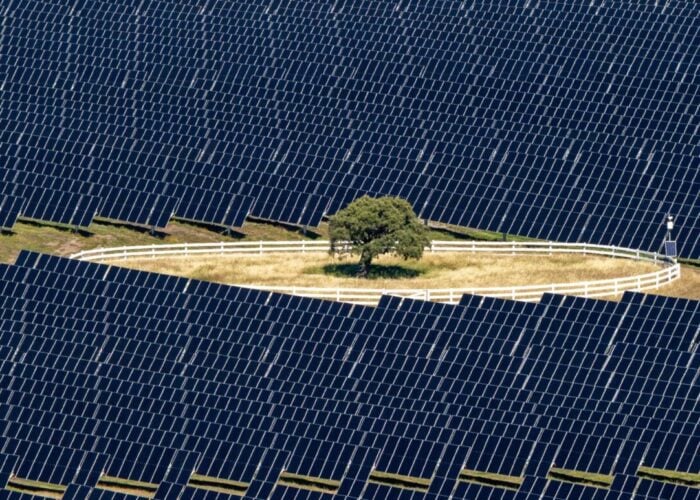
The Alberta Utilities Commission (AUC) has announced a 6-month moratorium on renewable energy project developments above 1MW in size, primarily to review concerns around land use.
The announcement was met with concern by the Canadian Renewable Energy Association (CanREA), which said that the pause was a “mistake” and could undermine the state’s hitherto strong market and reputation for renewables.
Try Premium for just $1
- Full premium access for the first month at only $1
- Converts to an annual rate after 30 days unless cancelled
- Cancel anytime during the trial period
Premium Benefits
- Expert industry analysis and interviews
- Digital access to PV Tech Power journal
- Exclusive event discounts
Or get the full Premium subscription right away
Or continue reading this article for free
The AUC said that it was responding to a letter received from municipalities and landowners raising concerns over the pace of renewable energy development and responsible land use.
During the review period, which runs until 29th February 2024, it said that it will assess the use of agricultural and public land for wind and solar projects, land reclamation and the role of municipal government in land selection. As it stands, all utility-scale projects in Alberta are commercially developed on private land and can only go forward with the permission of private land owners.
“Participants in our public hearings have increasingly raised concerns about the impacts and pace of renewable generation development,” said Carolyn Dahl Rees, chair of the AUC. “We are pleased to support the government in canvassing relevant issues for its development of policy to ensure the economic, orderly and efficient development of electricity generation in Alberta.”
Paul McLauchlin, president of the Rural Municipalities of Alberta added: ““RMA is pleased by this decision to develop a provincewide plan for how the industry can grow strategically and responsibly. Rural municipalities cover roughly 85 per cent of Alberta’s land and their voices must be included in the approval process for all renewable energy projects.”
CanREA said that the Albertan renewables market was already very well regulated, which had become a contributing factor in its remarkable growth in recent years. The organisation said that Alberta had accounted for 75% of Canada’s total renewable energy capacity additions last year and was expected to see further expansion in 2023, before the announcement of this moratorium.
In particular, CanREA’s vice-president of policy for western Canada, Evan Wilson, wrote in March that there had been a number of regulations modernised in recent years that allowed for responsible growth in the sector. Most notably, Rule 007 which concerns the application process for new projects “provides key landowner protections in terms of project decommissioning and land reclamation”, according to Wilson.
CanREA warned that the 6-month pause would shake investor confidence in Alberta’s renewables market. In a press release it said that “International investors can and will target their capital to other provinces and countries that allow for revenue stability and investor certainty” if the moratorium stands in its current form.
It also said that it threatens the state’s renewable energy targets and impacts its ability to negotiate for the upcoming Investment Tax Credit the government announced for renewable energy projects. CanREA is in discussion with the AUC to try and reduce the duration and impact of the moratorium.
Vittoria Bellissimo, president and CEO of CanREA said: “There has never been a better time or more support available to develop renewable energy resources. CanREA will continue to work closely with the provincial government and municipalities to re-open the Alberta market ASAP.”