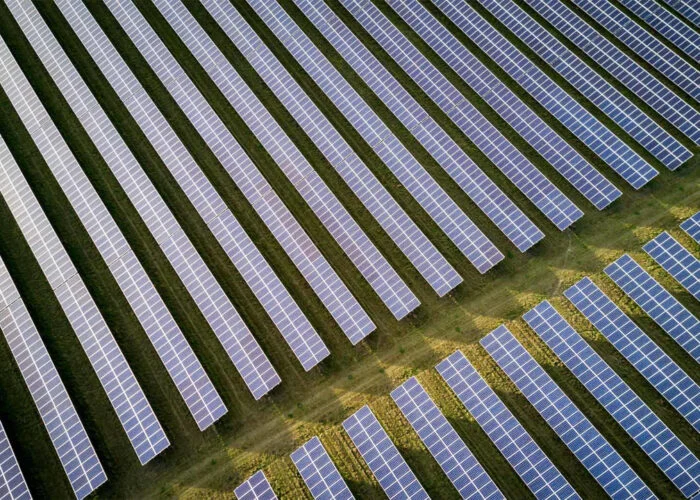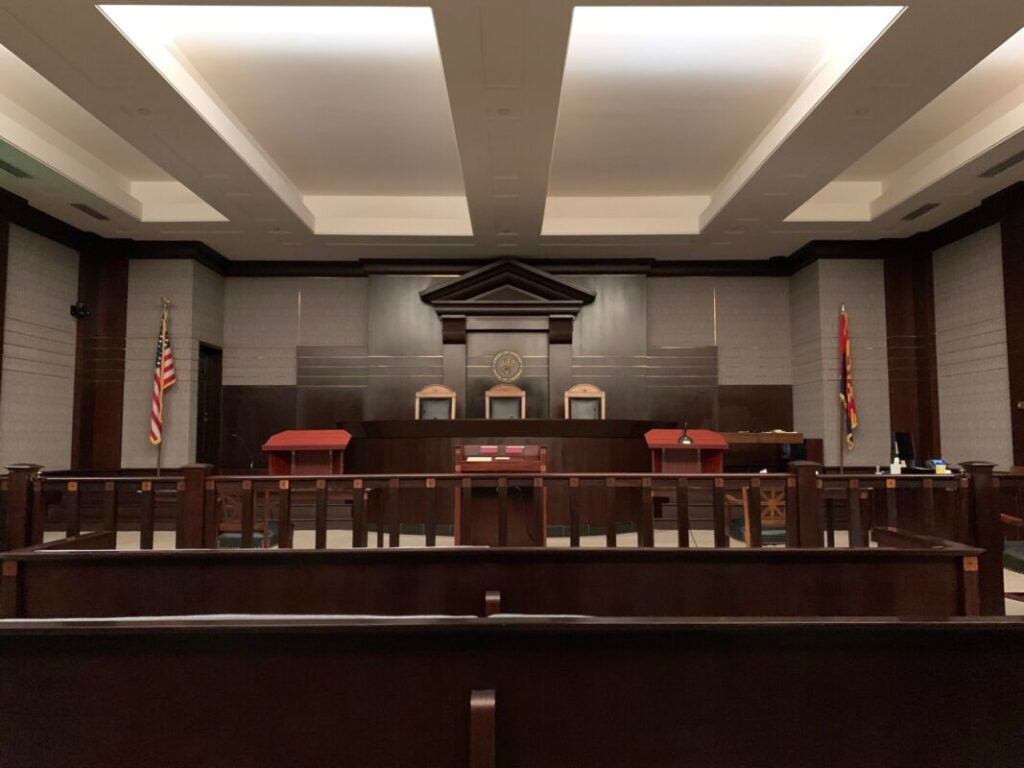
The Arizona Court of Appeals has ruled that Arizona utilities’ efforts to impose additional charges on customers whose homes have residential solar systems were made “in violation of due process,” and has vacated a December 2024 decision to this end.
The judgement, made by presiding judge Daniel J. Kiley alongside judges D. Steven Williams and Cynthia J. Bailey, was made this week, and means that residential solar users in Arizona will no longer have to pay additional charges to the Arizona Public Service (APS) utility that are 1.15 times higher than charges levied on non-residential solar customers.
Try Premium for just $1
- Full premium access for the first month at only $1
- Converts to an annual rate after 30 days unless cancelled
- Cancel anytime during the trial period
Premium Benefits
- Expert industry analysis and interviews
- Digital access to PV Tech Power journal
- Exclusive event discounts
Or get the full Premium subscription right away
Or continue reading this article for free
Vote Solar, a community solar advocacy group that was one of the organisations to oppose the rate increase, called the fees aimed at residential solar customers “discriminatory”. The organisation estimated that these charges amount to US$2-3 a month in additional charges for household.
“As Arizonans brace themselves for another hot summer, and yet another rate hike by APS, today’s decision marks an important step forward towards a fairer and more affordable energy system,” said Kate Bowman, Vote Solar’s west senior regulatory director. “Monopoly utilities should not be allowed to impose unjustified charges on households that choose to lower their utility bills by installing solar.”
The ruling is notable in Arizona, which has one of the larger residential solar sectors in the US. Figures from the Solar Energy Industries Association (SEIA), which joined Vote Solar in opposing the rate increase, show that, as of this month, Arizona has the fourth-most solar PV capacity in operation among the 50 US states, and the third-most residential solar capacity.
More than 15% of Arizona homes have solar panels installed, and the state added more residential solar capacity than utility-scale capacity in 2021 and 2022, a period that coincides with APS’ efforts to impose higher fees on residential solar customers; the utility was ordered to remove what it called a “grid access charge” (GAC) for solar projects specifically in 2019, and introduced a new GAC just a few years later in 2022.
Over a decade of legal battles
Arizona utilities have long argued that the state’s residential solar customers ought to pay higher rates than other residents; APS sought to introduce a specific charge for solar customers as early as 2013, alleging that “they paid less than their fair share” of the utility’s costs for providing services.
In 2019, the Arizona Corporation Commission (ACC), the state’s public utilities commission, instructed utility APS to remove the GAC, which amounted to a charge on solar projects in the state that pay “less than their fair share of APS’ fixed costs”. The GAC was first introduced in 2013, and upon its removal, ACC left the door open for future rates to be imposed on solar projects, saying that a new charge could be introduced if APS could provide “evidence of specific costs” that residential solar users “impose” on its system.
APS initiated a new rate case in October 2022, seeking to plug an annual budget gap of US$772 million by raising the base rate for all residential customers by 22.8%, whether or not they use a residential solar system. Curiously, neither ACC nor APS tried to reintroduce the GAC at this stage, as they sought to increase costs for all residential customers, rather than those that use solar systems in particular. The idea of imposing additional costs on residential solar customers came from administrative law judge Sarah Harpring who, in a 2023 case, in the words of the Court of Appeals decision, “recommended something no one asked for”.
APS witnesses also drew a distinction between “site-load COSS” and “delivered-load COSS”, in reference to a cost-of-service study (COSS), which a utility must complete in order to change its rates. This study assesses the relative costs of that utility serving each “customer class”, as the Court of Appeals puts it, in relation to the rates that each class pays.
The site-load COSS includes the total amount of electricity to be delivered from the utility to customers, including on-site generation from residential solar systems, and so “better reflects” the costs incurred by the utility, according to the APS witnesses who spoke during the 2023 case.
APS did not ask the ACC to include its site-load COSS estimates in the new rates to be levied on Arizona customers, as this would amount to a charge for residential solar consumers specifically—only making reference to this to set a precedent for “future rate case proceedings”—but Harpring then recommended that ACC use the site-load COSS in its rate calculations.
In March 2024, ACC then voted to adopt the recommendations made during this court process, including raising of the base rate by 22.8% for all residential customers and Harpring’s recommendation to impose a charge on residential solar customers in particular, which would increase their bills by 1.15 times the average increase under 22.8% base rate increase. Vote Solar and SEIA said they were “blindsided” by Harpring’s recommendations, and ACC’s decision to accept them.
Utilities’ work ‘did not constitute analysis’ necessary to increase rates
However, this rate increase was met with constant opposition. In a 2024 hearing, judge Belinda A. Martin called on the parties involved to “address the site-load COSS” issue raised by the earlier case, suggesting that uncertainty remained about the utilities’ COSS, and, as a result, the cost of the utilities serving Arizona residential solar customers.
Indeed, the Court of Appeals ruled this week that the ACC was aware that the work done by APS in its 2022 rate case proposal “did not constitute the ‘analysis’” of the costs of providing services that the ACC asked APS to complete after the 2019 decision. The ACC even noted that “APS does not truly provide additional services and does not use additional equipment to serve [residential solar] customers,” suggesting that the state’s residential solar customers were not only to be charged more, but to receive no additional services in return.
“Although the Commission determined that APS does not provide any unique services to residential solar customers, the Commission nonetheless authorised APS to impose a unique charge on those customers,” wrote presiding judge Kiley in the court’s final ruling.
However, it is worth noting that the Court of Appeals’ decision is not a rejection of the idea of GACs for residential solar projects in general, but a decision that the legal process by which the utilities sought to impose the GACs between 2019 and 2024, namely the absence of a COSS demonstrating higher cots of serving residential solar customers, was flawed.
Indeed, Vote Solar notes that the ACC is currently considering a separate proposal from APS to increase fees for residential solar customers that will increase costs to around US$6 a month.
The ongoing residential solar legal battles in Arizona are illustrative of the uncertainty policy environment facing the US solar sector at present. Policy will be a topic of discussion at Solar Media’s PV CellTech USA Conference in San Francisco, on 13-14 October 2026, particularly with regards to government incentives for building more upstream manufacturing capacity in the US. Read the full agenda here and book tickets on the event website.