Australia and India have formalised a broadened energy partnership that spans renewable energy deployment, supply chain resilience, critical minerals, rooftop solar training and uranium exports.
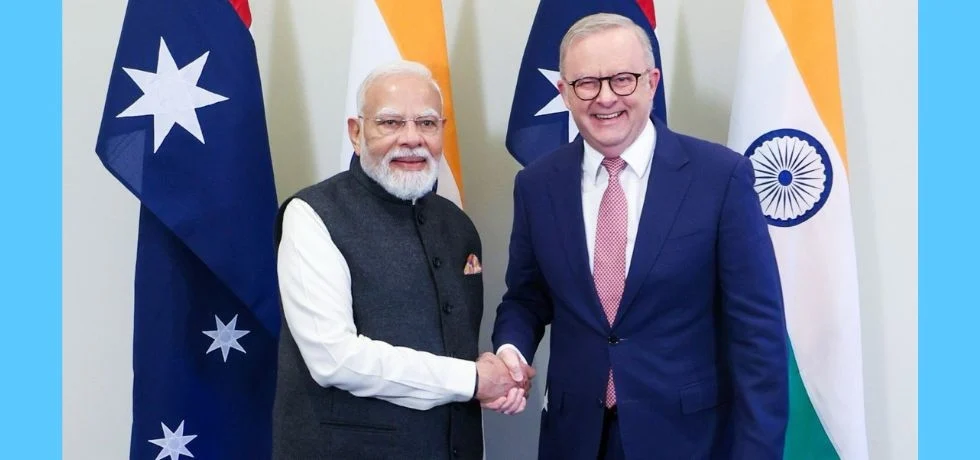
Australian Prime Minister Anthony Albanese and Indian Prime Minister Narendra Modi confirmed the agreement in Melbourne on 9 July 2026, framing the bilateral relationship around two parallel tracks.
Try Premium for just $1
- Full premium access for the first month at only $1
- Converts to an annual rate after 30 days unless cancelled
- Cancel anytime during the trial period
Premium Benefits
- Expert industry analysis and interviews
- Digital access to PV Tech Power journal
- Exclusive event discounts
Or get the full Premium subscription right away
Or continue reading this article for free
This includes securing the near-term supply of conventional fuels and accelerating the energy transition through renewables and electrification.
The joint statement acknowledges the prolonged disruption to global energy supply chains stemming from instability in the Middle East. It reaffirms both countries’ commitment to open markets and rules-based trade.
Against that backdrop, it commits Australia and India to strengthening cooperation to maintain a stable supply of coal, diesel, other liquid fuels, and natural gas. India is currently Australia’s fourth-largest source of refined petroleum, while Australia is a longstanding supplier of coal and liquefied natural gas to India.
At the same time, the statement recognises that “increasing electrification of respective energy systems will be a valuable source of energy security into the future,” and welcomes progress under the India–Australia Renewable Energy Partnership, including the opening of a Rooftop Solar Training Academy in Gujarat.
The academy draws on Australian technical expertise to support India’s growing solar installer workforce, a practical expression of a collaboration first formalised in a 2022 letter of intent that committed both countries to reducing the cost of solar PV, battery energy storage and other clean technologies through scaled manufacturing and deployment.
Two large markets, shared delivery challenges
The statement comes at a moment when both countries are implementing renewable energy programmes at scale but are wrestling with the infrastructure and policy conditions needed to sustain deployment.
India added approximately 26GW of solar capacity in the first half of 2026 alone, a 43% increase on the same period in 2025, according to JMK Research, taking cumulative renewable energy installed capacity to around 288GW.
Utility-scale projects accounted for 19GW of those additions. At the same time, the rooftop segment recorded approximately 6.4GW, more than double the figure for H1 2025, driven largely by the government’s PM Surya Ghar: Muft Bijli Yojana (PMSGY) rooftop solar initiative.
JMK projects India will add around 47GW of solar and wind combined across the full year 2026, keeping it on track toward its target of 500GW of non-fossil fuel capacity by 2030.
Rooftop solar momentum in India is building, but execution remains uneven, according to analysis from the Institute for Energy Economics and Financial Analysis (IEEFA).
More than 3.3 million systems have been installed under PMSGY, adding over 12GW of capacity. Still, by mid-2025, only around 22.7% of the scheme’s 5.8 million applications had been completed, a gap that varies sharply by state.
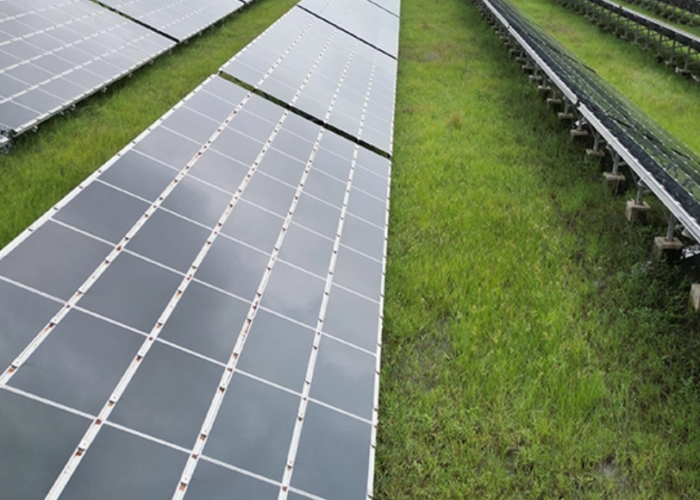
The Rooftop Solar Training Academy, which opened in Gujarat, India’s leading state for solar capacity additions in H1 2026, sits at the heart of that execution challenge.
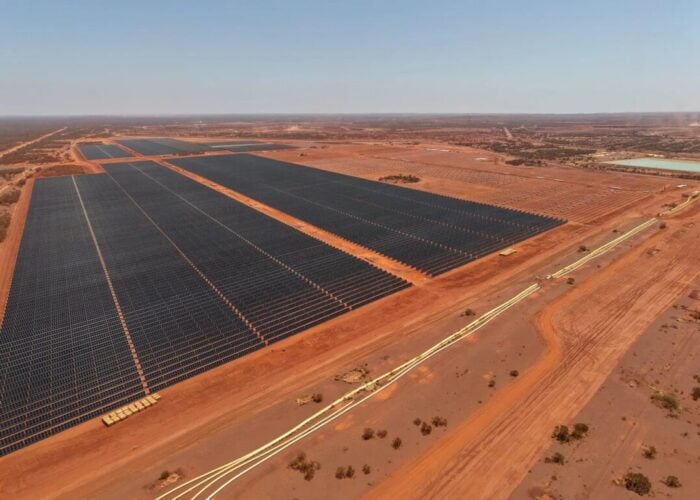
In Australia, the scale of the renewable energy task is no less formidable. AEMO’s 2026 Integrated System Plan (ISP) calls for nearly 120GW of utility-scale wind and solar by 2050, roughly five times the current level of around 23GW, and explicitly states that delivery, rather than planning, is now the binding constraint.
Australia needs to build at a sustained pace that has not been achieved in any consecutive five-year period, and the ISP identifies 35GW of short and medium-duration battery storage alongside 5GW of long-duration storage as essential firming infrastructure to make the renewable energy build-out dispatchable.
Meanwhile, investor confidence in Australia’s clean energy sector has deteriorated sharply, according to the Clean Energy Investor Group’s 2026 survey.
Just 8% of respondents believe Australia is on track to meet its 82% renewable energy target by 2030, with 65% saying it will not be met. Transmission buildout delays have become the single largest challenge for investment, surpassing planning approvals.
Australia’s Climate Change and Energy Minister Chris Bowen framed the partnership in terms of mutual commercial interest as much as geopolitics.
“Both our nations understand the importance of practical action on climate, and the significant economic opportunity the energy transition presents,” Bowen said, citing the Rooftop Solar Academy as an example of Australia’s technical expertise meeting India’s installer workforce needs.
The statement also acknowledges the energy security vulnerabilities of Pacific Island Countries and the importance of maintaining energy resource supply to their resilience, a signal that the bilateral energy framework is intended to extend its reach across the region, not solely between the two signatories.