Australia must find green iron customers beyond China as Chinese steel demand declines and iron ore export earnings fall, according to the Institute for Energy Economics and Financial Analysis (IEEFA).
The energy think tank’s latest report argues that converting iron ore into green iron using renewable energy such as solar PV has moved from an opportunity to an economic necessity for Australia.
Try Premium for just $1
- Full premium access for the first month at only $1
- Converts to an annual rate after 30 days unless cancelled
- Cancel anytime during the trial period
Premium Benefits
- Expert industry analysis and interviews
- Digital access to PV Tech Power journal
- Exclusive event discounts
Or get the full Premium subscription right away
Or continue reading this article for free
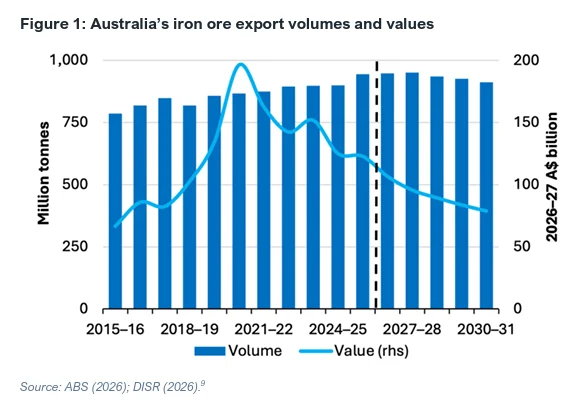
Around 80% to 85% of Australian iron ore is shipped to China, where crude steel output peaked in 2020. The federal government expects export volumes to peak within about two years and then decline for the rest of the decade.
Citing those forecasts, IEEFA said Australia’s iron ore export earnings are set to fall by AU$44 billion (US$31 billion) in real terms, from AU$123 billion in 2025-26 to AU$79 billion in 2030-31.
“China’s steel boom is over, and Australia’s iron ore outlook is now one of falling volumes and falling prices,” said Simon Nicholas, lead analyst for global steel at IEEFA.
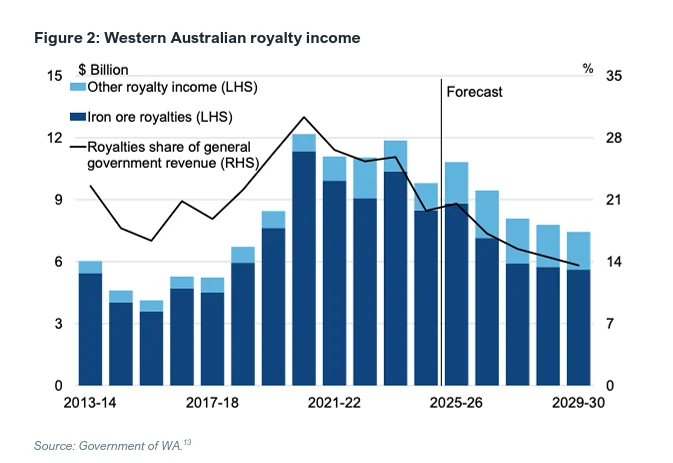
Western Australia is most exposed. Iron ore royalties are estimated at AU$8.8 billion for 2025-26, or 81% of the state’s royalty income, and are forecast to drop by AU$1.7 billion in 2026-27.
The pressures inside China are building. Crude steel output fell 3% year-on-year to 500 million tonnes in the first half of 2026, while new building starts dropped by 23.4%.
Chinese steel exports, which reached a record 119 million tonnes in 2025 and helped support iron ore imports, fell by 5.6% over the same period, while the US, EU, UK, Vietnam and Australia raised tariffs or cut quotas.
Supply competition is also rising. The Simandou project in Guinea, led on the Chinese side by China Baowu, is ramping up towards an annual capacity of 120 million tonnes faster than expected. IEEFA noted that S&P Global expects the seaborne iron ore market to be oversupplied until the mid-2030s.
The commercial relationship has become harder too. China Mineral Resources Group (CMRG), the state buying agency set up in 2022 to centralise iron ore purchases, told some Chinese mills not to take delivery of certain portside Fortescue cargoes from 15 July, Reuters reported. IEEFA said the affected Super Special Fines product accounted for 45% of Fortescue’s exports.
That marks a change from two years ago. In its 2024 financial results, Fortescue named China a “core market” and pointed to the country’s “insatiable demand for green products” as it set out plans for an integrated Australia-China green metals supply chain.
Other voices in the sector shared that view. Tim Buckley, director of Climate Energy Finance, told PV Tech Premium last year that “the single biggest opportunity for Australia is to enhance and pivot our relationship with China”, arguing that exporting green iron instead of raw ore would also diversify the mining workforce.
Solar-powered pilots test Australia’s green iron route
Green iron is produced by removing oxygen from iron ore using green hydrogen or renewable energy, rather than coal. The resulting iron can then be melted into steel in an electric arc furnace (EAF), cutting emissions from one of the world’s most carbon-intensive industries.
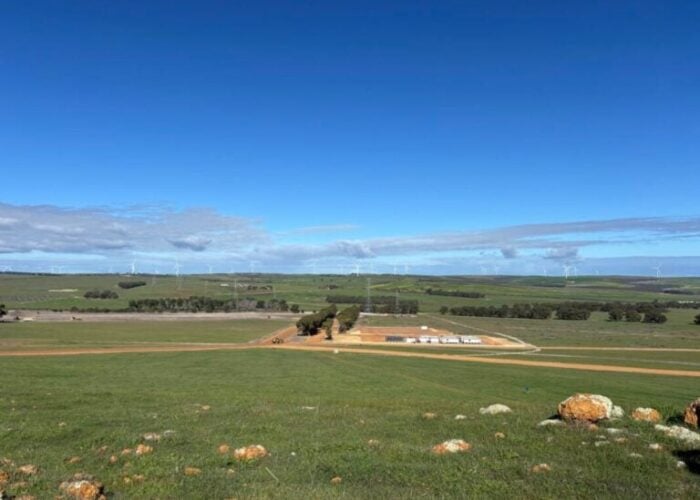
Fortescue has gone furthest in linking that process to solar PV. The Perth-headquartered miner began building a US$50 million Green Metal Project at its Christmas Creek site in the Pilbara in 2024, using green hydrogen to power an electric smelting furnace, with a target of more than 1,500 tonnes of green metal per year.
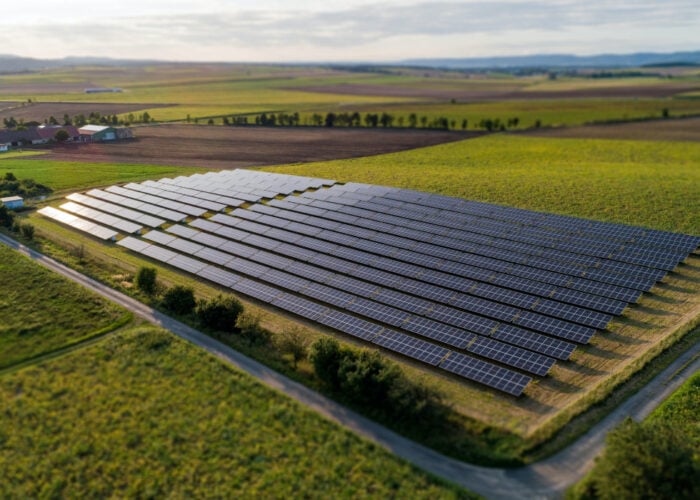
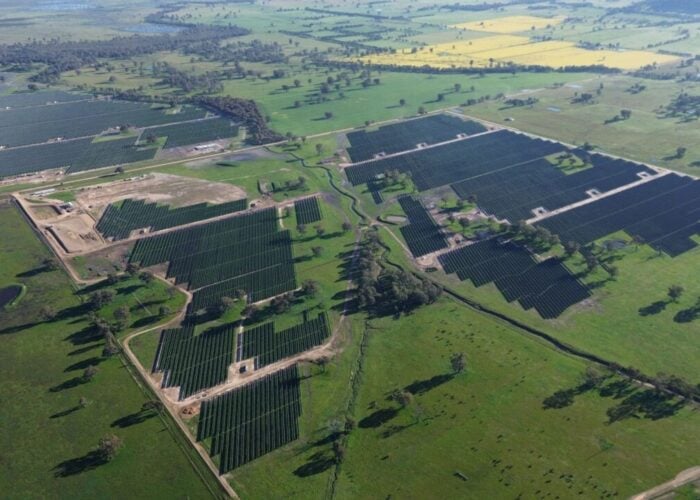
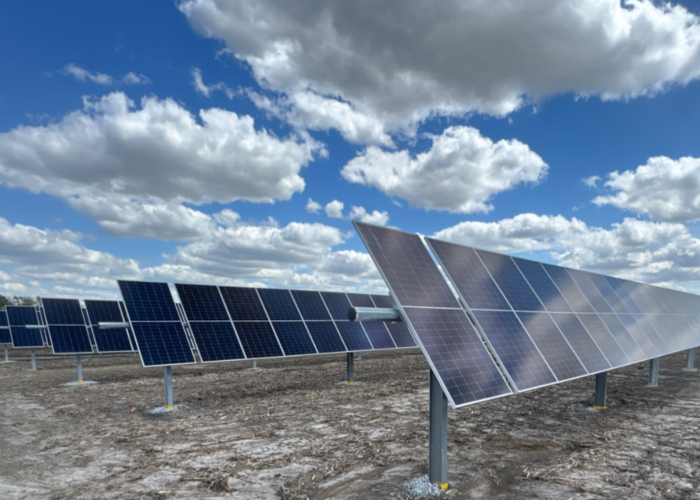
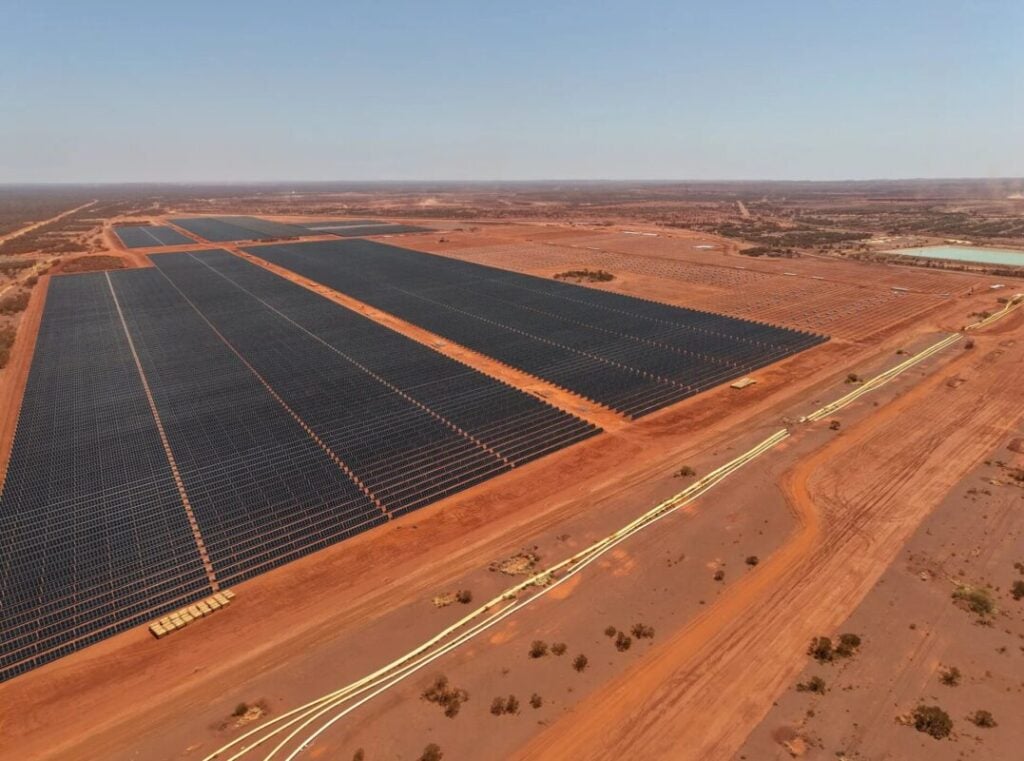
Around 160,000 solar PV modules partly power Christmas Creek and the nearby all-electric Cloudbreak mine. The company also switched on its 100MW North Star Junction solar PV plant near the Iron Bridge magnetite mine in July 2024.
The pilot produced its first hot metal in August 2026, about a year later than the 2025 start first targeted.
“For decades Australia has exported iron ore to the world,” said Fortescue CEO Dino Otranto. “That’s a competitive advantage we should be building on.”
Fortescue’s modelling indicates it will need at least 2GW to 3GW of wind and solar, backed by battery storage, to meet all of its electricity demand from renewables by 2030.
Matching that variable output to industrial demand is the main technical challenge. Tony Wood, energy programme director at the Grattan Institute, previously told PV Tech that on-site solar may prove cheaper than grid-supplied renewable energy for metals production, with wind used alongside it to reduce exposure to intermittency.
Larger projects are moving more slowly. NeoSmelt, a joint venture of BHP, Rio Tinto, BlueScope, Woodside and Mitsui, plans a 30,000 to 40,000-tonne-a-year electric smelting furnace pilot plant in Kwinana, Western Australia. BlueScope said in April that a final investment decision is due at the end of 2026, with start-up pushed back a year to 2029.
In South Australia, renewable energy platform ZEBRE, a joint venture of HD Renewable Energy (HDRE) and ZEN Energy, signed a memorandum of understanding with Greensteel Australia in May. The agreement draws on ZEBRE’s 437MW South Australian portfolio, including the 210MW Solar River solar PV plant near Robertstown, and the partners will explore a 400MW battery at the steel production hub.
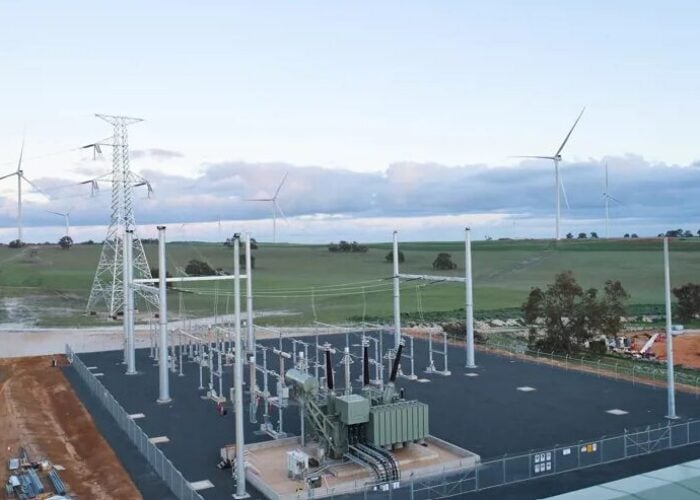
New industrial loads of this kind are already changing grid planning. Transmission operator ElectraNet expects South Australia’s electricity demand to approach 50TWh by 2040 under high-growth scenarios, with the Whyalla steelworks’ planned move to an EAF and a direct reduced iron (DRI) plant among the drivers.
The federal government has set aside AU$1 billion through its Green Iron Investment Fund, with up to AU$500 million reserved for the Whyalla transformation and at least AU$500 million open to early-mover projects across the country.
Japan, South Korea, India and Southeast Asia emerge as green iron buyers
IEEFA’s central argument is that China may not become a large buyer of Australian green iron, even if it remains the biggest buyer of Australian ore for now.
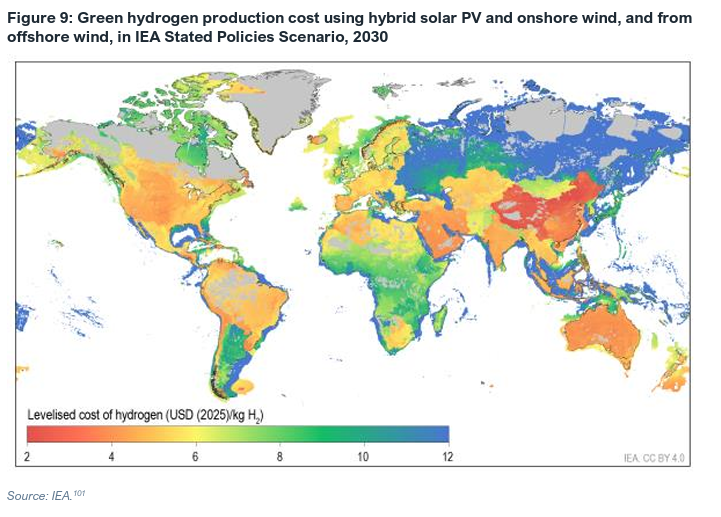
China held around two-thirds of global electrolyser capacity at the end of 2025, and the International Energy Agency expects parts of the country to produce green hydrogen for US$2/kg by 2030, below Australian costs. An August 2026 policy document under China’s Five-Year Plan lists DRI as a priority use for green hydrogen.
China Baowu is developing a US$1.5 billion green hydrogen project, with some output to be piped to its Zhanjiang steelworks. IEEFA cited an analysis from the Australian National University finding that Australia would need to offer clearly lower costs than China to export green iron there.
“Australia’s biggest iron ore customer won’t necessarily be its biggest green iron customer,” Nicholas said.
IEEFA said Japan and South Korea remain the most obvious markets because their steelmakers have limited access to renewable energy. Earlier IEEFA analysis estimated that supplying those two countries could be worth around US$2 billion a year to Australia by 2030.
Japanese steelmakers are already shifting production. Nippon Steel approved a US$6 billion investment in 2.9 million tonnes a year of EAF capacity in May 2025, and JFE Steel is building a 2-million-tonne-a-year EAF at Kurashiki. Green iron can be fed into EAFs alongside scrap steel to raise quality.
Southeast Asia offers a further route. IEEFA expects the region’s steel demand to rise from 76 million tonnes in 2023 to more than 100 million tonnes by 2030, with EAFs making up a large share of new capacity and cited forecasts that a regional scrap surplus could turn into a 15-million-tonne deficit.
Competitors are moving into that gap. Meranti Green Steel plans a 2.5 million-tonne-a-year DRI plant in Oman using 15% green hydrogen at the outset, with some output due to supply an EAF in Thailand from 2029.
India is the other market IEEFA highlights. The country has long met its own iron ore needs, but the Australian government forecasts that its imports will rise from virtually nothing to 50 million tonnes by 2031. Jindal Steel plans to import DRI and hot briquetted iron because of scrap shortages and is the final bidder for the Whyalla steelworks.
Fortescue has shifted in the same direction. IEEFA noted that the company, which in 2024 targeted 100 million tonnes of green iron exports to China annually, is now looking to Southeast Asia and India.
The report also points to buyers willing to pay more for low-emissions steel. Swedish producer Stegra has signed long-term offtake contracts at a 20% to 30% premium for steel made with green hydrogen, with early demand expected from car makers, shipbuilders, wind turbine manufacturers and data centres.
Previous studies cited by IEEFA estimate that green iron processing could add between AU$133 billion and AU$269 billion to the value of Australia’s largest export.