Despite efforts to revive European PV manufacturing at scale, the continent remains well behind many parts of the world. China still dominates global solar supply, but there are many examples of other countries using protectionist measures to foster their domestic industries. Lower costs of capital and shorter development cycle times would help Europe compete. However, the heart of the issue is the need for more stringent European legislation, according to the head of a French startup that plans a 5GW solar cell and module manufacturing facility in northeastern France. Moreover, European manufacturers collaborating with China on technology may be essential given there is almost no locally established industry.
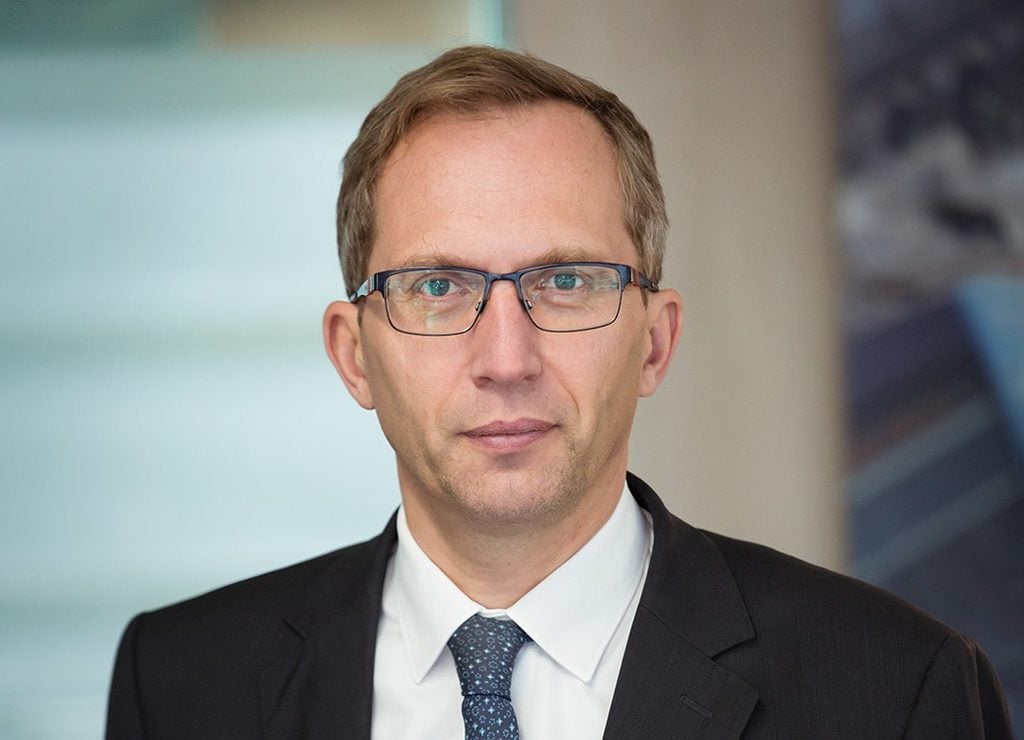
HoloSolis, whose gigafactory in Sarreguemines-Hambach is due to start production in 2029, recently closed a Series A funding round of more than €15 million (US$16.5 million) from four new investors. One of them is Trina Solar, which had already signed agreements with the company to use its PV technology at the proposed factory. But some of the financing the project needs must wait until new European legislation known as the Industrial Accelerator Act (IAA) is finalised next year. The wording of the act will be pivotal for domestic manufacturing in Europe. Even so, Henri Poupart-Lafarge, a former rail executive who became CEO of HoloSolis in October, tells PV Tech Premium he is confident that the current direction of EU legislators’ discussions favours both the project and the continent’s manufacturing sector at large.
Try Premium for just $1
- Full premium access for the first month at only $1
- Converts to an annual rate after 30 days unless cancelled
- Cancel anytime during the trial period
Premium Benefits
- Expert industry analysis and interviews
- Digital access to PV Tech Power journal
- Exclusive event discounts
Or get the full Premium subscription right away
Or continue reading this article for free
NZIA lacked stringency
There has been much talk in recent years about revitalising European PV manufacturing, but there is little to show for it on the ground. The industry had been counting on support from Europe’s Net Zero Industry Act (NZIA), which makes low-emission clean technology manufacturing a core criterion in public procurement and renewable energy auctions, something that was expected to favour European producers. However, trade association SolarPower Europe said in a recent report that the act has been implemented too slowly. Member states were required to introduce NZIA criteria from the start of 2026, but the rollout was described as both slow and “fragmented”.
The act also lacked stringency, adds Poupart-Lafarge – noting that several projects in France and Germany failed to get off the ground because there was no market for their products.
Rather than directly promoting European manufacturing, legislators hoped the carbon footprint criterion would help reshore industry in Europe. But some external players have been able to adapt their carbon footprint and still compete in Europe, says Poupart-Lafarge. Carbon criteria also changed from tender to tender, so carbon footprint was valued differently in each bid.
“It was not stable enough,” he says. “Going indirectly through a resilience or a sustainability criterion, which is very variable, is a huge risk and that has led to the situation in which we are today.”
He therefore argues that any new regulation to support European PV manufacturing should be based on “strict ‘Made in Europe’ criteria, which makes it much more stringent”.
Getting Europe’s manufacturing back on its feet
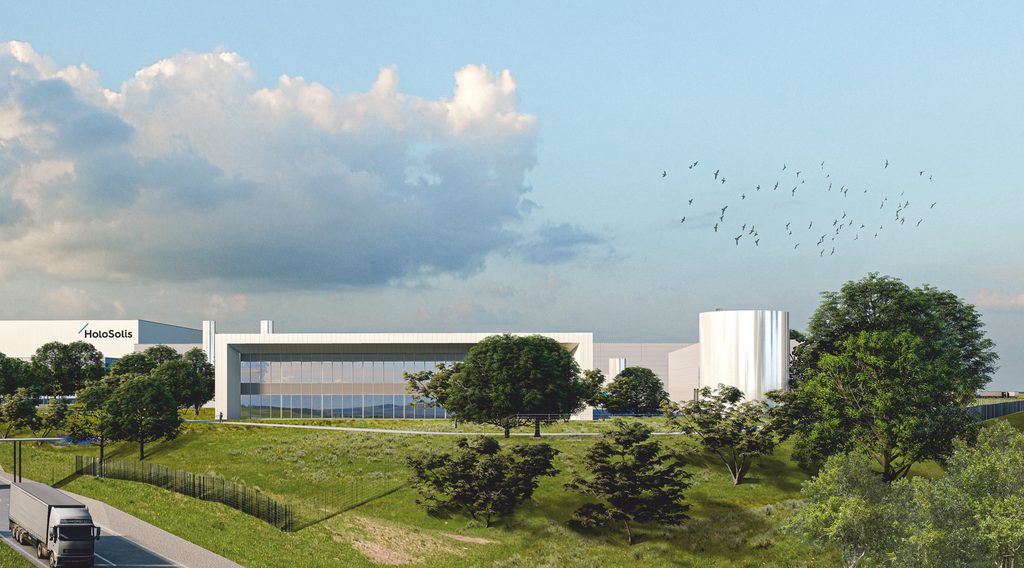
The industry will be counting heavily on the forthcoming IAA to create a proper market for locally made PV. The act, due to be finalised next year, aims to raise manufacturing’s share of EU GDP from 14.3% in 2024 to 20% by 2035.
For years, Europe has lost PV manufacturing expertise and capacity to China, other parts of Asia and, more recently, the US, India and the Middle East. It must now find new ways to reassert itself as a solar manufacturing competitor.
Shorter development cycle times and subsidies will both help drive this comeback. But according to Poupart-Lafarge, the clear headliner is the IAA, which he describes as “the cornerstone of our project”.
The European Commission published its first legislative proposal for the IAA in March. Trilogue negotiations between the European Parliament, Commission and Council are expected to settle on a final text in the spring.
Alongside a favourable IAA, Europe also needs to shorten cycle times for investment and permitting and lower its cost of capital. Otherwise, it will continue to struggle to compete with China.
“That’s why we are so happy to have some subsidies because the cost of capital is too high in Europe, when in China, they get some free capital,” adds Poupart-Lafarge. “We cannot have European industry which is not competitive against the Chinese industry in general.”
Help from China
With this in mind, HoloSolis’ agreement with Chinese PV giant Trina Solar raises the question of whether European manufacturing projects can become viable at all without significant support from China. Indeed, under the patent licence agreement, HoloSolis can use Trina’s tunnel oxide passivated contact (TOPCon) patent portfolio in Europe.
Asked whether a project could succeed without such support, given that Europe currently lacks established manufacturing players, Poupart-Lafarge says: “I would say it’s a non-starter. You need to be pragmatic.”
It would be possible to partner with a company from a country other than China, such as South Korea, he adds, but the partner would need to be an established firm with experience.
Chinese manufacturers also have enormous economies of scale. Several Chinese firms produce close to 100GW of PV modules or more per year, which puts the size of HoloSolis’ proposed 5GW gigafactory into perspective. However, Europe is still home to some of the world’s foremost PV laboratories, including CEA, IPVF and Fraunhofer.
“And by the way, these EU PV labs are today working with the Chinese industry because they cannot work with the European industry as the European industry does not exist anymore,” says Poupart-Lafarge. “Europe can still innovate, but we need manufacturing facilities to industrialise EU R&D. And we want of course to partner with the European laboratories, R&D centres in order to keep up with the latest technology.”
He describes EU labs as “top-notch” and stresses that PV still has a long future of innovation ahead of it. The technology can still be “vastly upgraded”, which is why quality labs matter.
He says the rise of large-scale PV manufacturing in regions such as the US, India, the Middle East and other parts of Asia is no surprise, because they have gone through the same reasoning. They, too, have concluded that solar energy is crucial to their strategies for sovereignty and autonomy and have moved to protect their domestic industries.
This diversification is adding further pressure to the market. As a result, Europe now needs to protect itself against all competitors, not just China, and needs further incentives for local manufacturing, says Poupart-Lafarge.
A certain level of scale is ultimately needed for a project to be viable, but he stresses that there are no shortcuts. Projects need to be developed progressively, without being overambitious at the start.
“I think the gigafactory is important in order to get the right economies of scale. But we’ll do it step by step,” he says. “It’s important that we show to our potential customers security and certainty in delivery, quality in delivery, and then the last competitiveness point will be gained through the gigafactory.”
Progress so far
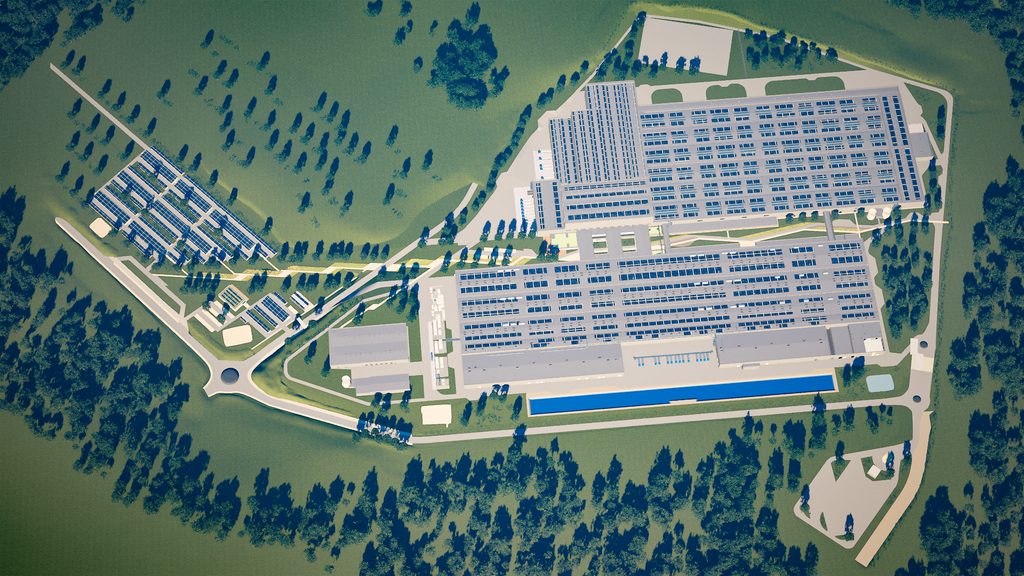
The HoloSolis project is still at an early stage. Permitting and basic design are complete, but the project must wait for the new European regulations to come in. Some of the capital raising must also wait for the IAA, as must the firming up of more than 30GW of letters of intent (LOIs) from potential customers.
“The year from now up until summer 2027 is absolutely crucial because this is where everything will come together,” says Poupart-Lafarge.
He adds that the €15 million of financing came “at the right moment”, just as the European regulation is being discussed. It will allow HoloSolis to complete detailed on-site engineering studies and technical specifications, select suppliers for its manufacturing lines and qualify its prototype panels. It will then allow the company to design and set up a commercial strategy based on the European regulations.
HoloSolis has also been selected for potential support from the European Commission’s Innovation Fund. This brings the total financing and support identified for the project to more than €400 million.
On the new financing from established partner Trina Solar, Poupart-Lafarge says: “I think it’s extremely important to have a partner capable of not only giving us the technology but also helping us to ramp up the facility, because some experience on gigafactory has shown that it’s not easy to re-launch a complete industry, so we need to get some help. We’re happy to have this help.”
The earlier patent agreement covers the use of Trina’s TOPCon technology in Europe and also allows for a European production line based on that technology. The two companies are discussing future collaborations, including potential strategic initiatives to strengthen the European solar supply chain.
Poupart-Lafarge says the company’s future technology partnerships may depend on how the technology evolves. HoloSolis could also license products developed by EU labs.
“In four, five years, we’ll see which technology is the best, who’s the better partner to work with and adapt,” he says.
However, the company is not considering moving further upstream, because other European players are already working there. Resilicon is developing “ultra-pure” polysilicon in the Netherlands, and Sunwafe is planning the continent’s first large-scale ingot and wafer fab in Spain.
“We can expand horizontally, but we are not going to expand vertically,” Poupart-Lafarge adds.
It all rests on ‘Made in Europe’
Some attention has focused on the French site’s use of nuclear-powered electricity, which makes the solar manufacturing process more sustainable. But Poupart-Lafarge says the main draw for HoloSolis products is still their ‘Made in Europe’ label, although the company would also benefit from decarbonised electricity.
Ultimately, the prospects for European PV manufacturing appear to depend heavily on what the trilogue agrees on the Industrial Accelerator Act. The result may not be black and white, but “without strong regulation – particularly on the definition of the ‘Made in Europe’ – it will not work”, says Poupart-Lafarge. “But it’s not the direction taken by the discussion today, so we are confident.”
“What we see today is the text evolving in the right direction,” he continues, “but if at one point in time the text derails and does not at all go in our direction, then it kills the project.”
On a positive note, he points to other countries that have rebuilt their domestic manufacturing industries, in some cases with stringent measures.
“That’s been done in Turkey, that’s been done in the US, so I think Europe is learning, and that’s what we are going to do.”