Streamlined permitting processes, support from the transmission system operator (TSO) and EU grants have been integral in enabling the growth of the solar and energy storage sectors in Bulgaria.
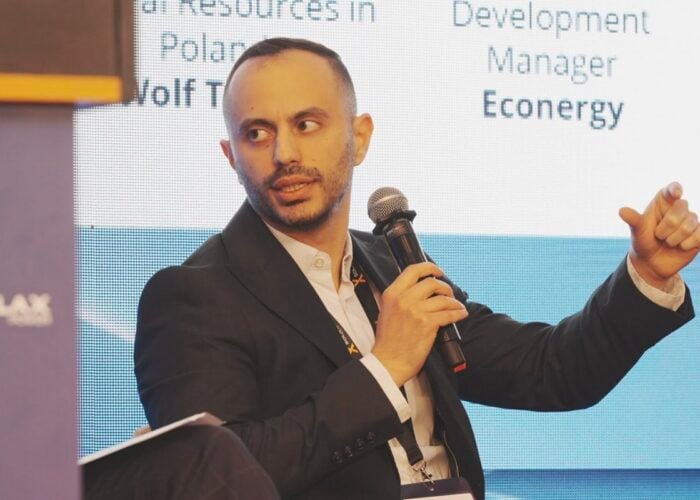
These were among the key takeaways from a panel discussion held this afternoon at PV Tech’s SolarPlus Central Eastern Europe event, which framed Bulgaria as Europe’s “quiet overachiever” in bringing new solar and battery energy storage system (BESS) projects online in recent years.
Try Premium for just $1
- Full premium access for the first month at only $1
- Converts to an annual rate after 30 days unless cancelled
- Cancel anytime during the trial period
Premium Benefits
- Expert industry analysis and interviews
- Digital access to PV Tech Power journal
- Exclusive event discounts
Or get the full Premium subscription right away
Or continue reading this article for free
Rositsa Chopeva, managing partner at xFigure Finance, introduced the discussion with a presentation on recent capacity additions in Bulgaria, which include the addition of 6.5GW of solar PV over the last six years, “that are all merchant based”. This echoes a sentiment expressed at an earlier panel discussion at the event, that there is a strong business case for solar-plus-storage in the region at present, particularly in comparison to standalone solar.
Chopeva added that Bulgaria is expected to have 7.5GW of cumulative solar PV capacity in operation by the end of this year, alongside 7GW of BESS, which led Ivaylo Stanchev, editor-in-chief of Bulgarian business publisher Capital, to tell our colleagues at Energy-Storage.news earlier this year that the country has become the world’s most battery-intensive energy market in the world. Chopeva attributed this growth to “a combination of factors”.
“In our market we have streamlined procedures for renewable energy assets,” she said. “We see standalone BESS projects being developed in about a year and going online in 18-24 months. We have good support from the grid operator, because our TSO has been able to connect to the grid close to 7GW of BESS without any issues in the grid; and still today we have grid capacity for new projects coming.
“We have targeted EU support that has been able to attract close to €3 billion (US$3 billion) of private capital for the standalone BESS projects,” Chopeva added.
HRH Boris Saxe-Coburg-Gotha, strategic development manager at Renalfa IPP, agreed, naming “streamlined procedures, grid access and EU grants” as the three primary causes behind this growth. The company’s flagship project in Bulgaria—the 242MWp solar PV, 311MW/773MW BESS Tenevo hybrid project—began commercial operations last month, and Saxe-Coburg-Gotha said that the project was delivered through a power purchase agreement (PPA) that was the first of its kind in the country.
Bulgaria’s ‘do-it-yourself’ approach
He added that a “do-it-yourself” approach from the Electricity System Operator (ESO), the Bulgarian TSO, allowed Renalfa to lead with work on building its own substation, which accelerated the project timeline.
“We have very specific grid connection rules in Bulgaria, that incentivise do-it-yourself behaviour,” he explained. “For the Tenevo project, the grid connection and substation were built by ourselves. That meant that in a merchant market, every day that we don’t trade is a day that you lose potential revenue, so we were able to build the substation ourselves, and in Bulgaria that substation is given to the TSO.
“But because we’re able to build it faster and quicker, we were able to avoid delays in revenue through grid connection permits or [limited] grid access.”
Velizar Cholakov, head of business development at HEC Solar, agreed, saying that this approach, whereby an IPP can build a substation under the oversight and direction of the TSO, and effectively donate that substation to the grid operator once it begins commercial operation, grants Bulgaria a “big, big, big advantage” compared to other markets.
“Usually this is the biggest bottleneck [and] the biggest long-lead item,” explained Cholakov. “We see a similar challenge in Italy, where Terna is building all the substations, and the contracts say it’s going to be ready in 2027, but everyone knows that they’re not going to be ready until 2029; this makes it very hard to manage your cashflow and your contracts.”
He added that this could cut the length of the project development process from four to five years to one to two years, which could translate to significant revenue opportunities in a market as merchant-reliant as Bulgaria.
The sixth edition of PV Tech’s SolarPlus Central Eastern Europe conference is currently underway in Warsaw, Poland, and talking points include local policy frameworks and the role of storage in the region’s solar sector. For more details visit the event website.