The Australian Energy Market Commission (AEMC) has released draft technical standards requiring large data centres to remain connected during grid faults, following international incidents in which facilities simultaneously disconnected during disturbances, causing cascading blackouts.
AEMC’s proposed standards arrive as social backlash appears inevitable unless the industry stops freeloading on Australia’s clean energy, with a coalition of climate groups, unions and renewable energy organisations demanding that new facilities provide their own firm renewable energy sources or face community opposition.
Try Premium for just $1
- Full premium access for the first month at only $1
- Converts to an annual rate after 30 days unless cancelled
- Cancel anytime during the trial period
Premium Benefits
- Expert industry analysis and interviews
- Digital access to PV Tech Power journal
- Exclusive event discounts
Or get the full Premium subscription right away
Or continue reading this article for free
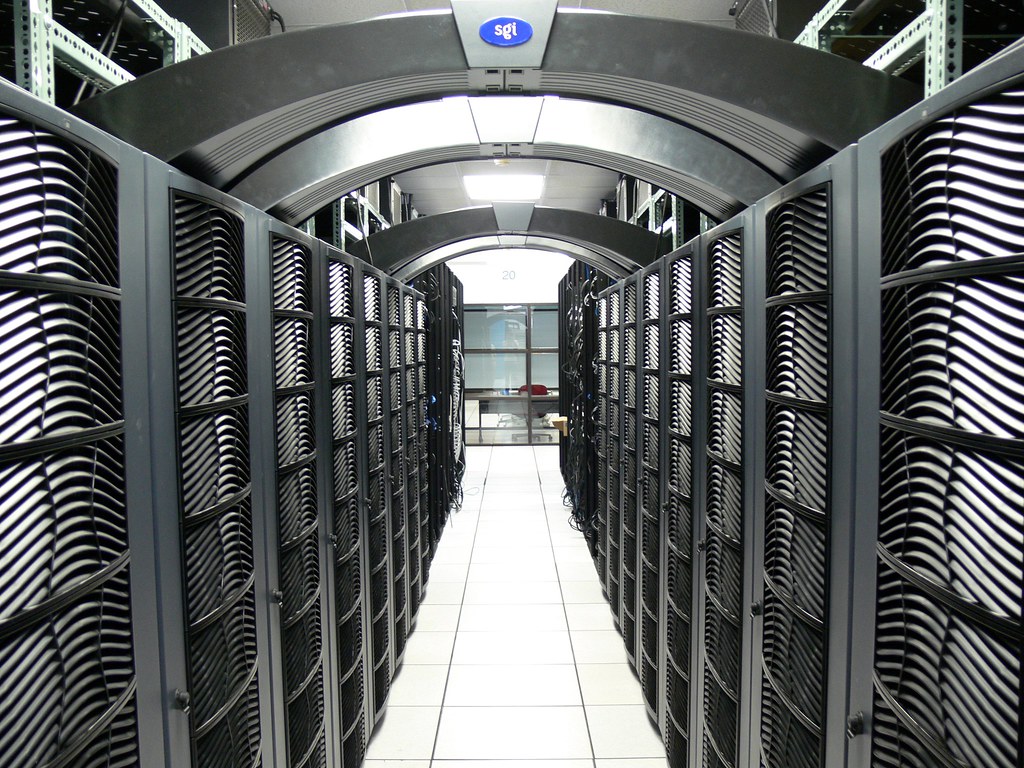
Data centres currently consume approximately 3.9TWh of energy annually, representing 2% of Australia’s total electricity consumption.
However, Oxford Economics projections developed for AEMO indicate this could surge to 32TWh by 2050 – equivalent to 12% of national consumption and potentially adding another manufacturing sector’s worth of demand to the grid.
The technical challenge is significant. Most data centres use inverter-based technology similar to wind and solar PV power plants, which can suddenly disconnect during grid disturbances.
When multiple facilities disconnect simultaneously, the results can be catastrophic. For instance, in July 2024, 60 data centres in Virginia pulled 1,500MW off the grid during a single fault, causing cascading failures and grid instability.
Similar incidents in Ireland and Texas have prompted some jurisdictions to halt new data centre connections entirely.
“Data centres aren’t passive loads anymore; they’re active grid participants,” said AEMC Chair Anna Collyer.
“When they fail to ride through faults, it has the potential to trigger cascading failures and blackouts. We have seen this happen overseas, and it can cost consumers billions in lost electricity supply or emergency network upgrades.”
Three-tier framework targets highest-risk connections
The AEMC’s draft rule establishes a clear three-tier classification system for distribution-connected loads, moving away from the current 5MW threshold to a more nuanced approach that recognises actual grid impact.
Under the proposed framework, Tier 1 connections would apply to inverter-based loads up to 30MW and all non-inverter loads regardless of size. Tier 2 covers inverter-based loads between 30-100MW, while Tier 3 applies to facilities 100MW or greater.
The Schedule 5.3 access standards would apply at the network service provider’s discretion for Tier 1 and Tier 2 connections, but would apply automatically for all Tier 3 facilities.
The new standards would require large data centres to meet specific disturbance ride-through requirements, staying connected during voltage and frequency disturbances and recovering power within defined timeframes.
Crucially, the AEMC has aligned these standards with those used or proposed in Texas, Ireland and Finland, enabling data centre operators to use the same equipment and feasibility studies across jurisdictions.
This standardised approach promises faster deployment, lower costs and better investment certainty – critical factors as AI and data centre demand is set to more than double by 2030.
The International Energy Agency (IEA) projects global electricity demand from data centres will surge to 945TWh annually by 2030, with AI-optimised facilities quadrupling in the same period.
The technical requirements address the fundamental difference between data centres and traditional industrial loads.
While mines, refineries and processing plants typically comprise heterogeneous motors and resistive processes that follow prevailing grid conditions, data centres connect through actively controlled power electronic converters whose behaviour during disturbances is shaped by software and control systems.
“Large inverter-based loads can rapidly reduce or cease demand during voltage and frequency disturbances, interact dynamically with system strength, contribute limited fault current, and affect stability in weaker grid conditions,” the AEMC noted in its draft determination.
“In aggregate, this behaviour can influence disturbance outcomes and, if not appropriately managed, increase the risk of cascading events.”
Industry investment signals positive response
Major technology companies are already demonstrating how data centre expansion can align with clean energy development.
Amazon’s AU$20 billion (US$14 billion) investment in Australian data centres powered by solar PV represents one of the largest commitments to renewable-powered digital infrastructure in Australia, while Microsoft has secured a 15-year power purchase agreement for a 353MW solar plant in New South Wales.
These investments suggest the industry recognises that Australia can turn the data centre boom into a grid growth story rather than a burden on existing infrastructure.
The AEMC’s proposed standards aim to support this transition by ensuring that new facilities contribute to, rather than detract from, grid stability.
The draft rule also includes provisions for data centres to provide grid support services, recognising that properly managed facilities could become valuable grid assets.
Requirements for demand response, storage deployment and participation in contingency services would help strengthen overall system resilience.
Beyond the immediate technical standards, the AEMC’s proposal addresses broader regulatory clarity issues that have created uncertainty for both developers and network service providers.
The current framework, originally designed for conventional generation and passive loads, has led to inconsistent application of technical requirements across different network operators.
“Without a clear and fit-for-purpose framework to classify large inverter-based loads and determine how the technical access standards apply to each category, network service providers may interpret and apply those standards inconsistently,” the AEMC noted.
“This uncertainty can lead to delays in the connection process and result in real cost impacts.”
The AEMC is seeking stakeholder feedback on the draft rule by 7 May 2026, with a final rule expected mid-2026.
To support implementation, AEMO will publish interim guidelines in the coming months to help network service providers and data centre developers prepare for the proposed changes.
The Energy Storage Summit Australia 2026 will be returning to Sydney on 18-19 March. It features keynote speeches and panel discussions on topics such as the Capacity Investment Scheme, long-duration energy storage, and BESS revenue streams. ESN Premium subscribers receive an exclusive discount on ticket prices.
To secure your tickets and learn more about the event, please visit the official website.