The Philippines has fast-tracked 1.4GW of new renewable energy projects in response to the ongoing effects of the Iran war on fossil fuel prices.
The Department of Energy (DOE) announced today that it will accelerate the grid integration of 22 renewable energy projects with a combined 1,471MW of generation capacity, to bring them online within the next month.
Try Premium for just $1
- Full premium access for the first month at only $1
- Converts to an annual rate after 30 days unless cancelled
- Cancel anytime during the trial period
Premium Benefits
- Expert industry analysis and interviews
- Digital access to PV Tech Power journal
- Exclusive event discounts
Or get the full Premium subscription right away
Or continue reading this article for free
Most of these (12) are solar PV projects with a cumulative 1.28GW of generation capacity, along with six hydroelectric projects, two biomass, one wind project and one integrated renewable energy storage system.
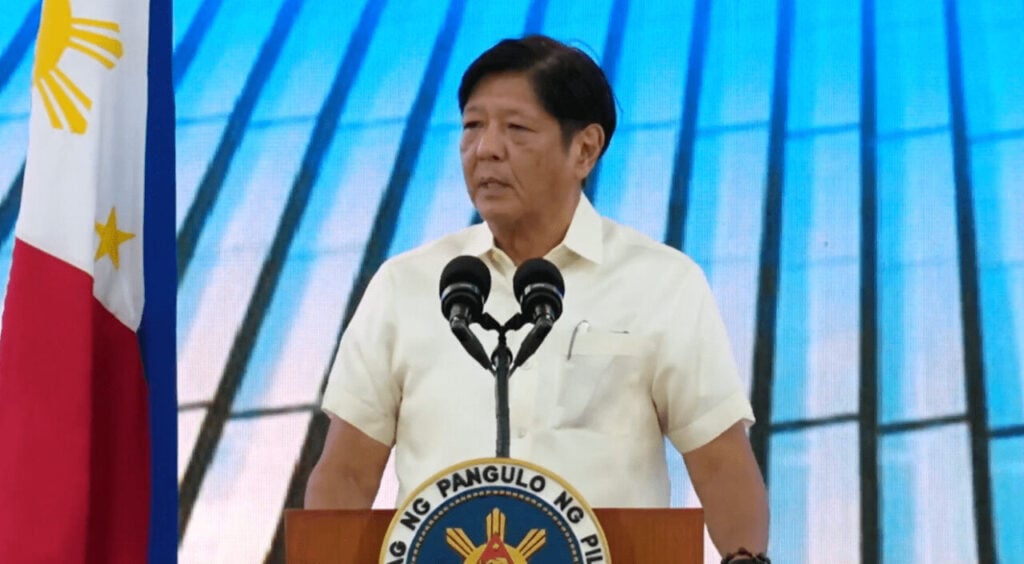
In a statement, the DOE said the projects were all in “advanced stages of construction” or are undergoing final testing and commissioning. The projects are part of the 200 power plants that Philippines President, Ferdinand R Marcos Jr., has committed to fast-track over the next three years.
To accelerate their completion, the DOE will work with the Philippines’ grid operator, electricity market operator and energy regulator to “address outstanding transmission, interconnection, inspection, registration, and metering requirements”.
“At a time when the country must act with urgency and discipline to protect the integrity of the power system, the timely delivery of committed capacity is imperative,” said energy secretary Sharon S. Garin. “Every megawatt that can be safely and lawfully brought into the grid strengthens our ability to meet demand, manage supply risks and protect consumers. The Department is fully engaged across the entire power value chain, from generation to transmission to market operations to help ensure that these projects move forward at the soonest possible time.”
The DOE also publicly welcomed the energisation of the first phase of the massive MTerra solar-plus-storage project. A total of 250MW of solar capacity and 450MWh of battery storage capacity have come online at the plant, which will reach 3.5GW/4.5GWh of capacity once fully operational.
“Amid the Middle East conflict, accelerating the development of renewable energy and storage is both a strategic necessity and a national imperative,” said Garin.
The closure of the Strait of Hormuz and damage to fuel production facilities in Gulf nations has greatly disrupted global fuel supply chains and markets. As with the outbreak of war in Ukraine, fossil fuel disruptions can cause soaring energy prices and spikes in demand.
In response to Iran’s closure of the Strait of Hormuz after US-Israeli attacks, the Global Renewables Alliance (GRA) called on governments to fast-track renewable energy deployments to bolster against volatile fossil fuel markets. It outlined five emergency measures around permitting, grid connection, financing, electrification and supply chains to break what it called the “crisis cycle”.
Dave Jones, chief analyst and co-founder of energy think tank Ember, recently told PV Tech Premium that the Iran war could prompt Asian countries, in particular, to double down on solar and other renewable energy technologies as the majority of the oil and gas going to Asia comes through the Strait of Hormuz. He contrasted this with the 2022 energy shock after the Ukraine invasion, which saw Europe accelerate renewables deployment to reduce its reliance on Russian gas.
In a social media post today, Jigar Shah, former head of the US Department of Energy’s Loan Programs Office, said that a prolonged blockade would affect poorer countries worse than wealthier nations in Asia and the West. “People in wealthy countries may experience this as higher prices. People in poorer countries may experience it as not having enough energy at all. A prolonged Hormuz closure is, in plain terms, a global fuel rationing event — and when fuel gets rationed poor people lose access to energy,” he wrote.