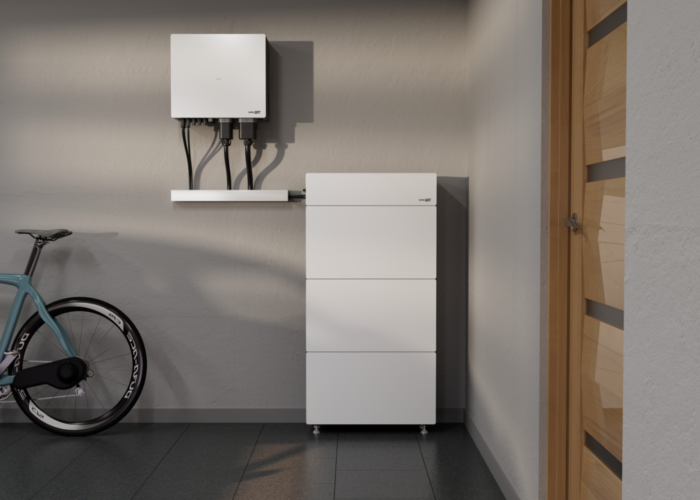
Belectric’s Energy Buffer Unit (EBU) has been successfully prequalified for 1.3MW frequency response by a German transmission network operator (TNO) that provides frequency response balancing for reliable grid operation when taking into account large quantities of renewable energy being connected to grid. Belectric’s EBU system delivers a state-of-the-art battery based energy storage system in a container solution.
Problem
With increased adoption of renewable energy, grid operators have to better manage fluctuations in the transmission network. Large-scale battery storage improves the safety of transmission network operation, even during heavy fluctuations like a generator or interconnector trip.
Try Premium for just $1
- Full premium access for the first month at only $1
- Converts to an annual rate after 30 days unless cancelled
- Cancel anytime during the trial period
Premium Benefits
- Expert industry analysis and interviews
- Digital access to PV Tech Power journal
- Exclusive event discounts
Or get the full Premium subscription right away
Or continue reading this article for free
Solution
Belectric’s EBU system can be prequalified for frequency response on the German transmission network with up to 650kW, taking into account reserve capacity required by the German TNOs. The advanced lead-acid batteries were developed for a long service life and high cycling stability for high performance applications. EBU system standardization enabled Belectric to offer a cost-effective utility scale energy storage system. Services from the EBU will be offered on the frequency response market on a weekly basis. Due to rising prices in this market over the last three years, attractive business models are now appearing for the use of energy storage.
Applications
Energy Buffer Unit is for frequency response and other cyclic grid applications.
Platform
The EBU is shipped with power inverter and medium voltage transformer and features a nameplate power between 800kW and 1400kW, depending on configuration. It has a storage capacity of 948 kWh and is available starting at €560,000. BELECTRIC UK is also collaborating with UK’s National Grid to demonstrate frequency and voltage stability of distribution networks — protecting the UK from power blackouts and instability — and so reduce the grid’s reliance on spinning reserve. The Enhanced Frequency Control Capability (EFCC) project is using grid monitoring and control system that identify potential problems as they arise and uses the EBU unit and management technology to rectify them.
Availability
May 2015 onwards.