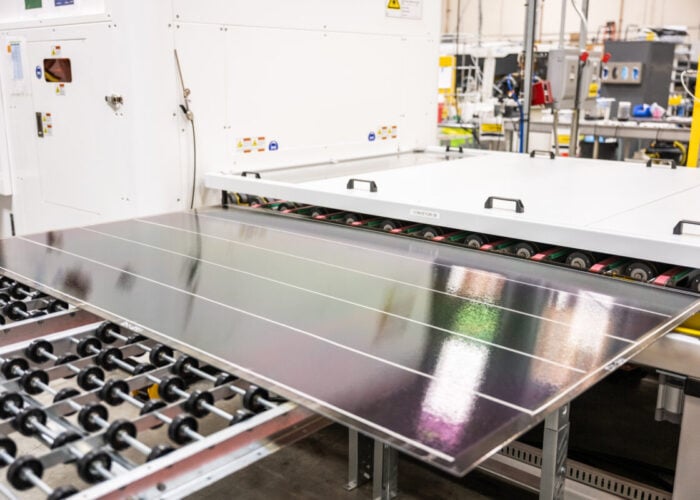
AQT Solar advised that using a low cost and production friendly sputter deposited copper-zinc-tin-sulfide (CZTS) thin-film solar cell, it had achieved high efficiencies. The company noted that the same manufacturing-ready processes and platforms used for its CIGS 2.0 solar cells was dually acceptable for CZTS and dubbed the term CIGS 3.0 for its future CZTS products.
The CZTS cells are developed as drop-in replacements for crystalline silicon cells, which AQT claims makes their adoption with existing crystalline silicon module manufacturing equipment and infrastructure run smoothly. The company further posits that because the raw materials are more widely and easily mined, the Indium availability and price volatility that has plagued the display and thin-film industries will be sidestepped.
Try Premium for just $1
- Full premium access for the first month at only $1
- Converts to an annual rate after 30 days unless cancelled
- Cancel anytime during the trial period
Premium Benefits
- Expert industry analysis and interviews
- Digital access to PV Tech Power journal
- Exclusive event discounts
Or get the full Premium subscription right away
Or continue reading this article for free
AQT stated that it has reached close to 10% efficiencies for sputtered CZTS by controlling the manufacturing process and platform foundation established for its CIGS product. The company expects to have its CZTS models, “under the sun” later this year with a campaign to actively begin the commercialization process following shortly thereafter.
“The founders of AQT, all of whom have previously worked in capitally intensive commodity industries, have experienced firsthand the huge disruption to business that occurs when re-capitalization is required due to technology migration and we have done everything possible to avoid this from affecting our business,” said Michael Bartholomeusz, CEO of AQT Solar. “Early on we recognized the critical necessity to adopt a future-proofed manufacturing platform and strategy and it remains a cornerstone of our business, enabling us to easily adapt solar cell production to new, advantageous materials such as CZTS.”
AQT was just recently named by Lux Research as one of the new start-up CIGS companies that had strong technical values, with weaker business execution scores. The report noted that AQT was one company that “was seen as [an] acquisition target.”