China has agreed to invest US$20 billion in Pakistan's energy infrastructure.
On a three day visit to China, Pakistan president Manmoon Hussain and minister for Punjab, Shahbaz Sharif met with financial and development companies and banks in Beijing, and signed MoUs for continued investment in solar projects in Pakistan.
Try Premium for just $1
- Full premium access for the first month at only $1
- Converts to an annual rate after 30 days unless cancelled
- Cancel anytime during the trial period
Premium Benefits
- Expert industry analysis and interviews
- Digital access to PV Tech Power journal
- Exclusive event discounts
Or get the full Premium subscription right away
Or continue reading this article for free
An estimated US$20 billion in energy investment has been promised; in return China will take ownership of coal plants, a document issued on Wednesday stated.
The investment will go towards solar, hydropower and coal power plants.
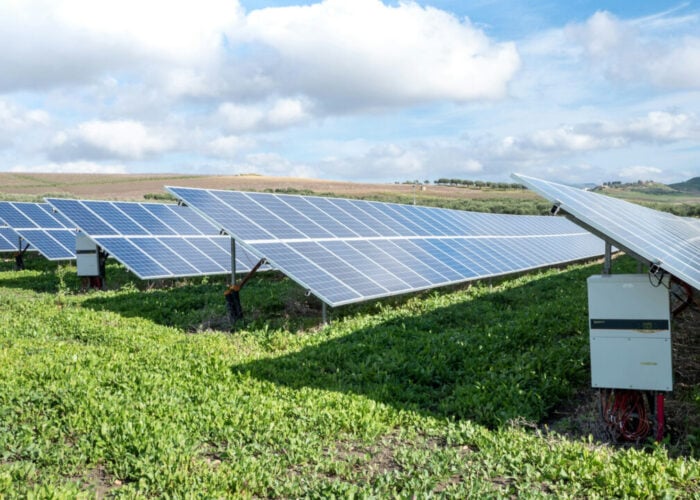
Sharif informed Chinese delegates on the trip that a solar plant in South Punjab is to be operational by the end of this year.
The investment will make a significant contribution to combating energy shortages in Pakistan.
According to the Associated Press of Pakistan, the MoUs signed included progress for the Pakistan-China Economic Corridor, an MoU co-establishing national joint research centres for small-scale hydro power technology, and cooperation on other construction projects.
Shahbaz Sharif’s official Facebook page stated yesterday the “mutually agreed China-Pakistan Economic Corridor is a gigantic development project which would prove to be a game changer in transforming the whole region by generating massive trade and economic activity”.
In a meeting between China and Pakistan’s Joint Cooperation Committee (JCC) to finalise projects to be part of the Economic Corridor, Sharif said thanks to a comprehensive framework of the JCC, Economic Cooperation Group, Joint Energy Working Group, Joint Investment Committee and several other mechanisms, the volume of trade had almost exceeded US$12 billion, with Pakistan’s exports increasing by 48%.
Punjab minister Sharif told The Guardian “security agencies” in Pakistan and India are acting as “blockages” to free trade between China and Pakistan. He said: “Unless you have economic security then you can't have general security.”
The Punjab ministry said in a statement this January: “Shahbaz Sharif has said that resolving of energy crisis is the top priority of the government as it is essential for economic development and strengthening of economy.”
China’s Foreign Ministry spokesperson Hua Chunying said in a press conference yesterday that President Xi Jinping and President Hussain spoke “highly of the development of bilateral relations, the two presidents agreed to jointly uphold and develop the traditional friendship and translate that into more tangible results of cooperation”, with both countries working towards “steering cooperation in energy”.
The China-Pakistan meeting prioritised projects and practical cooperation in energy infrastructure, with the two sides reaching “extensive consensus” Chunying said.
A statement published yesterday from the Foreign Ministry said “The two sides will speed up the second phase of negotiations on China-Pakistan Free Trade Area and push forward a balanced growth of trade between the two countries. The Chinese government encourages Chinese enterprises to invest and develop in Pakistan”.
It added that an “advance [in] cooperation in the fields of energy” will be pursued.
In October Sharif visited China to discuss solar energy projects and China offered Punjab 32GW of exported electricity.
In September last year the Punjab government finalised plans for 700MW of solar power.
Pakistan’s government separately signed MoUs for 150MW with a consortium of European countries and another with China North Industries Corporation (NORINCO) as well as 400 smaller solar projects in the pipeline.
Pakistan also finally announced FiT rates for large-scale solar projects last month.