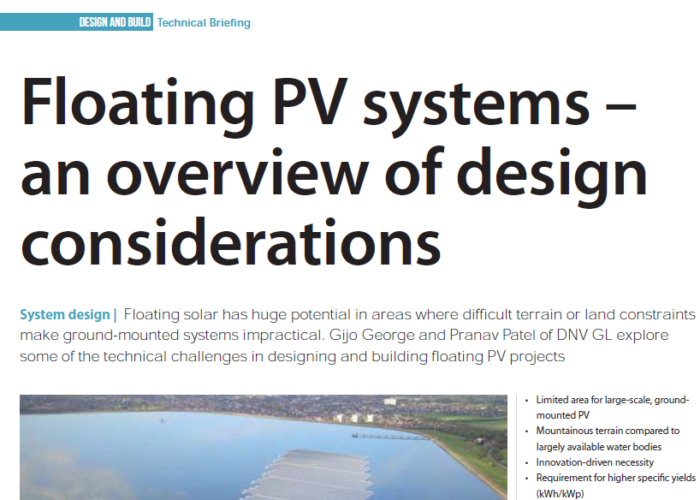
Floating solar has huge potential in areas where difficult terrain or land constraints make ground-mounted systems impractical. Gijo George and Pranav Patel of DNV GL explore some of the technical challenges in designing and building floating PV projects.
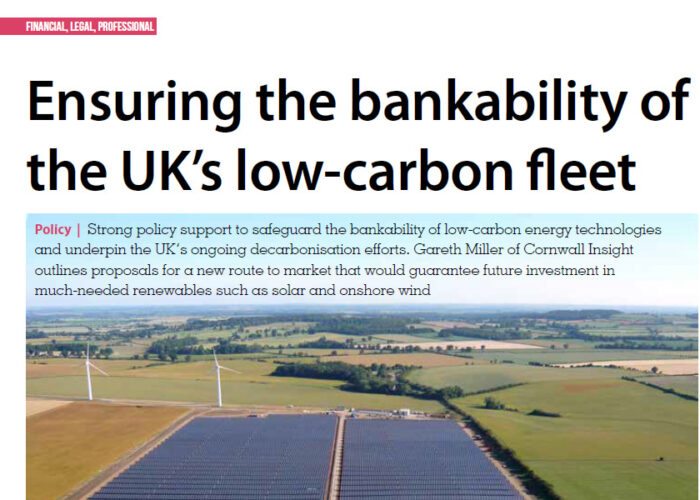
Strong policy support to safeguard the bankability of low-carbon energy technologies and underpin the UK’s ongoing decarbonisation efforts. Gareth Miller of Cornwall Insight outlines proposals for a new route to market that would guarantee future investment in much-needed renewables such as solar and onshore wind.
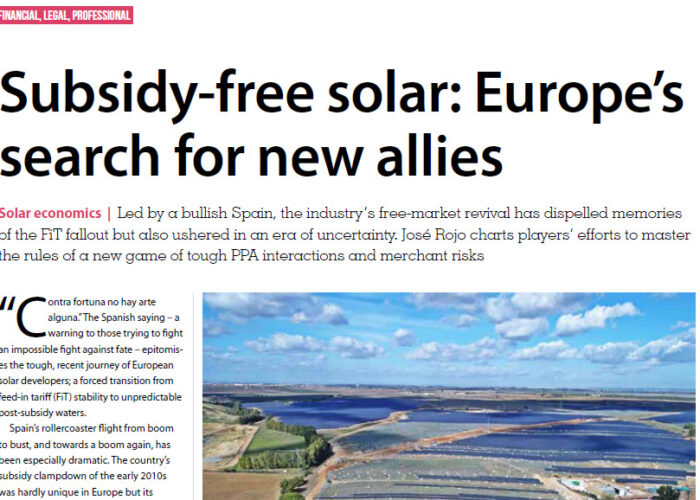
Led by a bullish Spain, the industry’s free-market revival has dispelled memories of the FiT fallout but also ushered in an era of uncertainty. José Rojo charts players’ efforts to master the rules of a new game of tough PPA interactions and merchant risks.
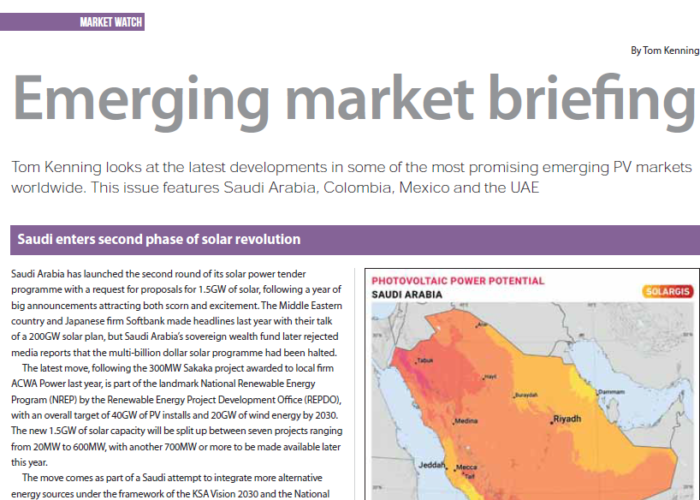
Tom Kenning looks at the latest developments in some of the most promising emerging PV markets worldwide. This issue features Saudi Arabia, Colombia, Mexico and the UAE.
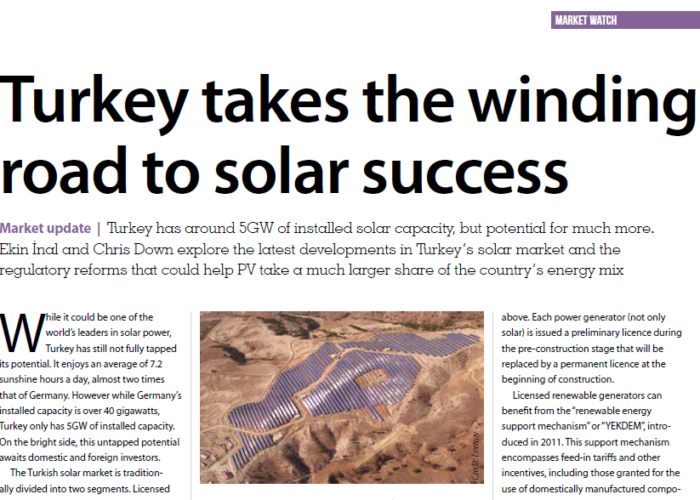
Turkey has around 5GW of installed solar capacity, but potential for much more. Ekin İnal and Chris Down explore the latest developments in Turkey’s solar market and the regulatory reforms that could help PV take a much larger share of the country’s energy mix.
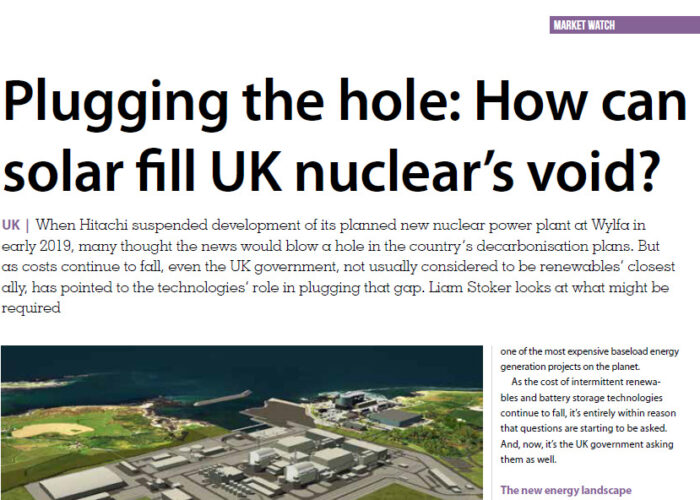
When Hitachi suspended development of its planned new nuclear power plant at Wylfa in early 2019, many thought the news would blow a hole in the country’s decarbonisation plans. But as costs continue to fall, even the UK government, not usually considered to be renewables’ closest ally, has pointed to the technologies’ role in plugging that gap. Liam Stoker looks at what might be required.
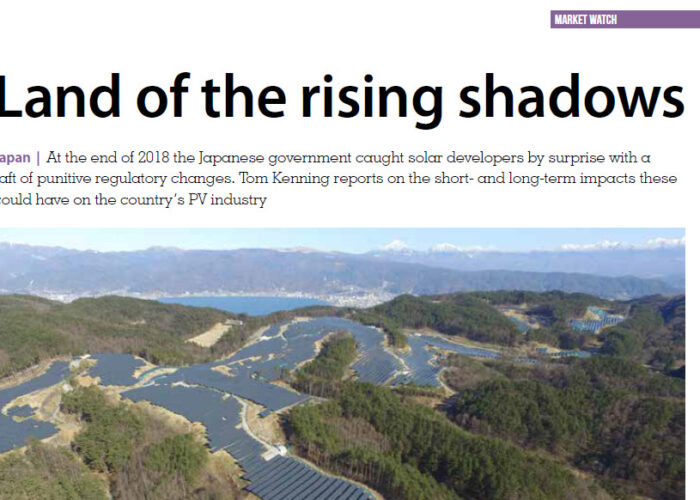
At the end of 2018 the Japanese government caught solar developers by surprise with a raft of punitive regulatory changes. Tom Kenning reports on the short- and long-term impacts these could have on the country’s PV industry.
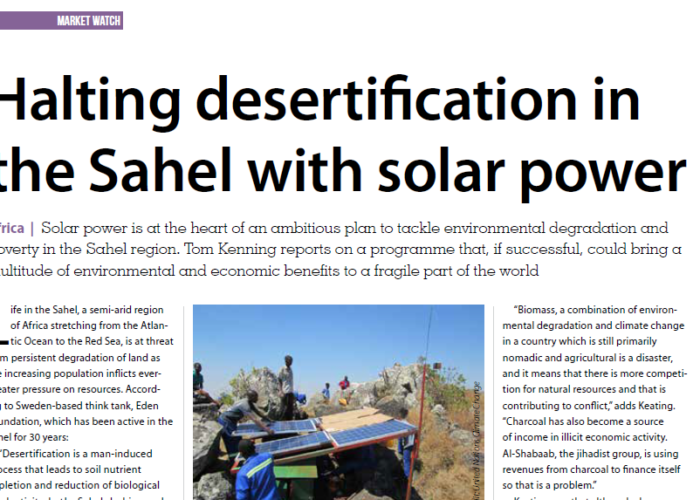
Solar power is at the heart of an ambitious plan to tackle environmental degradation and poverty in the Sahel region. Tom Kenning reports on a programme that, if successful, could bring a multitude of environmental and economic benefits to a fragile part of the world.
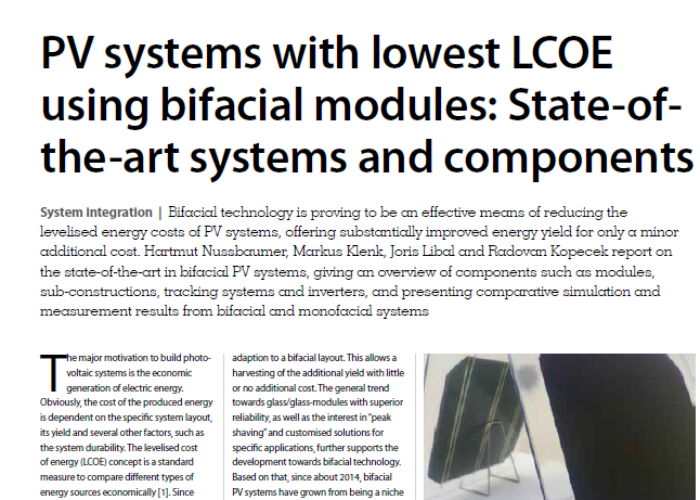
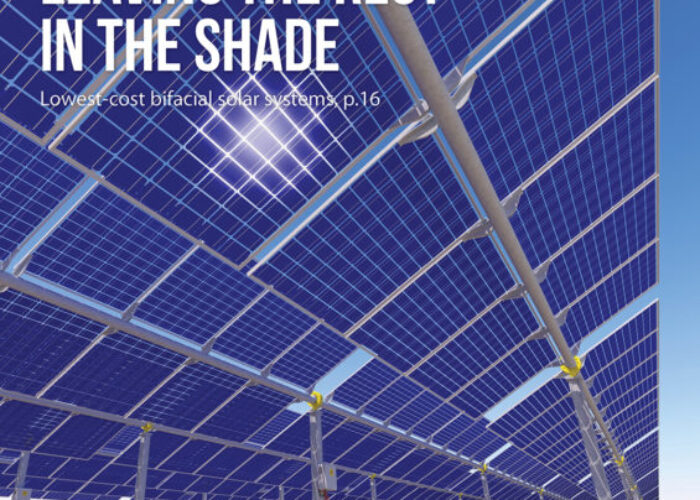
Bifacial technology is proving to be an effective means of reducing the levelised energy costs of PV systems, offering substantially improved energy yield for only a minor additional cost. Hartmut Nussbaumer, Markus Klenk, Joris Libal and Radovan Kopecek report on the state-of-the-art in bifacial PV systems, giving an overview of components such as modules, sub-constructions, tracking systems and inverters, and presenting comparative simulation and measurement results from bifacial and monofacial systems.
Welcome to the eighteenth edition of PV Tech Power. Bifacial system costs come under the spotlight. DNV GL looks at floating solar design. We also have papers on O&M business models, the European solar finance market that is supercharging the post-subsidy pipeline, an in-depth look at Turkey from the law firm Norton Rose Fulbright and much more. Our regular Storage and Smart Power section returns with Andy Colthorpe at the helm as always.