US solar manufacturer T1 Energy has signed a deal to buy US-made polysilicon and wafers from ceramics and glass producer Corning.
T1 said the deal was a “landmark” in the US solar industry, representing a fully US-made silicon supply chain.
Try Premium for just $1
- Full premium access for the first month at only $1
- Converts to an annual rate after 30 days unless cancelled
- Cancel anytime during the trial period
Premium Benefits
- Expert industry analysis and interviews
- Digital access to PV Tech Power journal
- Exclusive event discounts
Or get the full Premium subscription right away
Or continue reading this article for free
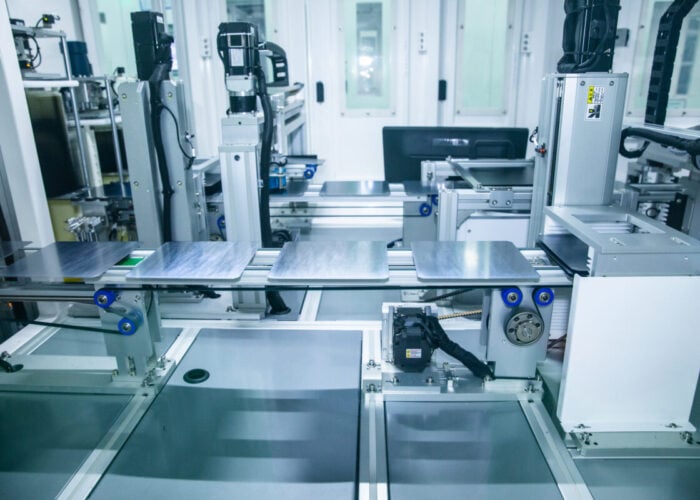
Under the agreement, Corning will supply wafers and polysilicon from its planned manufacturing campus in Michigan. Corning’s subsidiary, Hemlock Semiconductor, will produce polysilicon which will be made into wafers by Corning, then shipped to T1 Energy’s under-construction solar cell manufacturing facility in Austin, Texas. The cells will then be made into modules at T1’s module production facility in Dallas, Texas.
The shipments are scheduled to start in the “second half of 2026”.
“This is American companies building in America and protecting American energy security,” said Daniel Barcelo, CEO of T1 Energy. “The US needs to establish critical energy supply chains built on domestic capacity and industrial know-how.”
If the supply deal is realised, it could represent a significant moment in the US solar manufacturing industry.
The country has successfully built over 50GW of solar module production capacity, but upstream components—cells, wafers and polysilicon—have yet to materialise in comparable numbers. This is partly due to the complexity of the processes and partly due to China’s global dominance of the solar supply chain, which has driven down prices.
AB Ghosh, Corning VP and CEO of Hemlock Semiconductor, said the deal with T1 “underscores the strong demand for high-quality, American-made solar technologies.”
The US government has changed the policy landscape for domestic solar manufacturing, introducing potentially damaging “Foreign Entity of Concern” restrictions for tax credit eligibility, and layers of trade and tariff complexity for solar products entering the US.
Given the disparity between US module capacity and upstream manufacturing, many companies rely heavily on imports. But last month, T1 Energy said it expected potential tariffs on polysilicon imports and the antidumping and countervailing duty (AD/CVD) tariffs on solar cells and modules from certain countries to “boost” the US industry.
The long-term impact of the tariffs remains to be seen, but a successful supply deal with Corning would be a meaningful step for the industry.
Along with Hemlock Semiconductor, another US firm, Highland Materials, is planning to set up polysilicon production. The company recently signed a lease agreement for land at a former nuclear power site in Tennessee.