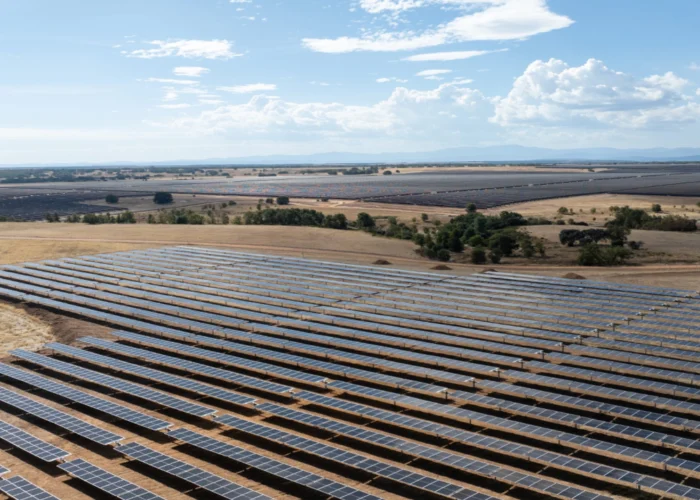
The government of Indonesia has launched a programme that aims to build 100GW of solar PV in the coming years, mostly distributed across smaller projects in rural areas.
The programme will consist of 80GW of solar PV plants and 320GWh of battery energy storage systems (BESS) across 80,000 villages as 1MW solar PV capacity and 4MWh BESS, which will be managed by the Merah Putih Village Cooperative (KDMP). The village cooperative was launched last month by Prabowo Subianto, Indonesia’s president.
Try Premium for just $1
- Full premium access for the first month at only $1
- Converts to an annual rate after 30 days unless cancelled
- Cancel anytime during the trial period
Premium Benefits
- Expert industry analysis and interviews
- Digital access to PV Tech Power journal
- Exclusive event discounts
Or get the full Premium subscription right away
Or continue reading this article for free
The capacity managed by the KDMP aims to provide reliable and affordable electricity to rural areas across the country and promote productive economic activities.
In addition to the 80GW managed by the KDMP, the programme will also aim to build 20GW of centralised solar PV plants.
The Indonesian energy sector think tank Institute for Essential Services Reform (IESR) praised the initiative, and its CEO, Fabby Tumiwa, said it was very appropriate for overcoming the challenges of energy transition and strengthening energy self-sufficiency.
“If implemented effectively, this project will become the largest rural electrification initiative and distributed renewable energy generation program in Southeast Asia, addressing the challenges of providing quality, equitable, and affordable energy for all Indonesians,” said Tumiwa.
This initiative comes two months after the Indonesian government ratified a plan to add 42.6GW of renewable energy capacity and 10.3GW of energy storage by 2034. The plan aims to support the country’s state-owned electricity company, for which solar PV will make up the bulk of the renewables, with 17.1GW.
Addressing three challenges for the programme’s success
Despite that, the IESR highlighted three challenges that need to be addressed for the project to succeed, especially during the preparation and implementation stages.
For starters, the selection of the locations for the PV plants to be built must take into account geographical conditions and electricity load requirements and ensure the technical and financial feasibility of the 80,000 planned projects.
Secondly, the size of the projects – 1MW solar PV co-located with 4MWh BESS – will require at least 30 to 50 high-skilled workers for each project for up to a year from the preparation stage to the commissioning. According to IESR, the availability of workers capable of building solar PV and BESS projects is very limited and uneven across the country.
The think tank calls on the government to conduct a workforce needs assessment and prepare certified installers through collaboration with vocational training centres, vocational schools, and universities. The training programme should also reach out to local communities where the projects will be built, in order to ensure local communities are involved in the construction of the projects.
Finally, it suggests that the government make the programme a National Strategic Program (PSN) as the planning and implementation will require coordination across different ministries, local governments and stakeholders such as private businesses.
IESR emphasised the need to prioritise rural communities’ involvement in the development of these solar-plus-storage projects, including planning, management, and utilisation.