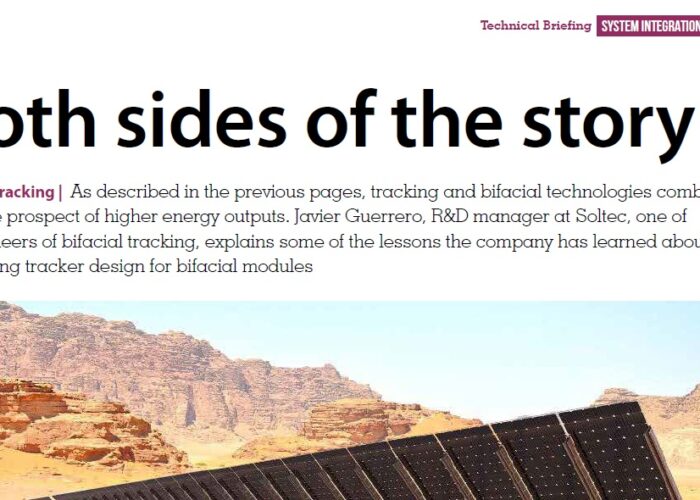
As described in the previous pages, tracking and bifacial technologies combined offer the prospect of higher energy outputs. Javier Guerrero, R&D manager at Soltec, one of the pioneers of bifacial tracking, explains some of the lessons the company has learned about optimising tracker design for bifacial modules
The term “big data” has recently become something of a buzzword in PV circles. But how are companies using this data and is it generating useful intelligence or merely information overload? Catherine Early reports
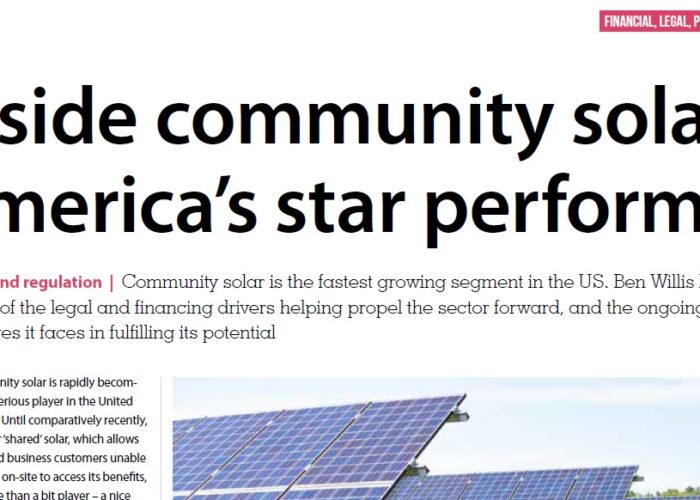
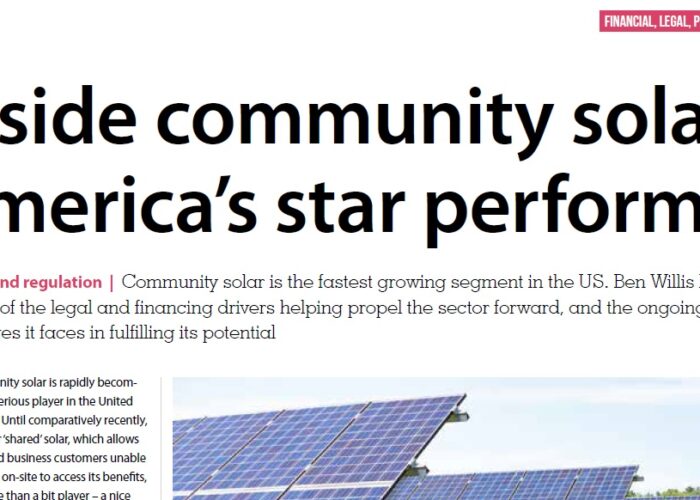
Community solar is the fastest growing segment in the US. Ben Willis looks at some of the legal and financing drivers helping propel the sector forward, and the ongoing challenges it faces in fulfilling its potential
Ben Willis look at the latest developments in some of the most promising emerging PV markets worldwide. This issue features Ukraine, Zambia and Ethiopia
Bifacial technology promises significant reductions in the levelised cost of electricity for PV systems, and almost all major PV suppliers are already producing or planning bifacial modules. Hartmut Nussbaumer, Markus Klenk, Andreas Halm & Andreas Schneider give an overview of the currently available bifacial modules and cell technologies and adapted mounting solutions
Community solar is the fastest growing segment in the US. Ben Willis looks at some of the legal and financing drivers helping propel the sector forward, and the ongoing challenges it faces in fulfilling its potential
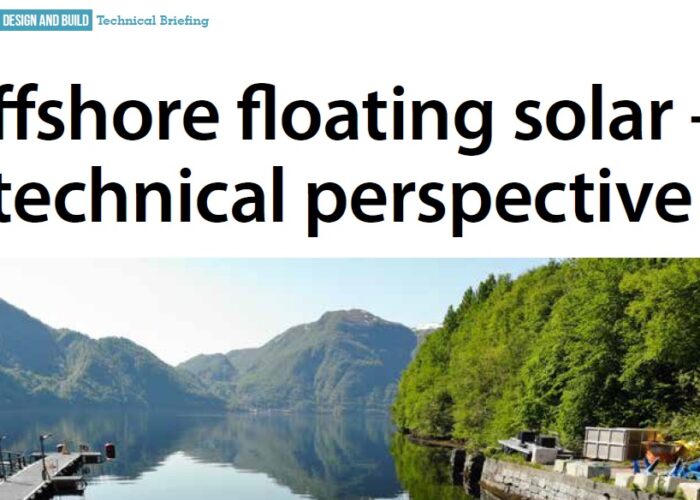
With floating solar on lakes and reservoirs well on the way to becoming a mainstream concept, attention is now turning to the possibilities offered by offshore systems. Børge Bjørneklett describes some of the pioneering R&D work being undertaken in the race to take solar to the open seas
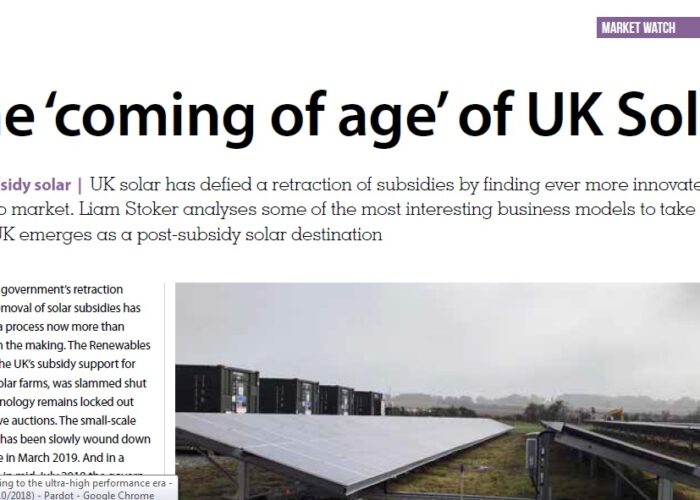
UK solar has defied a retraction of subsidies by finding ever more innovate routes to market. Liam Stoker analyses some of the most interesting business models to take hold as the UK emerges as a post-subsidy solar destination
Storage has an important role to play in the UK’s future energy system, but the challenge for investors and developers is to select the right business models and combination of technologies. Maria Connolly and Stuart Urquhart at UK law firm TLT look at how some of the new regulatory and policy developments are helping enhance the bankability of storage
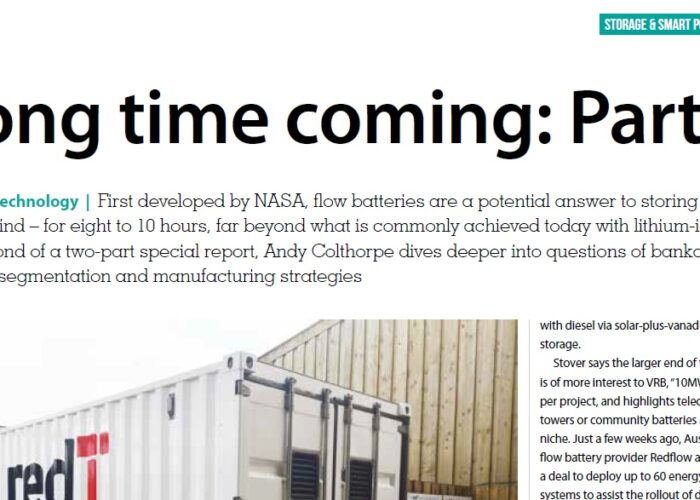
First developed by NASA, flow batteries are a potential answer to storing solar – and wind – for eight to 10 hours, far beyond what is commonly achieved today with lithium-ion. In the second of a two-part special report, Andy Colthorpe dives deeper into questions of bankability, market segmentation and manufacturing strategies