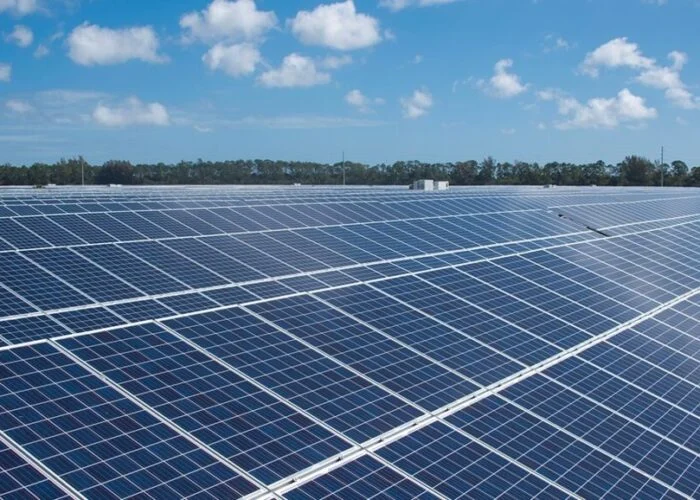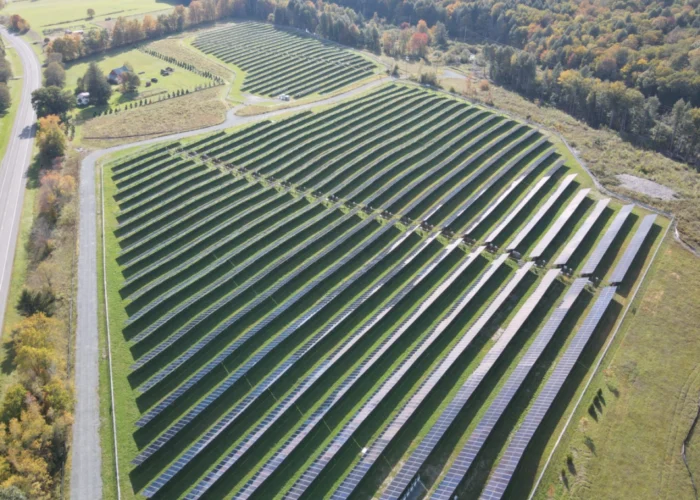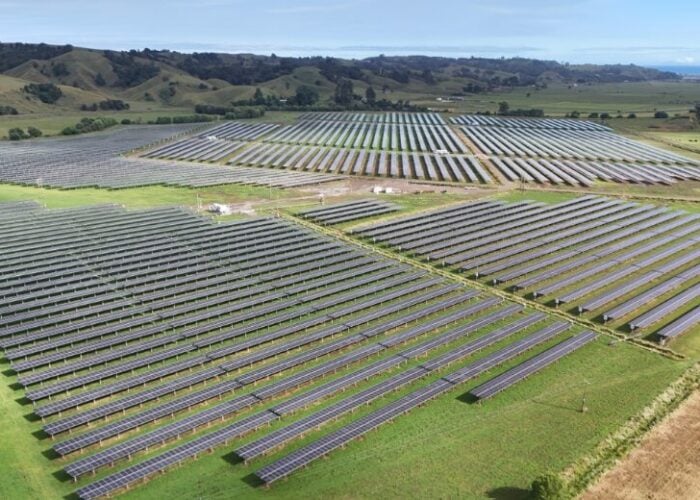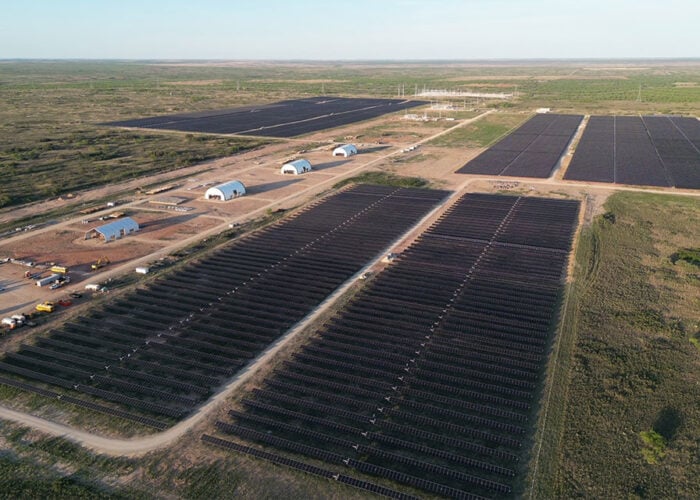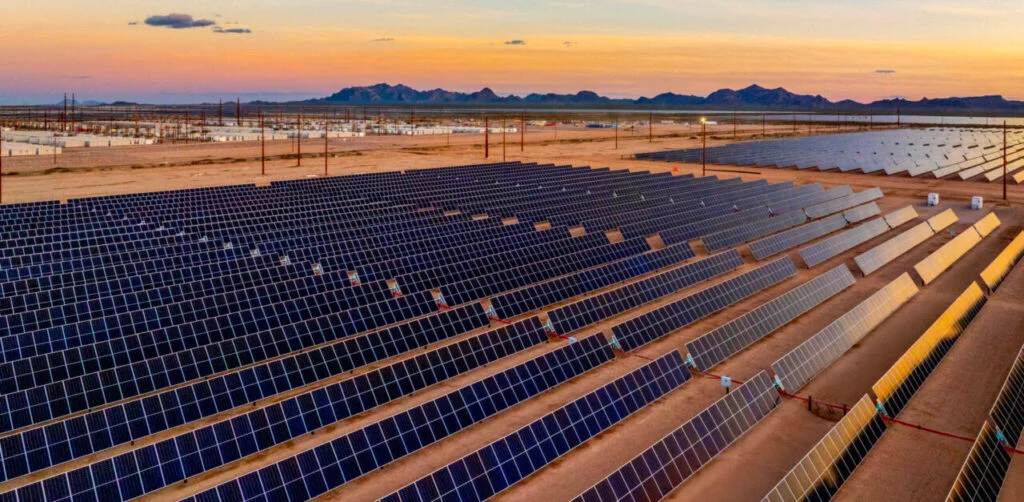
Solar manufacturer Qcells has completed engineering, procurement and construction (EPC) work on the 237MWdc Atlas V and 135MWdc Atlas VI solar projects in La Paz County, Arizona.
The two projects, which have a combined capacity of 372MWdc, form part of the wider Atlas Energy Park, a multi-phase solar and energy storage development in the US. The projects are contracted under long-term power purchase agreements (PPAs) with Southern California Edison.
Try Premium for just $1
- Full premium access for the first month at only $1
- Converts to an annual rate after 30 days unless cancelled
- Cancel anytime during the trial period
Premium Benefits
- Expert industry analysis and interviews
- Digital access to PV Tech Power journal
- Exclusive event discounts
Or get the full Premium subscription right away
Or continue reading this article for free
According to Qcells, the Atlas Energy Park is expected to deliver 2.8GW of solar generation capacity and 5.7GWh of energy storage capacity by 2028. The company said the project is intended to enhance grid reliability across the US Southwest and California while supporting the energy transition.
“Atlas V and VI are a clear demonstration of Qcells’ ability to deliver fully integrated, utility-scale solar solutions at scale,” said Chris Hodrick, CEO of Qcells EPC. “Our end-to-end platform enables us to optimise execution, enhance value, and deliver strong, long-term certainty for our partners.”
Qcells initially developed the Atlas V and Atlas VI projects before divesting them. The company has continued its involvement as the EPC contractor through its self-perform EPC business, supplying both solar modules and racking systems for the projects. It will also provide long-term asset management services following completion.
The projects use domestically manufactured solar modules produced at Qcells’ manufacturing facility in Georgia. The company also supplied its Flexrack solar tracking system manufactured in Ohio, while energy storage products are being supplied from LG Energy Solution’s manufacturing operations in Michigan.
Qcells said it has a US project pipeline of 11GW of solar and 5.7GWh of energy storage, including assets that have already reached commercial operation. The Hanwha Group subsidiary has 8.4GW of solar module manufacturing capacity in Georgia and has developed, constructed and operates nearly 2GW of solar projects across the US
Recently, the company began producing solar cells at its vertically integrated manufacturing facility in Cartersville, Georgia, while module assembly reached full capacity.
The Georgia facility is expected to reach full production in the third quarter of 2026. At full capacity, the site will have annual nameplate production capacity of 3.3GW each for ingots, wafers and cells, and 3.5GW for modules.