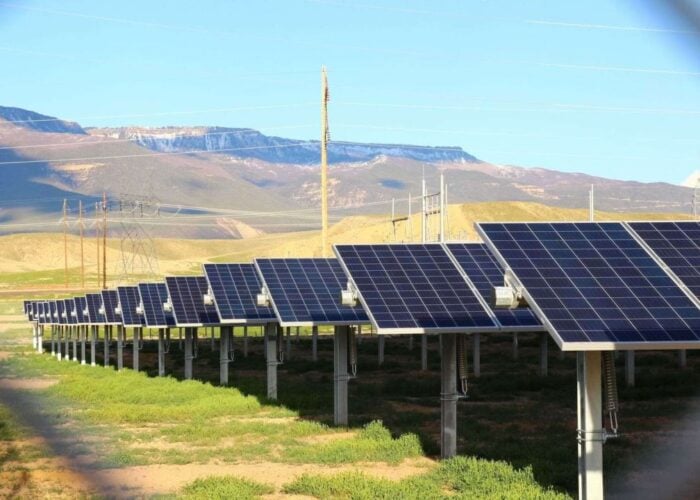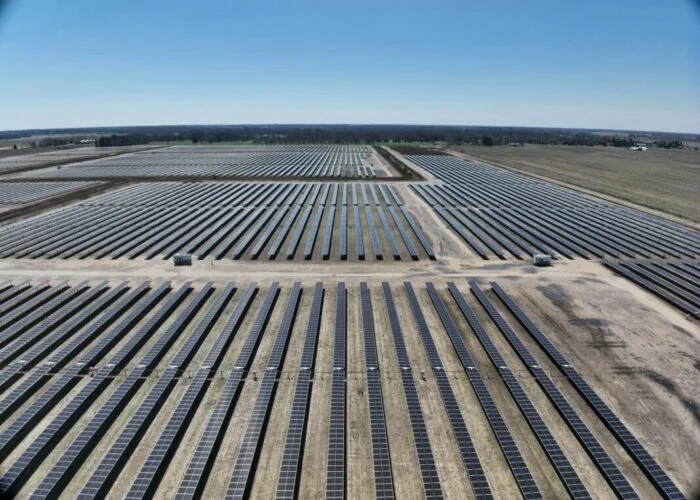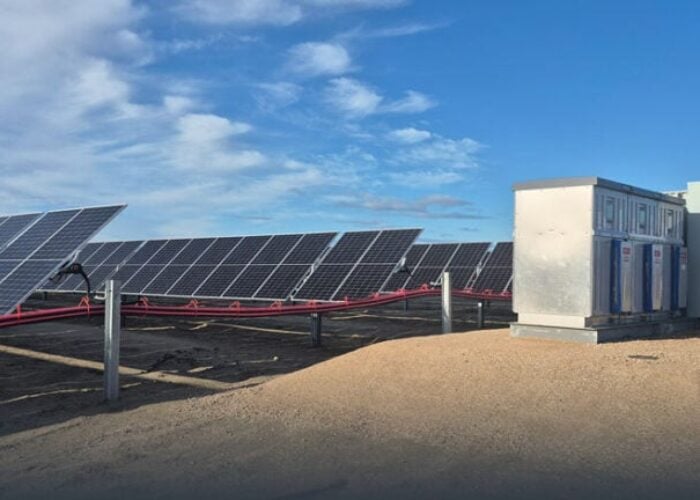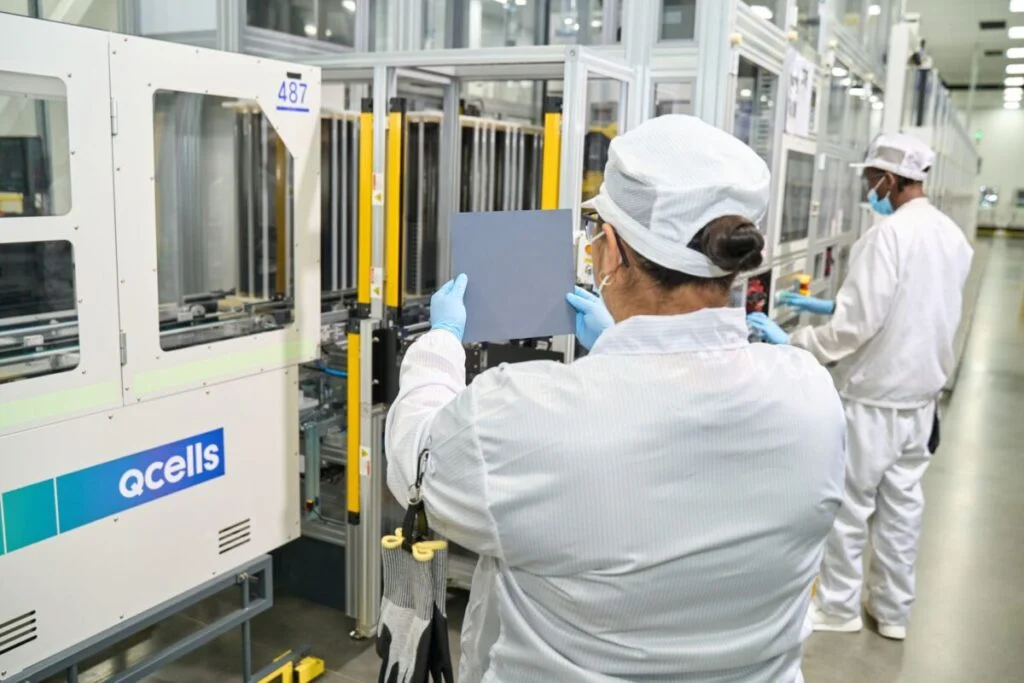
Qcells has started producing solar cells at its vertically integrated manufacturing facility in Cartersville, Georgia.
In addition to beginning cell production, the facility’s module assembly has reached full capacity, according to the company.
Try Premium for just $1
- Full premium access for the first month at only $1
- Converts to an annual rate after 30 days unless cancelled
- Cancel anytime during the trial period
Premium Benefits
- Expert industry analysis and interviews
- Digital access to PV Tech Power journal
- Exclusive event discounts
Or get the full Premium subscription right away
Or continue reading this article for free
Qcells added that ramping up of the entire value chain is underway, with the manufacturer expecting to reach full production in the third quarter of 2026.
By that time, the vertically integrated facility will have an annual nameplate capacity of 3.3GW each for ingots, wafers and cells, and 3.5GW for modules.
Qcells first announced the construction of the first US vertically-integrated facility in 2023, with, at the time, an investment of US$2.5 billion.
PV Tech spoke last year with Qcells’ global chief technology officer, Danielle Merfeld, about the Cartersville facility and the advantages it brings of building a domestic supply chain, as well as the company’s work on perovskite technology.
“Qcells starting production is proof that full vertical integration under one roof can happen in the US, becoming the first company with ingot to module manufacturing capacity in the country. It will also allow the company to produce modules with large amounts of domestic content. But above all this, it is a major milestone for US solar manufacturing,” said PV Tech Market Research analyst Joe Hennessy.
Indeed, as Hennessy highlighted, the modules produced at the Cartersville facility will allow developers and asset owners to qualify for the 10% domestic content bonus under the investment tax credit (ITC). Meanwhile, the manufacturer will be able to apply the full value of the Section 45X advanced manufacturing production tax credit across the entire supply chain, from ingots to modules.
“Producing the first solar cells at Cartersville is a milestone for Qcells and for American manufacturing,” said Andy Park, Global CEO of Qcells.
“As our ingot, wafer, and cell lines reach full capacity, we’ll be making the major components of a solar panel right here in Georgia. A dependable domestic supply chain doesn’t just create thousands of good-paying jobs, it gives our customers greater certainty on price, supply, and tariffs, and a product they can trust from start to finish.”
Aside from the Cartersville vertically integrated facility, the manufacturer also has a module assembly plant in Dalton, Georgia. The facility increased its annual nameplate capacity by 2GW to 5.1GW in 2023. Overall, once the Cartersville plant reaches full production capacity in Q3 2026, it will bring the company’s total annual nameplate module production in Georgia to 8.6GW.
Scaling up the entire supply chain in the US will be one of the key topics of conversation at PV CellTech USA in San Francisco, on 13-14 October 2026. The conference brings together the innovators, policymakers and supply-chain leaders driving the country’s next wave of wafer, cell and module capacity. You can find out more and get hold of tickets here. PV Tech readers can save 20% with code PVT20.