The Ohio Power Siting Board (OPSB) has denied the development of a 94MW solar project following “substantial” opposition from local residents.
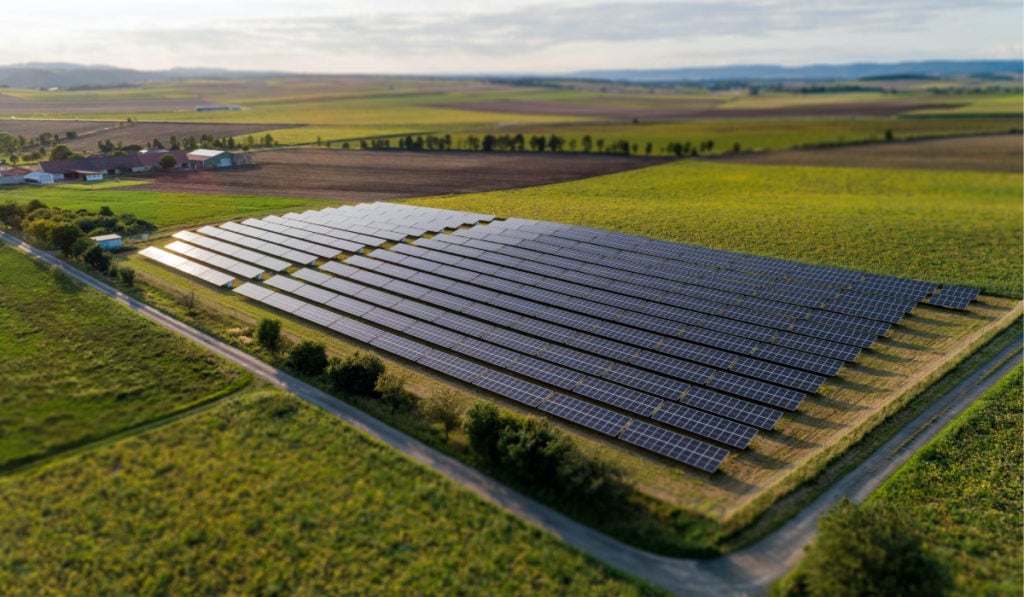
The Crossroads Solar I project, from developer Open Road Renewables, was proposed in Morrow County, Ohio. The plans were for a dual-use solar and livestock grazing facility, incorporating sheep grazing across its 726-acre area.
Try Premium for just $1
- Full premium access for the first month at only $1
- Converts to an annual rate after 30 days unless cancelled
- Cancel anytime during the trial period
Premium Benefits
- Expert industry analysis and interviews
- Digital access to PV Tech Power journal
- Exclusive event discounts
Or get the full Premium subscription right away
Or continue reading this article for free
The OPSB denied the project’s development following a local township’s non-unanimous rejection of the plans, on the grounds that it would “fail to serve the ‘public interest, convenience, and necessity’ as required under Ohio law”, and the “consistent and substantial opposition” from local residents and government.
Local opposition
In a statement, the OPSB said that the opposition highlighted “the lack of commitment to local sheep grazing” and “a lack of trust from local governments” over plans to sell the rights to the project before it completed construction.
Open Road Renewables sought consultation from Agrivoltaic Solutions—a solar grazing specialist—to produce its preliminary grazing plan, which was submitted to OPSB.
The decision has been met with criticism from renewable energy and climate change advocates. The Ohio Environmental Council (OEC) expressed “deep concern” at the denial of the Crossroads project and criticised the OPSB’s interpretation of “public interest”.
The OEC said that the plans were initially recommended for approval by OSPB staff, but were later rejected “following a local township’s non-unanimous resolution opposing the project. This approach raises serious questions about the OPSB’s interpretation of ‘public interest’ in Ohio’s energy siting process.”
Nolan Rutschilling, managing director of energy policy for the OEC, said: “OEC intervened in this case to ensure that decisions are based on facts, fairness and the long-term interests of Ohioans. When objective analysis is overridden, and the volume of public input is prioritised over its substance, it weakens trust in the process and makes it harder to build the energy system Ohio needs.”
Last month, reporting by Canary Media found that fake comments may have been submitted to the OPSB opposing the Crossroads project, with certain names and addresses attached to negative comments not aligning with available information on those names and addresses, including voter records. OEC said that these rumours were “undermining confidence in a system meant to elevate authentic community voices.”
In response to our enquiries, OPSB directed PV Tech to its opinion and order document. The document said OPSB recognises that parties “debate as to the ‘unique’ or verified character of some of these comments”, but that the board relied on “substantial local sentiment” that the project’s economic benefits “would not be as significant as represented” by the project developer.
Supporters of the project at a public consultation in December said that renewables are “necessary and important to combat growing energy needs in Ohio”, according to the same OPSB document, and others criticised “misinformation” in the opposition to the project.
Opposition comments focused on perceived environmental impacts, including fire risks, flooding, soil contamination and loss of agricultural land, as well as a claim that the installation would be “too expensive”. Data from 2025 found that solar PV had the lowest levelized cost of energy (LCOE) of any US power source, without taking tax credits into account.
Growing energy demand
“To put it plainly: Ohio needs more clean energy generation now to address soaring costs tied to data centres and geopolitical pressures on energy supply chains,” said Rutschilling. “Staff’s last-minute reversal on this decision creates an uncertain regulatory environment that will discourage energy developers from future investment.”
Rutschilling echoed comments from OPSB non-voting member senator Kent Smith, who said: “As demand increases, suppliers have incentives to enter the marketplace and that keeps price down … If we’re going to deny solar the ability to compete in Ohio’s marketplace, I think that will result in an artificially high price for Ohio consumers.”
US energy and electricity demand is expected to increase rapidly in the coming years, largely due to data centre expansions and increasing electrification across the economy. Data centre operators have contracted a lot of renewable energy supply to power their operations, but concerns have arisen that the growth of data centre demand will have an inflationary effect on energy bills and put greater strain on grid infrastructure.
PV Tech has contacted Open Road Renewables for comment on this story.