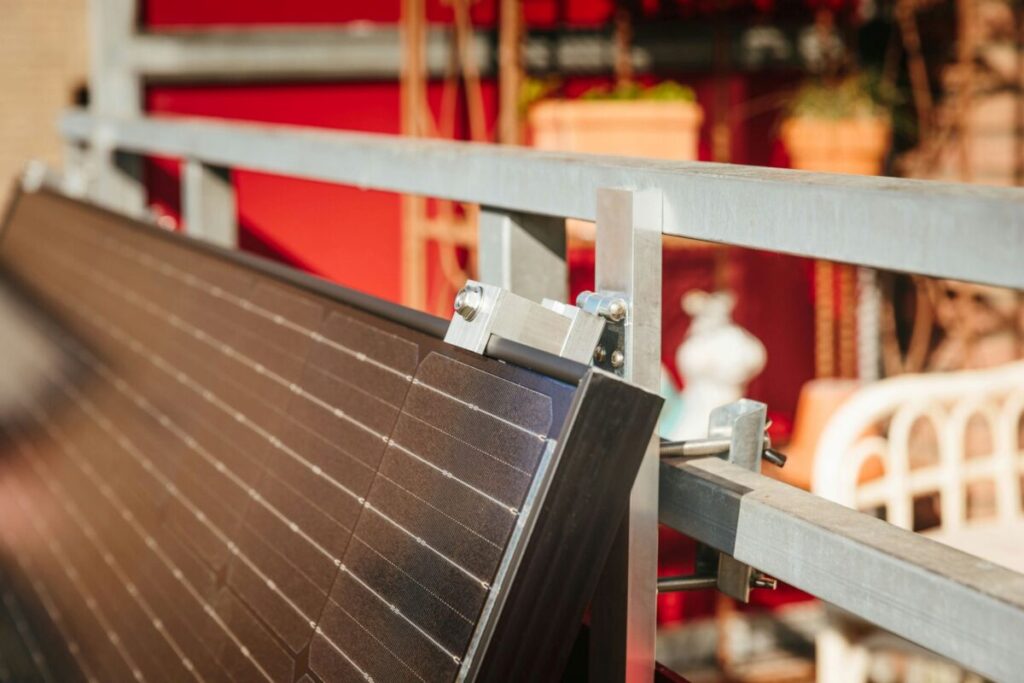
The US state of Maine has passed legislation that would make plug-in solar, also known as balcony solar, available for installation.
Signed into law by governor Janet Mills on 6 April 2026, LD 1730 allows the installation of plug-in systems of up to 1,200 watts.
Try Premium for just $1
- Full premium access for the first month at only $1
- Converts to an annual rate after 30 days unless cancelled
- Cancel anytime during the trial period
Premium Benefits
- Expert industry analysis and interviews
- Digital access to PV Tech Power journal
- Exclusive event discounts
Or get the full Premium subscription right away
Or continue reading this article for free
Solar panels certified under UL 3700—which is issued by UL Solutions—or a comparable standard from a nationally recognised testing laboratory will be eligible to be installed under the new legislation.
The plug-in systems will also require the use of inverters that are configured to shut off after 0.2 seconds if power is disrupted.
Moreover, plug-in solar panels with a capacity exceeding 420 watts must be notified to the transmission and distribution utility within 30 days of installation and installed by a licensed electrician.
The legislation prohibits utilities from requiring customers to get approval prior to the installation, submit an interconnection application—as is the case for rooftop solar installations—pay any fees related to the system or install additional controls or equipment “beyond what is integrated into the eligible system.”
The installation of any plug-in systems will also not be eligible for the state’s net energy billing.
Rebecca Schultz, senior advocate for climate and clean energy at non-profit organisation the Natural Resources Council of Maine, said: “As Mainers, we value self-reliance, and plug-in solar is one practical way we can help put affordable energy directly in the hands of more people across the state, allowing everyone from renters to lower-income households a simple way to take advantage of the cheapest energy on the planet.”
Balcony solar expands in the US
This comes only weeks after Virginia and California advanced similar bills that would allow the installation of plug-in solar within their borders.
In the case of Virginia, HB395 is in a more advanced stage, having passed a vote in the General Assembly earlier in March, and now awaits governor Abigail Spanberger’s signature by 13 April 2026 to become law.
Colorado is another state that is close to passing legislation regarding balcony solar. Earlier this month the House of Representatives voted in favour of HB 26-1007, which now goes to a vote in the Senate today (10 April 2026).
Similar to other states, only solar panels that have been labelled and listed by a nationally recognised testing laboratory are eligible for use and must include a feature that prevents the system from energising the grid during a power outage.
Currently, Utah is the only state to have passed legislation allowing the installation of small, portable solar systems. Since May 2025, residents in Utah can install a plug-in solar panel of up to 1,200 watts in their homes. Many other US states are following in the footsteps of Utah.
In its 2026 predictions, analyst Wood Mackenzie cited the rise of balcony solar in the US as one of the three trends shaping this year. The possibility to install plug-in solar without the need to request approval from the utility would open ways to quickly reduce energy bills, as electricity rates continue to rise across the US.
In Europe, meanwhile, Germany has long been the leading country in balcony solar with over one million panels installed so far, for a cumulative installed capacity of 1.14GW as of November 2025, according to data from German trade body BSW Solar. Other European countries, such as the Netherlands, France and Italy, have also shown interest in these plug-in systems.
The UK is the latest European country to allow households to buy and install plug-in solar systems. Unlike in the US, these systems’ capacity is currently capped at 800 watts and will soon be sold by major retailers such as Lidl and Amazon.