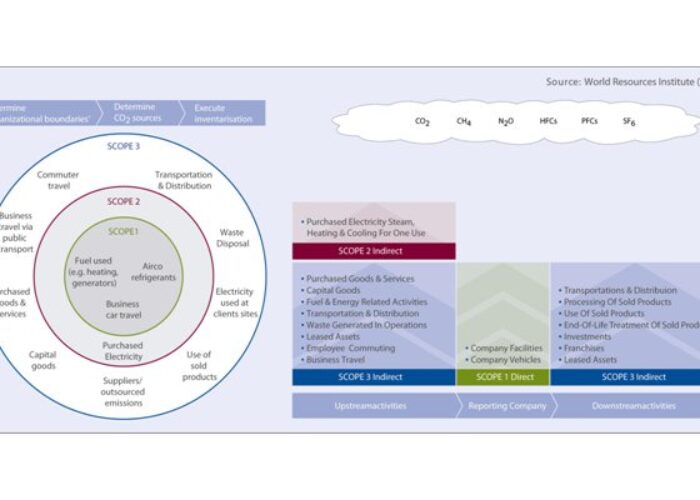
How much carbon is emitted in producing a solar PV module and launching it on the market? This could be an important question which project developers, installers, investors, government agencies and end customers might ask solar PV manufacturers in the future. To answer it, producers need to know the direct emissions from the manufacturing process, as well as those generated from the activities of manufacturers in the upstream supply chain (including raw material acquisition, upstream energy use, packaging, transportation and procurement), and also those arising from module usage and eventual recycling. This paper, written in a cooperation between EuPD Research and Deutsches CleanTech Institut (DCTI), presents an overview of PV’s carbon footprint.
The weak demand that has blighted the solar industry for much of 2011 is likely continue into the new year, according to a new report on the US market from ClearSky Advisors. Despite a growth in installed capacity, overcapacity in the supply chain will continue to affect module prices, with ClearSky forecasting these to fall for at least the first half of 2012.
Joint Forces for Solar (JF4S), a global synergy of stakeholders along the solar supply chain, has gained a new backer. pvXchange, who is an online business-to-business brokerage of PV modules and inverters, will be among the sponsors of JF4S’s fourth U.S. breakfast briefing and networking forum at Solar Power International in Dallas in October.
Despite the first-half slump in PV installations and significant inventory build across the PV supply chain, leading polysilicon producer Hemlock Semiconductor would seem to be riding its 50th year in business in style, as Dow Corning management noted that the polysilicon JV arm had remained ‘sold-out’ in the first half of the year and the situation would remain the same for sometime.
A period of equipment digestion or what's known as a reset could be at play after aggressive capacity expansions across the PV supply chain in 2010, according to the PV book-to-bill analysis featured in the forthcoming "Solarbuzz PV Equipment Quarterly" report. According to Finlay Colville, senior analyst at Solarbuzz, the PV book-to-bill is forecast to dip sharply below parity before rebounding in Q4’11.
SolFocus has promoted chief operating officer Bob Legendre to president and COO, reporting to CEO Mark Crowley. In his new, expanded position, Legendre will oversee a broad range of activities including manufacturing, supply chain, engineering and deployment. As the COO, Legendre led SolFocus’s engineering organization and finalized SolFocus’s product realization and product certification for deployment in EMEA, Australia and North America.
With more than 80% of PV module demand being satisfied by crystalline-based modules, the health of the silicon and wafer supply chain is of vital importance to the overall PV industry. This paper reviews the overall materials value chain from the manufacture of PV silicon to the wafer, prepared for manufacture of the cell. A glimpse is provided of the various market dynamics that exist in the supply chain, as well as the technology trends that influence or threaten the supply of wafers. Although the manufacturing routes are mature and well established, we also take a look at the possibility of novel and disruptive technologies altering the overall supply landscape.
Weaker demand in the first quarter is expected to generate a significant rise in PV module inventories throughout the supply chain, according to market research firm IHS iSuppli in a new report entitled ‘PV: Strong Market Has Suppliers’ Inventories at Healthy Levels.’
CPV cell developer Cyrium Technologies has opened its new office in Hong Kong, China and appointed Nelson Fan as its general manager for Asian operations. Fan holds eighteen years of experience in the semiconductor industry, having most recently worked with Traxon Technologies as its research and development director. In his new position with Cyrium Technologies, Fan will be charged with concentrating on the company’s supply chain while detecting technology options and supporting their Chinese and other Asian customers.
PV industry module and component manufacturers have brought down costs significantly over the last four years. This trend is clearly evident as most publicly traded companies continue to grow revenue despite falling module and component prices. However, it is far less clear how downstream system integrators are handling the drop in system prices and contributing to value creation. System prices are generally higher in the U.S. than in Europe despite lower module prices in the U.S. This disparity often raises questions on the part of European PV professionals where these costs come from, and secondly, what have U.S. system integrators done to reduce costs. This article is the second of a two-part series shedding light on how U.S. integrators contribute to a decreasing installed-PV-system cost roadmap by championing value creation in the downstream segment. Focusing on the residential market segment, Part I delved into activity cost savings through innovation in engineering and construction [1]. Part II illustrates how changes in marketing and sales, rebates, interconnection, supply chain management and customer support have evolved considerably over the last several years to result in reduced costs.