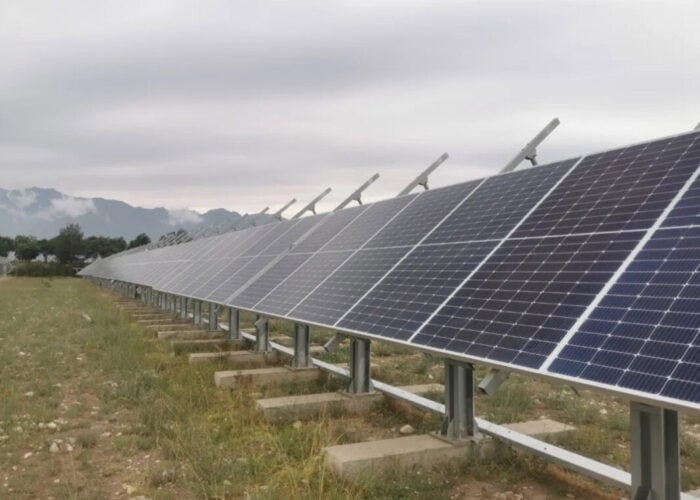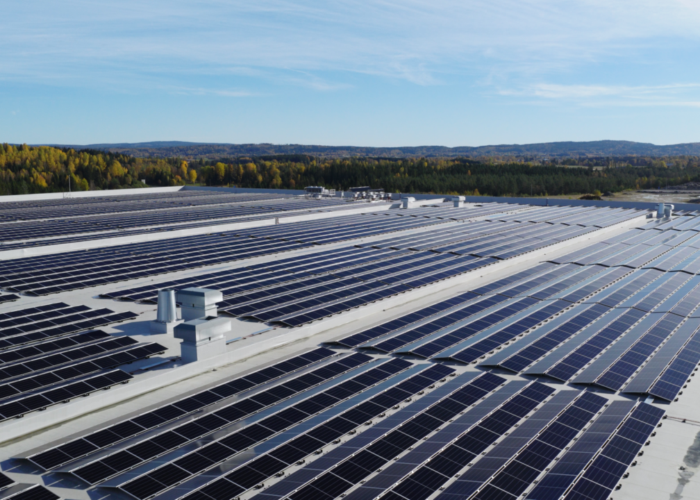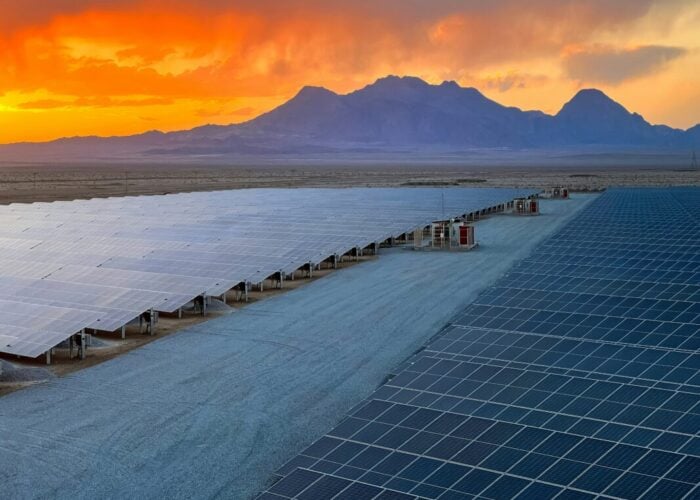
Singapore’s Energy Market Authority (EMA) has launched a five-year ‘Energy Infrastructure Plan’ that includes a new target of deploying 4GWp of cumulative solar PV capacity by 2035.
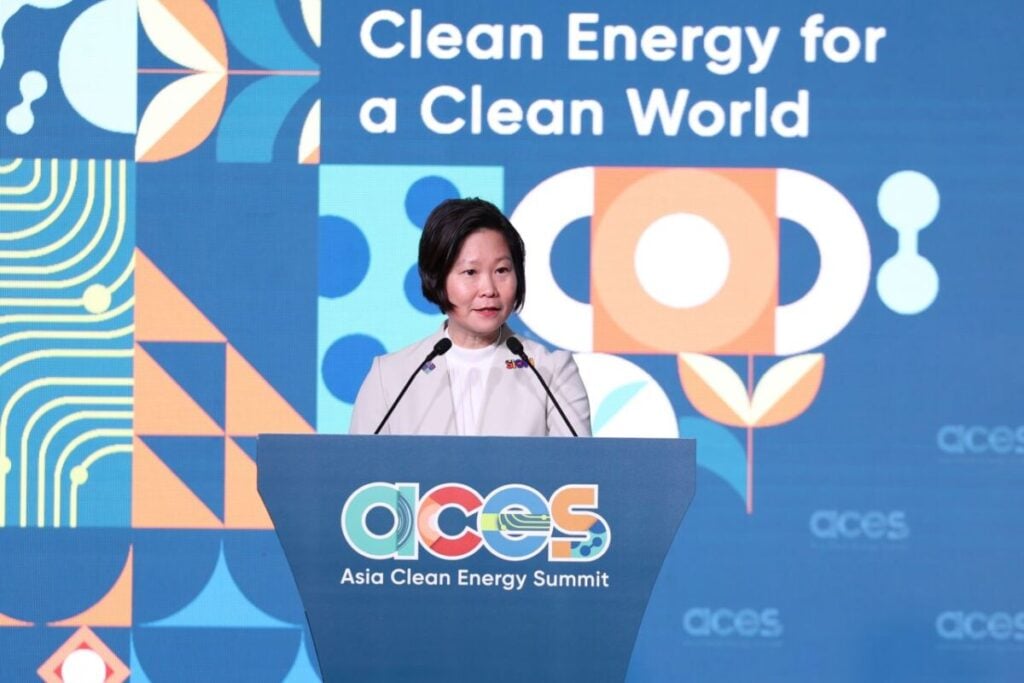
The EMA notes that Singapore currently has 2.3GWp of solar PV generation capacity in operation, and is “well on track” to meet its earlier target of 3GWp in operation by 2030; the new 4GWp target builds on this older target. While the EMA did not provide further details of these new solar deployments, at this week’s Asia Clean Energy Summit in Singapore, part of the Singapore International Energy Week, Minister of State for Energy, Trade and Industry Gan Siow Huang delivered an address in which she said that Singapore would look to accelerate deployment of solar projects in “public spaces beyond rooftops”.
Try Premium for just $1
- Full premium access for the first month at only $1
- Converts to an annual rate after 30 days unless cancelled
- Cancel anytime during the trial period
Premium Benefits
- Expert industry analysis and interviews
- Digital access to PV Tech Power journal
- Exclusive event discounts
Or get the full Premium subscription right away
Or continue reading this article for free
“I am happy to announce that EMA has launched a new tender for solarisation of public premises, which will include new surfaces such as solar carports and building-integrated photovoltaics,” said Gan. “The tender will aggregate the demand across government agencies, and create greater scale and more opportunities for the solar industry.”
Gan also said that the government would consider expanding its involvement in ‘overhang solar’, the construction of solar panels in the space between nearby buildings.
She pointed to an overhang project in the Woodlands East Industrial Estate, piloted by government sustainable infrastructure development agency JTC and completed in collaboration with Portuguese developer EDP, as an example of the practice. According to EDP, this project will have a capacity of 455kWp and enter commercial operation in 2028, ahead of delivering electricity to the grid for ten years.
The minister also said that the government has updated Singapore Standard (SS) 673, which specifies the types of renewable energy certificates (RECs) that can be used to illustrate clean energy generation in Singapore. Under the new “amended” standard, in order to qualify for a REC, an organisation will need to demonstrate that renewable electricity has been physically supplied to the Singaporean grid, either from domestic generation sources or overseas imports.
“This is in line with international practices to ensure that renewable electricity claims are supported by credible evidence,” said Gan. “The updated SS 673 will strengthen trust in corporate sustainability reporting and reduce the risk and issues of greenwashing concerns that we have heard.”
Singapore sets 1GWh BESS target
The EMA announcement also included a number of new targets for battery energy storage system (BESS) deployments, including goals to have over 1GWh of BESS in operation, up from around 350MWh in operation today.
“Singapore’s need for flexibility in the power system is growing. We would like to partner companies to turn promising ideas into commercially viable energy storage solutions that can be deployed at scale,” said EMA chief executive Puah Kok Keong. “By doing so, we can strengthen power system reliability while making better use of every storage.”
The latest energy storage target builds on a 200MWh target by 2025, which was achieved two years early. Read more coverage of Singapore’s new energy storage goals on our sister site Energy-Storage.news.
Fossil fuels and electricity imports remain key components of energy mix
These changes come as Singapore anticipates a significant expansion in its electricity demand, which the EMA estimates could be as high as 13GW by 2031, up from 8.6GW in 2026. A significant portion of new electricity generation will be accounted for by fossil fuels—the EMA expects five new gas-fired power plants to start operations by 2031, expanding the country’s electricity generation by around 26%
Gan said at the event this week that some of this demand would be met by more energy imports from overseas; this week, EMA granted conditional approval (CA) to Sembcorp Utilities to import 1.3GW of low-carbon electricity capacity from Peninsular Malaysia.
“With this latest project, EMA has now granted CAs to three projects from Peninsular Malaysia,” said Gan. “And if all three projects materialise, up to 2.2 GW of low-carbon electricity could flow from Peninsular Malaysia to Singapore.”
The Energy Infrastructure Plan also includes a US$5.3 billion investment, to be made between 2025 and 2029, into the country’s grid infrastructure, which is 11 times more than was invested into the grid in the preceding five years.
This investment will aim to deliver the construction of seven new transmission substations by 2031, and the addition of 1,400km of new transmission cables by 2030, alongside “strengthening the distribution network” to improve electricity access for homes and businesses. The EMA names solar panels and electric vehicle (EV) chargers as beneficiaries of this distribution network expansion.