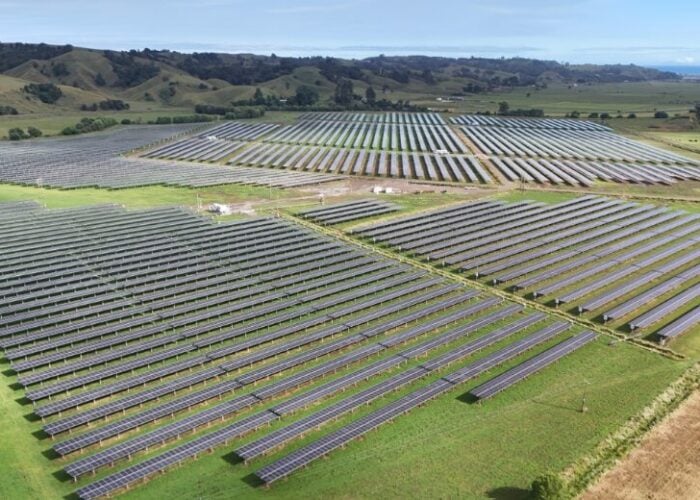
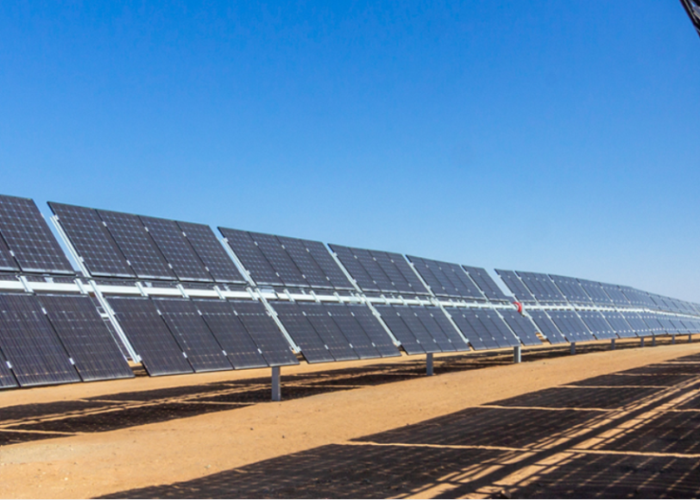
At Solar Energy Southeast Asia 2014 in Bangkok last week, speakers discussed the many opportunities for solar in the region. With a lack of centralised grids, sprawling islands prone to hurricanes and thundering monsoons, the region is also proving a fertile testing ground for innovation in storage, hybrid and mini-grid technologies.
Referring to the second largest SEA PV market, the Philippines, Alex Lenz, Asia and the Middle East president of global downstream PV firm, Conergy said the country's “geographical spread, it is a logistical challenge” where you need to bring in local contractors with local knowledge. Conergy recently won a 41MW EPC deal in the Philippines.
Try Premium for just $1
- Full premium access for the first month at only $1
- Converts to an annual rate after 30 days unless cancelled
- Cancel anytime during the trial period
Premium Benefits
- Expert industry analysis and interviews
- Digital access to PV Tech Power journal
- Exclusive event discounts
Or get the full Premium subscription right away
Or continue reading this article for free
Adding that “what is a little bit tricky” about the Philippines is it’s “widespread geography, with different islands and the more of products sourced from outside, the more risk is put on your particular plant.” Many South East Asian countries are split into many islands creating challenges for developers.
Meanwhile, Andy Schroeter, CEO of off-grid specialist, Sunlabob, said Southeast Asian countries are “burning fossil fuels like hell”. “We have to find alternatives,” Schroeter said.
Using “hybrid mini-grid” technology is the only way to go said Schroeter, adding that telecommunication (TELCO) towers also offer many opportunities for solar installations.
Christophe Inglin, co-founder and managing director of Phoenix Solar Asia Pacific, told the Solar Energy Southeast Asia 2014 (SESEA) conference how Singapore is using GPS mapping technology to solve intermittency issues and provide PV information for the public.
Then Tetchi Capellan, founder of the Philippine Solar Alliance, and managing director for Solarus, showed dated pictures of watt-sized solar installations – with batteries. “Off-grid solar and battery technology has been used in rural areas from as far back as ten years ago. [It] is perfect for a nation [the Philippines] made up of 7,100 islands,” Techi said.
Techi reminded the audience of the multiple typhoons that have cost lives, wrecked homes and cost billions in the Philippines. On top, this “also makes installations much harder”, he said; with higher winds, solar technology and equipment has to be extreme-weather proofed.
But with government support, and solar at parity with diesel, Tetchi said computer models of island simulations the Solar Alliance has run show how 24-hour power can be granted across the Philippines using hybrid off-grid solar and storage solutions. By using these new technologies, a return from annual savings on fuel, and hours of energy access for off-grid development can be provided in Southeast Asia.
Deepak Verma, managing director of nv vogt, noted that one of the major challenges in off-grid hybrid solutions is that although solar can provide peak energy supply in the middle of the day, there is also peak demand in the evening which would currently rely on expensive diesel fuel acting as the main energy source in the evening, rather than as just a back up for intermit solar. Verma said that solar could offset peak diesel, but will most likely not completely replace it.
Director of solar development for developer, Sonnedix, Franck Constant showed the crowd the ingenuity of locals the company works with in creating what might be the world’s only solar-powered golf cart, as well as a transportable solar-powered hydro pump.
Principal engineer for Global Sustainable Energy Solutions, Chris Martell, gave the audience the lowdown on new battery technologies, and said system controls to monitor and manage loads from PV generation, with generators and batteries, are important considerations for Southeast Asia to keep what centralised grids there are stable.
Paul Puthenpurekal, director of developer Solutions Using Renewable Energy (SURE), revealed that moves are underway to break into the difficult and secretive Vietnam market. He said that although the government there extensively controls the market, his company is conducting feasibility studies on opportunities in Vietnam, as well as Cambodia and Myanmar.
Frank Zimmerman, business development manager for renewable energies, for South East Asia at ILF Consulting Engineers, cited a large-scale diesel hybrid project in the United Arab Emirates his company had been involved in as an example of technology that could be transferred to Southeast Asia.
Zimmerman explained how the project’s levelised cost of energy (LCOE) for diesel turned out to be €300-600 (US$374-748) per MWh, while solar came out as €80-150 per MWh. The UAE project was also unique in using large-scale energy storage systems to provide predictability. As solar irradiation is similar in Southeast Asia to the UAE, Zimmerman said this technology could be used across the region.
The climatic, geographic and geographic conditions in Southeast Asia clearly create many challenges for developers looking to tap into this solar-rich. But as was also evident at SESEA 2014, the technological solutions to many of these already exist. With a concerted push, solar could help bring electricity to the millions of people in the region who lack power and are most vulnerable to climate change.